

Frequently asked questions about the food intolerance test
Answers about how the FOODTEST test works, sample collection, interpreting your results, payment and coupons.
No results. Write to us: info@foodtest.hu
Frequently asked questions
Clear answers
About the FOODTEST food intolerance test
We have gathered the most important information about the test, sample collection, interpreting the results and the dietary steps, so you can find the answers that matter to you more quickly.
110,000+ food intolerance tests performed

Ordering and payment
Questions about ordering and payment
I have a discount coupon. How can I redeem it?
- Click the “Add to basket” button.
- In the basket or at the checkout, open the “Have a coupon?” field, enter your coupon code and click the “Apply coupon” button.
- The system automatically deducts the discount from the total.
How can I order the food intolerance test?
- Choose which food intolerance panel you would like: FOODTEST 110+ or FOODTEST 200+
- Choose whether you would like home or laboratory blood sample collection.
- Choose the turnaround time (how many working days after the blood sample collection you receive your results).
- Choose the quantity you wish to order; 1 is selected by default.
- Press the "Add to basket" button, which takes you to the basket page.
- On the basket page you can check your order; if everything is in order, click the "Proceed to checkout" button.
- Fill in your details, then choose a payment option (card payment or bank transfer).
- Accept the General Terms and Conditions; you cannot continue with your order until you have accepted them.
- If you choose bank transfer, a page will appear where you will receive all the important information for the transfer.
- If you choose card payment, you will automatically be redirected to the 100% secure payment page provided by Barion.
- Enter your card details.
- Accept the payment terms, then click the "Pay" button.
- The transaction will then be completed and the system will take you back to www.foodtest.hu.
- You will receive a confirmation email about your purchase at the email address you provided.
How can I pay for my order?
Pay easily and securely online by bank card or by bank transfer.
Can I transfer the FOODTEST test I ordered to someone else?
Of course you can; you can even buy the test as a gift
How long can I use the test for?
You can use the test within 90 days of purchase.
What is the customer service phone number?
Feel free to contact our customer service; we are happy to help!
Phone: +36 1 424 0969
Customer service opening hours:
- Monday 9:00–15:00
- Tuesday 9:00–15:00
- Wednesday 9:00–15:00
- Thursday 9:00–15:00
- Friday 9:00–15:00
- Saturday Closed
- Sunday Closed
Sample collection
Questions about sample collection
When will I receive the home blood sampling kit (delivery information)?
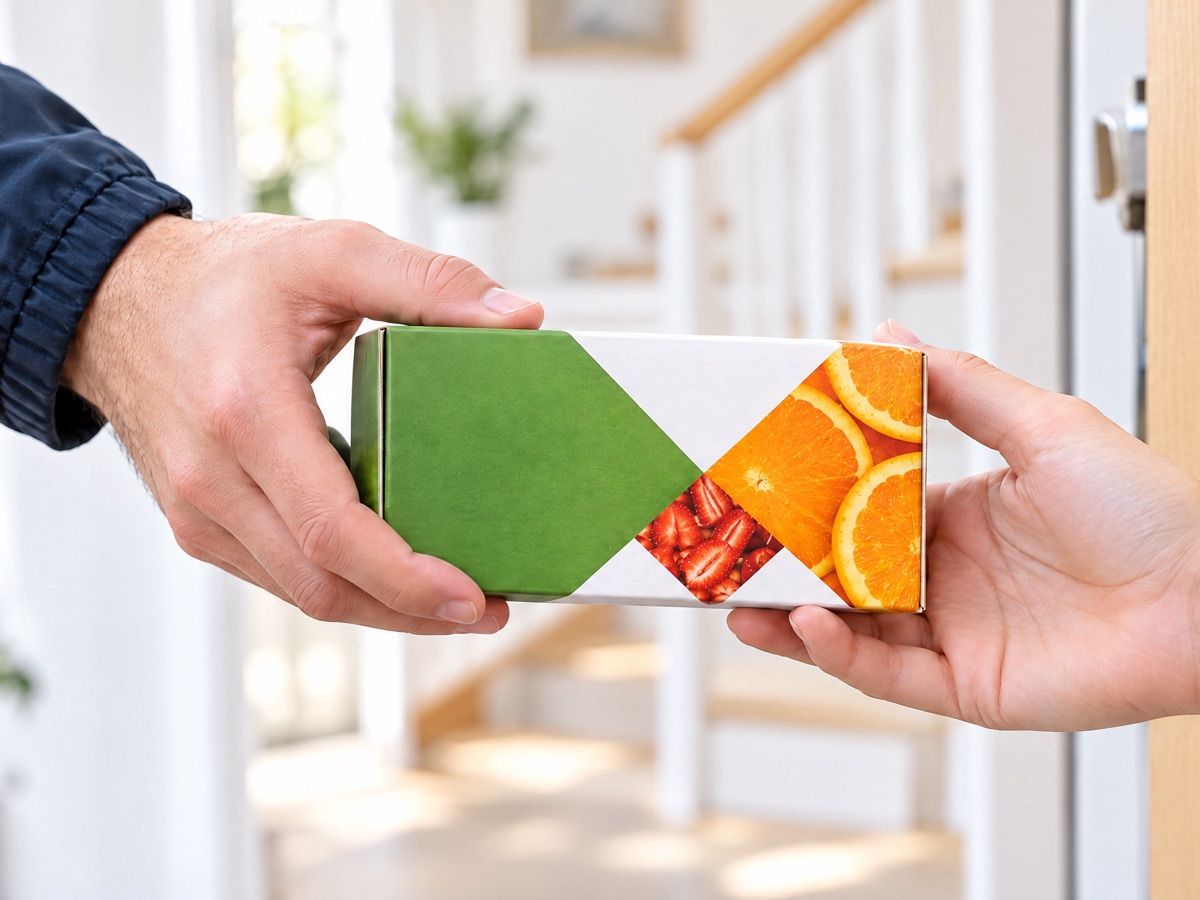
Our contracted partner will deliver the kit to the address you provided within 5 working days of your order.
How do I get an appointment for laboratory blood sample collection?
We will contact you within one working day of your order and arrange a blood sample collection appointment that suits you.
What does home blood sample collection mean?
Blood sample collection can now be done in your own home using a blood sampling kit, at no extra cost!
Home blood sample collection is a convenient solution that lets you take the sample without booking an appointment or waiting.
Order any FOODTEST food intolerance test with a home blood sampling kit!
The kit is delivered to your home. Follow the instructions and take the blood sample at home. It is just as simple and painless as a blood sugar test.
Our courier takes the blood sample to our laboratory.
We analyse and evaluate the blood sample, then make your test report available in your myFOODTEST account within a few days.
We will notify you by email when your test report is ready.
The test report helps you map which foods may play a role in your complaints.
Is there an extra cost for home blood sample collection?
There is no separate fee for home blood sample collection: you do not have to pay a surcharge for either the FOODTEST 110+ or the FOODTEST 200+ test, regardless of whether the blood sample is taken at home with a blood sampling kit or at one of our blood collection sites by professionals.
What does laboratory blood sample collection mean?
Laboratory blood collection means that you come in person, at an agreed time, to one of our blood collection sites, where qualified professionals take the blood sample. At our Diósd laboratory you can also learn about the technology behind FOODTEST 200+.
Where does laboratory blood sample collection take place?
Laboratory blood draws are available at six sites. We will call you within 1 working day of your order to agree on the one closest to you; blood is drawn by appointment only.
- Budapest – Gazdagrét finger-prick sampling point
1112 Budapest, Dió utca 2.
Tuesday 8:30–19:00 - Diósd – FOODTEST Centre
2049 Diósd, Álmos fejedelem utca 27.
Tuesday, Wednesday, Thursday 8:30–15:30
You can park free of charge in the private car park next to the laboratory. - Kakucs – Attentum Kft.
2366 Kakucs, Rónay György utca 77.
Monday to Friday 12:00–14:00 - Székesfehérvár – Ambrózia Health Centre
8000 Székesfehérvár, Piac tér 28.
Tuesday, Wednesday 13:30–14:30 - Dunaújváros – Dr. Gyöngyi Gergely Dermatology Practice
2400 Dunaújváros, Kossuth Lajos utca 15. fszt. 1.
Friday 9:00–12:00
Over 16s only. - Szentes – Nutrimed Health Centre
6600 Szentes, Arany János utca 3.
Monday to Friday 11:00–12:00
Children only on Mondays and Tuesdays.
Do I need to fast before the blood sample collection?
No, you can eat and drink anything you like before the blood sample collection.
How should I prepare for the FOODTEST food intolerance test?
For the FOODTEST test to give the most accurate result possible, pay attention to the following 2 important things:
1. Reintroducing foods
Reintroduction is only needed if you have been on a conscious diet for at least 2 months and have cut out certain foods: eat small amounts of these in the 4 weeks before the test. You do not need to eat foods you never normally eat. Eating a small amount 1–2 times a week is enough.
(Only reintroduce a food if you do not have a confirmed allergy or sensitivity to it.)
2. Steroid-containing medicines
Steroid-containing medicines may affect the test result and cause false results. If you are undergoing such treatment, it is advisable to wait 1–2 months after the end of the treatment before having the FOODTEST 200+ food intolerance test.
If you often experience headaches, bloating, abdominal pain or skin rashes and cannot find the cause of your complaints, it is worth considering food sensitivity too.
In most cases, one or more foods may be responsible for these complaints.
Which medicines affect the test result?
Steroid-containing and immunosuppressive medicines may affect the test result.
If you have to take these medicines continuously, do not stop taking them before the test, as the test reflects your condition while taking the medication.
If you only had such a medicine temporarily, as a course, it is worth having the blood sample taken 1–2 months after finishing the course. Never stop a medicine because of the test: only your doctor can decide that.
Testing and results
Questions about testing and results
Do FOODTEST tests measure total IgG?
Yes.
Modern food sensitivity tests such as FOODTEST 110+ and FOODTEST 200+ measure total IgG (the antibodies produced against foods).
IMPORTANT: laboratory tests that measure only IgG4 (which makes up just 1–4% of total IgG) are not suitable for detecting food sensitivity.
What is FOODTEST 200+?
FOODTEST 200+ is the protein-chip-based food intolerance measurement used in our laboratory. From a single small blood sample, it simultaneously detects the amount of IgG antibodies produced against more than 200 foods and food ingredients. Food intolerance usually occurs with the most frequently eaten foods.
Many people do not connect their complaints with the foods they eat regularly.
Unlike food allergy, the symptoms of food intolerance usually appear with a delay, hours or days after eating.
FOODTEST 200+ shows which foods the blood has elevated IgG levels against; this can be the starting point of a dietary change guided by a specialist.
Many diseases and conditions that impair quality of life may be associated with food intolerance.
For chronic complaints, a targeted dietary change supervised by a specialist may help and can complement treatment.
FOODTEST 200+ measures the body's total IgG response to more than 200 foods. The result is a dietary starting point, not a medical diagnosis; a dietitian helps you interpret it.
What is FOODTEST 110+?
FOODTEST 110+ is a modern food intolerance test that detects, from a single small blood sample, the amount of IgG antibodies produced against more than 110 foods and food ingredients.
It makes it easier to identify the foods that may lie behind your persistent complaints.
What will the test report look like?
Curious about what results you will receive after the test? Take a look at the detailed sample test reports!
FOODTEST 110+ view sample test report →
FOODTEST 200+ view sample test report →
What should I do once I have received my result?
Once you have received your test report, review the results, which show which foods may be causing you complaints. Based on the test report, it is recommended to temporarily remove the foods concerned from your diet (elimination diet).
It is worth changing your diet carefully and monitoring how your complaints change.
Elimination is temporary: after the period agreed with the professional supporting you (a dietitian or a nutrition adviser), reintroduce the foods one at a time, a few days apart, and watch your symptoms. Only leave out long term what brings the complaints back on reintroduction, and only exclude a whole food group with professional guidance.
Why is IgG-based food intolerance testing debated?
Some professional bodies (for example the European Academy of Allergy and Clinical Immunology, EAACI, and the Hungarian Dietetic Association, MDOSZ) hold that food-specific IgG mainly reflects earlier consumption of a food and is not a proven diagnostic tool for food intolerance. We think this is important to say.
The FOODTEST test is not an allergy test, does not detect coeliac disease, lactose or fructose intolerance, and is not a medical diagnosis. We recommend the result as a dietary starting point for a temporary elimination guided by a professional, such as a dietitian or a nutrition adviser, followed by reintroduction. We discuss the professional debate in detail in this article.
Is the test advisable during pregnancy or breastfeeding?
During pregnancy and breastfeeding we only recommend an elimination diet agreed with a dietitian and your doctor (gynaecologist or health visitor), because a balanced nutrient intake is especially important at this time. Please ask our customer service before the test.
Children and special cases
Questions about children and special cases
From what age is the test recommended for children?
We recommend the FOODTEST test from the age of 2; we do not advise it under two, because the test report is less informative at that age. Parents of babies struggling with digestive problems, abdominal pain, eczema or rashes often contact the Food Intolerance Centre.
In such young children the immune system is not yet fully developed, so the FOODTEST test does not necessarily give an accurate picture of food sensitivity. With complaints in babies and toddlers, see a paediatrician first and, if needed, a paediatric gastroenterologist.
In the case of children, professional guidance is especially important. Never put together a diet without the help of a qualified dietitian, because it is very important that the diet remains balanced and does not lack the necessary vitamins, trace elements and macroelements.
Are you a child-friendly blood sample collection point?
Yes, we have particularly extensive experience in taking blood samples from children. Blood is taken by experienced professionals who pay particular attention to making it as gentle and calm as possible. For little ones we take blood from a fingertip, so no needle in a vein is needed.
We know that having blood taken can be frightening for many children, so the sample is collected with patience, empathy and a child-friendly approach, to make it as quick and stress-free as possible.
Not every site sees children, or not on every day (Szentes, for example, only on Mondays and Tuesdays; Dunaújváros only over 16s): when we book your appointment, we will tell you where and when we can see your child.
Does finger-prick blood sample collection hurt?
Finger-prick sampling takes a tiny prick on the fingertip, and a few drops of blood are enough. The prick lasts only a moment. We also asked Sára what it was like for her:
 Play video: Food intolerance test experiences
Is there a special food intolerance package for children?
Yes, we offer a special children's food intolerance package, designed specifically for children's needs.
The FOODTEST Children's food intolerance package includes the following:
Is the FOODTEST test recommended in the case of a congenital metabolic disorder or congenital digestive disease?
In the case of a congenital metabolic disorder or congenital digestive disease, only use the FOODTEST test after first consulting the laboratory performing the test.

Questions about the FOODTEST test
General questions
What are the symptoms of food intolerance?
Food intolerance can show itself in many different symptoms. The most common are digestive disorders such as diarrhoea, constipation, bloating, abdominal cramps, abdominal pain, but it may also appear as central nervous system complaints – such as insomnia or chronic headaches –, skin problems – such as eczema or spots – as well.
Managing food intolerance rests on identifying the foods behind the complaints and leaving them out for a while, with a specialist’s guidance. A food intolerance test gives a dietary starting point for this; the result is not a medical diagnosis, and persistent or alarming symptoms need a doctor first.
What is the myFOODTEST account?
In your own account you can securely access the requests, test reports and counselling sessions for yourself and your children at any time, from anywhere. You can view your test report in several languages, or request dietetic counselling for your completed test report.
You can always have at hand what you cannot eat and what to look out for – whether you are shopping or in a restaurant.
If you have had a test report before, you can also check the changes.
I don't have a myFOODTEST account yet. How can I create one?
You can easily register for a myFOODTEST account at https://www.myfoodtest.hu/. Your username will be the email address you give when registering, and we will send your password to this email address after registration. You can find information about registration here: foodtest.hu/myfoodreg
Can I create my myFOODTEST account in advance?
Yes, you can also register for a myFOODTEST account in advance at https://www.myfoodtest.hu/. You can find information about registration here: foodtest.hu/myfoodreg
We would like the test for our child. Can a myFOODTEST account be created for them?
No, people under 18 cannot create their own account. For a child's test, you as the parent or guardian should create your own account and then create your child's profile within it.
I have forgotten the password for my myFOODTEST account. What can I do?
You can request a new password at https://www.myfoodtest.hu/ by clicking the "Forgotten password" button.
How much does the FOODTEST test cost?
The price of the FOODTEST 200+ test is HUF 89,900, which also includes a free written dietetic evaluation.
The price of the FOODTEST 110+ test is HUF 59,900.
The price does not depend on whether you choose home or laboratory blood sample collection; there is no separate fee for home sampling.
How much does home delivery cost?
Home delivery is always free of charge!
Didn't find the answer?
If you have any further questions, our customer service will be happy to help. Get in touch with us and we will help you find your way through the information about our tests.