On this page
- How can diet and skin be connected?
- Common foods that may play a role
- Eczema in early childhood
- Typical symptoms of eczema
- Frequently asked questions about eczema
- Do dermatologists recommend a food intolerance test?
- Can food intolerance cause eczema?
- Can eczema clear up with dietary changes?
- How long might it take for the skin to improve?
- Want to do more than just treat the symptoms?
Symptoms of food intolerance
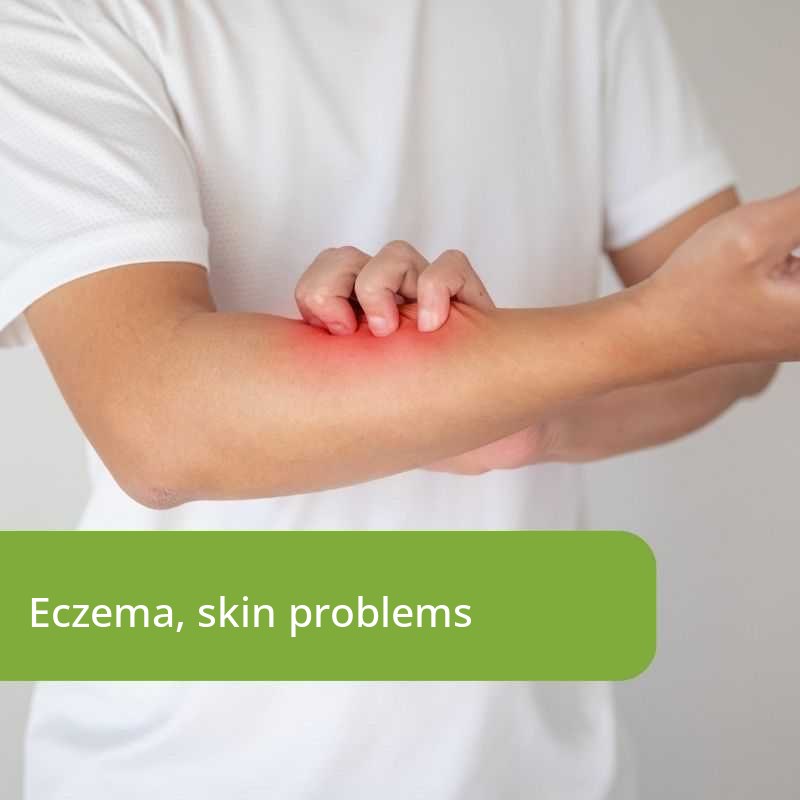
Eczema and skin problems
When your skin sends a signal
Can food intolerance cause eczema? Eczema (atopic dermatitis) is primarily a disease of the skin barrier and the immune system; a role of foods is established mainly in young children with IgE-mediated food allergy, and there is little evidence for an IgG-based diet. Diagnosis and treatment are the job of a dermatologist; FOODTEST can be the starting point for a time-limited dietary trial guided by a professional, such as a dietitian or a nutrition adviser.

Connections
How can diet and skin be connected?
When the body cannot properly process the proteins of a particular food, the immune system may react. This reaction can trigger inflammatory processes that may affect not only the digestive system but also the skin.
Persistent inflammation may contribute to dry, irritated skin and to symptoms involving itching. That is why it is important to explore whether there is a link between your diet and the condition of your skin.
Common foods that may play a role
in the development of skin problems
Wheat
Egg
Tomato
Soya
Fish and seafood
Milk and dairy products
Nuts
Citrus fruits
Is the food you eat to blame?
Eczema in early childhood
Skin problems can appear as early as early childhood. Many parents find that the symptoms appear unexpectedly and then return from time to time. In such cases it is especially important to examine whether certain foods in the diet may be contributing to the persistence of the symptoms.
Symptoms
Typical symptoms of eczema
Constant itching
Small blisters
Weeping skin
Thickened skin
Cracked, flaking skin
Secondary skin infection
Frequently asked questions
Frequently asked questions about eczema
Do dermatologists recommend a food intolerance test?
In some cases dermatologists may also recommend a food intolerance test, especially when skin complaints keep coming back and conventional treatments bring only temporary improvement.
Experience shows that diet and the body's reactions may in some cases play a role in sustaining inflammatory processes, so identifying the triggers can be an important step towards long-term improvement.
The FOODTEST food intolerance test is recommended to patients by several specialist dermatologists, including:
Dr. Révész Klaudia, dermatologist
Dr. Gergely Gyöngyi, dermatologist
In their experience, identifying the triggers can help treatments become more effective and symptoms ease more lastingly.
Can food intolerance cause eczema?
In some cases, diet and the body's reactions may contribute to inflammatory processes that can also affect the condition of the skin.
Can eczema clear up with dietary changes?
Changing your diet may help reduce inflammatory processes if the foods contributing to the symptoms can be identified.
How long might it take for the skin to improve?
This can vary from person to person. The degree of improvement depends on identifying the triggers and on how consistently the dietary changes are followed.
Want to do more than just treat the symptoms?
The answer may lie in your diet. A food intolerance test can help you get closer to understanding the underlying causes, especially if your symptoms have persisted for a long time or keep coming back.
The FOODTEST food intolerance test is built on the experience of more than 110,000 tests performed. Our tests are recommended by many professionals and dermatologists in cases where the background of the complaints is unclear and it is important to identify the triggers accurately.
The aim is not only to relieve symptoms, but to understand what may lie behind your skin problems and how you can consciously change your diet.
If you would like to find out whether your diet may play a role in your symptoms, a comprehensive test can help bring you closer to the answers.
Medically reviewed by: Dr Károly Krkos, laboratory medicine specialist · Updated:
Free download (PDF)
14-day symptom diary
Five minutes a day: write down what you ate and when the complaint came. In two weeks you will see more clearly what is going on.