An annoying roadside weed that folk medicine has long known.
Common burdock, or greater burdock, belongs to the aster family. It is known by several names in Hungarian: bojtorvány, lapu, bogáncs and ragadvány, as well as “roadside grass” and “bitter-leaved grass”, and in some places it is called csibrika.
It is native to the temperate regions of Europe and Asia, but has spread all over the world. It grows wild along roadsides and riverbanks, on nitrogen-rich soil. In some cultures, however, it is cultivated as a vegetable.
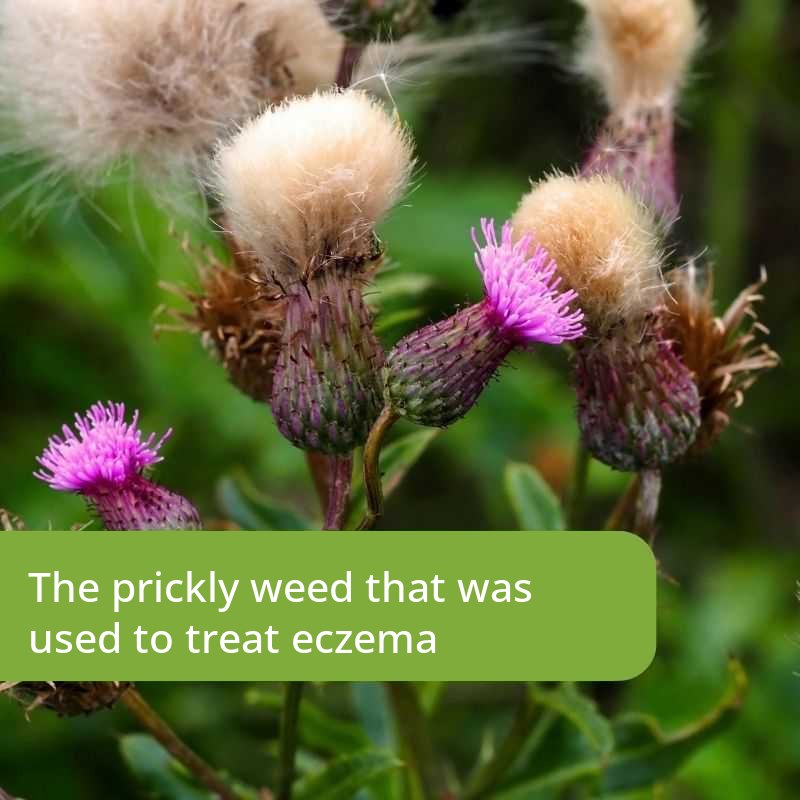
Its purple or pink, tubular, five-lobed flowers sit on long stalks and form heads arranged in umbel-like clusters, making the inflorescence globular. These easily get caught in the fur of domestic animals or in clothing. That is another reason it is so annoying.
At the same time, folk medicine uses it as a diuretic and a sudorific. It was traditionally used to stimulate bile secretion and for rheumatism, skin conditions such as eczema, and wounds that are slow to heal. These are not proven treatments: see a doctor about persistent or severe skin symptoms, eczema or a wound that does not heal. Its extracts prepared with oils are also traditionally used for rheumatic pain, hair loss and dandruff.
You can read more about the possible causes of skin symptoms, and whether diet may play a part in them, on our skin problems page.
In natural medicine its dried root is used, while its fresh shoots can also be used as a vegetable, though it is served as a side dish in only a few places: Japan, Korea, Italy and Portugal.
Burdock contains inulin, mucilage, polyynes, caffeic acid derivatives and triterpenes; it is also rich in essential oils and is bitter because of a substance called sesquiterpene lactone.
Burdock can – although this has not been proven – also cause poisoning, so only use herbs from a reliable source!

Don't just get the school bag ready
Starting school is not only about new exercise books and a changed daily routine but also about reorganising family meals. The FOODTEST Children's pac...
IBS and food intolerance: can diet help?
Several factors may lie behind irritable bowel syndrome, and the role of diet may also come up. The article explains in plain terms how certain foods...
Do you have to give up tasty food with a food intolerance?
Free-from or diet cooking does not mean going without: with the right ingredients and tricks, you can make tasty, varied dishes at home too.
FOODTEST newsletter
Food intolerance tips and recipes by email
Practical diet tips and recipes, straight to your inbox.