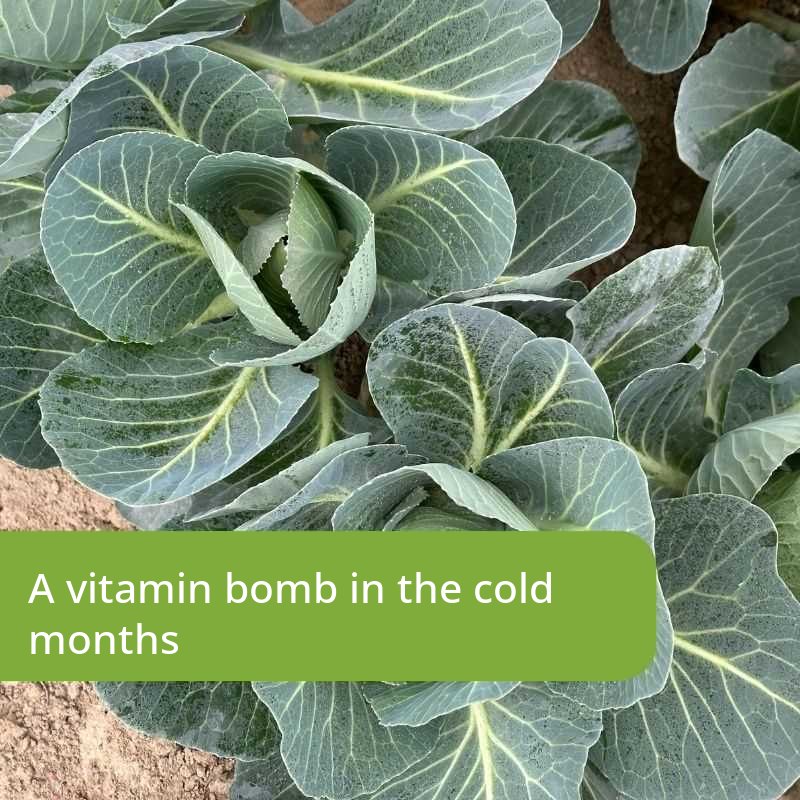
As part of a varied diet, the fibre in cabbage can help regular bowel movements. Folk tradition especially recommends raw cabbage juice for supporting bowel function
Patch upon patch, yet never a needle stitched it… a riddle from our childhood. This is the plant that is very filling and nourishing, one of the best ingredients in the winter months, and we know many ways of using it.
Although in recent years we have favoured exotic vegetables and fruits that are almost out of our reach, we must not forget the very useful plants within arm’s reach! One such excellent vegetable is cabbage, which undeservedly lags behind on the list of what we eat.
White cabbage is one of the oldest known and cultivated vegetables. It was already grown 4,000 years ago along the coasts of the Atlantic Ocean and the Mediterranean Sea. The ancient Egyptians and Greeks also ate it and believed it had a sobering effect. Whether or not this is why, white cabbage went on to become the most important food plant in Ireland.
The origin of sauerkraut is uncertain, but the first records come from China: when the Great Wall was being built, the workers regularly received sauerkraut. The Greeks revered it as a sacred plant and believed it protected new mothers from evil spirits. In France, cabbage was associated with the blessing of children: the French version of the stork story for small children, for example, says that mothers find their babies in cabbage heads.
Captain Cook also recognised the beneficial effects of cabbage: in 1769 his ship’s doctor treated a sailor’s gangrenous leg with sauerkraut. Captain Cook also recognised that scurvy could be prevented with sauerkraut, which is high in vitamin C, so he always set out on his voyages with sauerkraut, and the crew had to eat it regularly.
And if all this is not convincing enough: in 1984 the UN selected white cabbage as one of the 20 most important vegetables in the world.
But what makes this plant so wonderful?
Cabbage contains:
We know several kinds of cabbage, and there is no significant difference between them in terms of their nutritional value: it may be savoy cabbage, winter or summer cabbage, or red cabbage.
As part of a varied diet, the fibre in cabbage can help regular bowel movements. Folk tradition especially recommends raw cabbage juice for supporting bowel function.
It is no coincidence that the cabbage soup diet is popular among people who want to lose weight, since it has hardly any calories, yet it contains vitamins and fibre.
In some folk medicine traditions the plant is still used externally today! Cabbage-leaf compresses are recommended for joint pain and swelling; this is a traditional use, not a proven remedy. See a doctor about a festering wound or ulcer.
Unfortunately, bloating after eating cabbage is a common complaint. This is mainly due to the hard-to-digest carbohydrates in cabbage, but if the complaint is frequent or severe, it is worth looking into what might be behind it. Rarely, but it can happen that someone becomes sensitive to cabbage. The FOODTEST test also measures the IgG antibody level to cabbage.

Don't just get the school bag ready
Starting school is not only about new exercise books and a changed daily routine but also about reorganising family meals. The FOODTEST Children's pac...
IBS and food intolerance: can diet help?
Several factors may lie behind irritable bowel syndrome, and the role of diet may also come up. The article explains in plain terms how certain foods...

Do you have to give up tasty food with a food intolerance?
Free-from or diet cooking does not mean going without: with the right ingredients and tricks, you can make tasty, varied dishes at home too.
Free download (PDF)
Elimination starter kit
Leaving foods out and bringing them back, step by step, without your plate going empty.