In this article
Author: Dr Anikó Hovanecz
Gastroenterologist
In an earlier article, “SIBO and food intolerances”, we pointed out the links between SIBO and food intolerances. Now let's take a closer look at SIBO itself, which can also lie behind complaints that resemble food intolerance.
You ate an apple and now look six months pregnant? You are not alone. When all hell breaks loose in the small intestine, SIBO (small intestinal bacterial overgrowth) is often behind it.
What is SIBO? When bacteria move to the wrong place
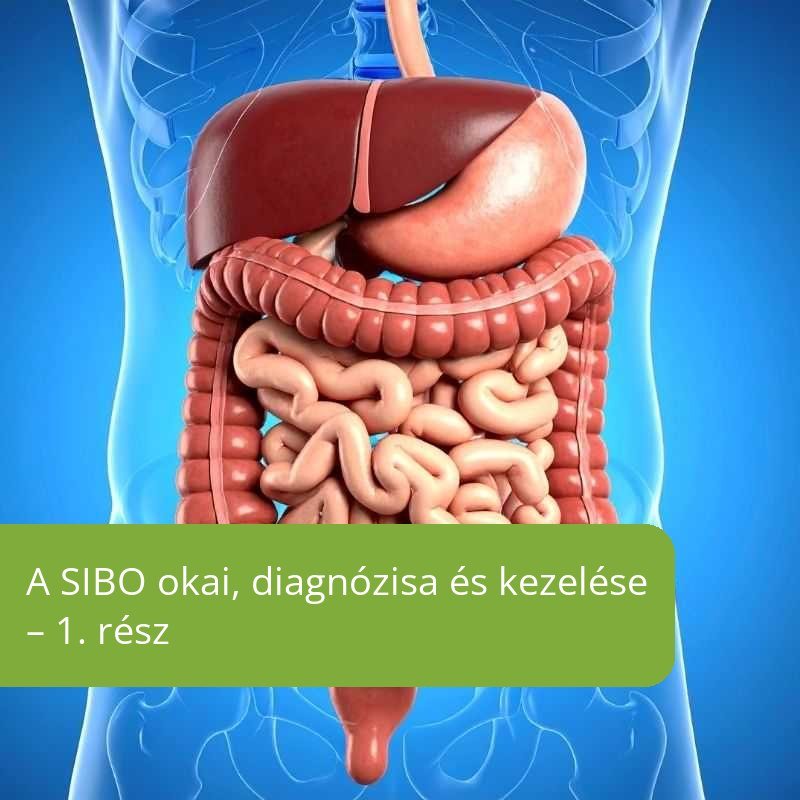
SIBO stands for Small Intestinal Bacterial Overgrowth, also known as contaminated small bowel syndrome. This digestive disorder develops when bacteria that normally live in the large intestine pass over in large numbers and multiply in the small intestine.
The job of the small intestine is to absorb nutrients, but the uninvited guests (bacteria) start fermenting the food (especially carbohydrates) before the body can use it. This process comes with heavy gas production, bloating and nutrient absorption problems.
The main causes of SIBO
SIBO is rarely a disease in its own right; it is mostly the consequence of another disorder. Normally the body has several lines of defence that keep bacteria out of the small intestine (e.g. stomach acid, bile, normal bowel movements). If these are damaged, SIBO gets the green light.
- Slow or impaired gut motility: At night and between meals, the cleansing waves of the small intestine “sweep out” the bacteria. If this movement slows down – for example because of diabetes, an underactive thyroid or chronic stress – bacteria are able to settle.
- Reduced stomach acid: Stomach acid is the first line of defence, killing swallowed pathogens. Long-term use of acid-reducing drugs (so-called proton pump inhibitors, PPIs) or advancing age increases the risk.
- Anatomical and structural causes: Previous bowel surgery, adhesions, scars or a faulty ileocaecal (Bauhin's) valve, which separates the small intestine from the large intestine, mechanically allow bacteria to flow back.
- Other underlying conditions: Crohn's disease, coeliac disease, and congenital lactose intolerance (milk sugar intolerance) that was not recognised in time are also often accompanied by SIBO.
Typical symptoms
The symptoms of SIBO are extremely unpleasant and typically get worse after meals (especially 1–2 hours later):
- strong, visible abdominal bloating (“balloon belly”) and gas,
- abdominal pain and cramps,
- chronic diarrhoea or constipation, or the two alternating,
- nutrient deficiency (mainly vitamin B12 and iron deficiency) and the resulting fatigue.
On the trail of the mysterious “balloon belly”: how do we diagnose it?
It is important to know that there is a huge difference between one SIBO and another. The war in your gut can be run by two completely different “gas gangs”: the hydrogen crew and the methane faction. It is worth getting to know both, because treatment also depends on which one is behind the complaints.
The great “gut derby”: who is blowing up your tummy? Hydrogen or methane SIBO
The most widely used, painless way to detect SIBO is the lactulose hydrogen and methane breath test. During the test, the patient drinks a special sugar solution and then breathes into a device at set intervals. Since hydrogen and methane are produced not by the human body but by the microorganisms living in the gut, an abnormal amount of gas in the exhaled air points to fermentation in the small intestine. The result also shows which “team” is responsible.
Although both involve unwanted gas production in the small intestine, the microorganisms producing the gas and the symptoms they cause differ considerably. The table below summarises the most important differences:
| Feature | Hydrogen-dominant SIBO | Methane-dominant SIBO – now called IMO |
|---|---|---|
| Main culprits | Bacteria (e.g. E. coli, Klebsiella) | Archaea (e.g. Methanobrevibacter smithii) |
| Main symptom | Chronic, urgent diarrhoea or loose stools | Stubborn, hard-to-treat constipation |
| Bowel movement | Faster gut motility, cramping pain | Slower gut motility (methane slows the bowel down) |
| Weight change | Often weight loss due to malabsorption | Tendency to gain weight or difficulty losing weight |
Differences and characteristics in detail
1. Hydrogen-dominant SIBO
This is considered the classic form. When the bacteria that have multiplied in the small intestine meet refined carbohydrates or fibre, they start fermenting and produce hydrogen gas as a by-product.
- The cause of diarrhoea: Hydrogen gas irritates the lining of the gut and draws in water, which speeds up bowel movement.
- Symptoms: Sudden diarrhoea with bloating, often right after meals. Nutrient deficiencies (e.g. vitamin B12) are common because food passes through the system too quickly.
2. Methane-dominant SIBO or IMO
The latest medical guidelines no longer call this SIBO but IMO (Intestinal Methanogen Overgrowth). The reason is that methane is produced not by bacteria but by so-called archaea, which can be present not only in the small intestine but also in the large intestine.
- The cause of constipation: Archaea consume the hydrogen produced by bacteria and turn it into methane gas. Methane slows down bowel movement, so it can come with stubborn constipation.
- Symptoms: Almost constant, hard bloating resembling a “pregnant belly”, gas and constipation lasting for days. The slower passage through the gut has also been linked to a tendency to gain weight, so losing weight can be harder.
Why does it matter which one lives in there?
This is key to comprehensive treatment. Imagine you have a burst pipe in your house, but you call an electrician. It makes no sense, does it?
The comprehensive treatment of SIBO will be the topic of the next article. Until then, watch your symptoms and keep a diary! Many useful things that help the diagnosis may come to light. Investigating the symptoms is a task for a gastroenterologist.
Author: Dr Anikó Hovanecz
gastroenterologist, yoga therapist
FOODTEST newsletter
Food intolerance tips and recipes by email
Practical diet tips and recipes, straight to your inbox.