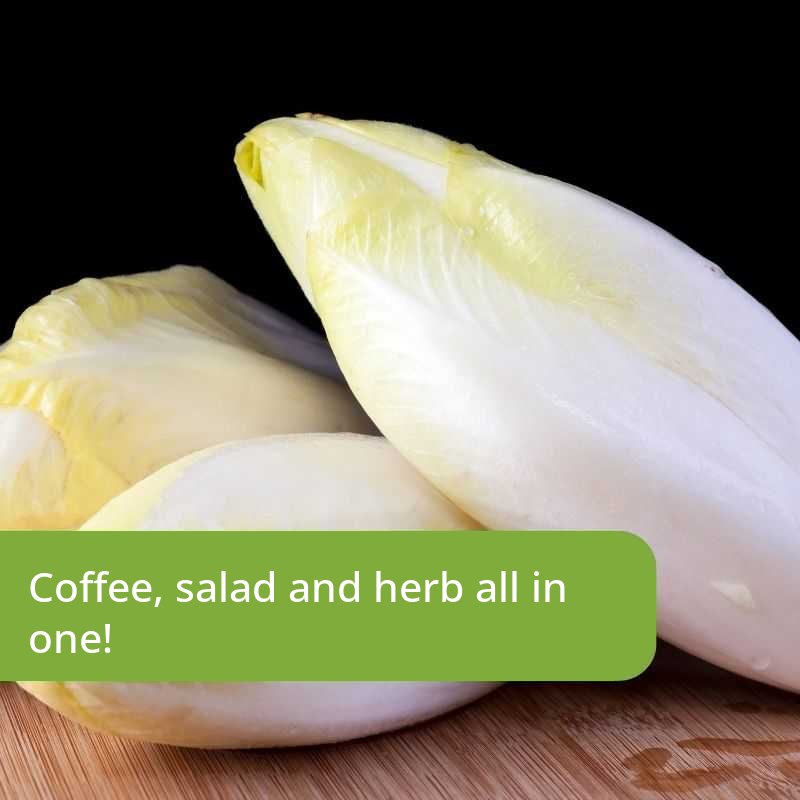
The Greeks and Romans already knew about its beneficial effects, and as medicine has developed, many new properties have been recognised. Even so, chicory is still undeservedly little known in Hungary. It is known mainly as a coffee substitute or coffee ingredient, yet it is much more than that! It can also have a place in the diet of people with diabetes and people with food sensitivities.
But what is chicory?
Put simply, it is a salad plant. It looks just like the salads we know. Coffee is made from its root, which also has notable physiological effects. The root is also used to produce inulin, which is classed as a prebiotic. According to studies, the plant contains significant amounts of antioxidants, vitamins and minerals, and it is high in fibre.
In the 1600s it was used to treat liver and gallbladder complaints and urinary tract infections; the buds of the plant were eaten pickled, and its flowers and leaves as salad. Its powdered and then roasted root was used as a coffee substitute.
Chicory inulin, at 12 grams a day, contributes to normal bowel function by increasing stool frequency. It can also be included in the diet of people with diabetes; discuss this with your doctor or dietitian. Inulin is a fructan, however, so with fructose intolerance or IBS it can also cause bloating.
Chicory can be served as a salad alongside main courses, or eaten steamed or as a vegetable stew. Admittedly, its slightly bitter taste may seem unfamiliar at first, but with a little imagination and some spices you can make it piquant.

Don't just get the school bag ready
Starting school is not only about new exercise books and a changed daily routine but also about reorganising family meals. The FOODTEST Children's pac...
IBS and food intolerance: can diet help?
Several factors may lie behind irritable bowel syndrome, and the role of diet may also come up. The article explains in plain terms how certain foods...
Do you have to give up tasty food with a food intolerance?
Free-from or diet cooking does not mean going without: with the right ingredients and tricks, you can make tasty, varied dishes at home too.
Free download (PDF)
Elimination starter kit
Leaving foods out and bringing them back, step by step, without your plate going empty.