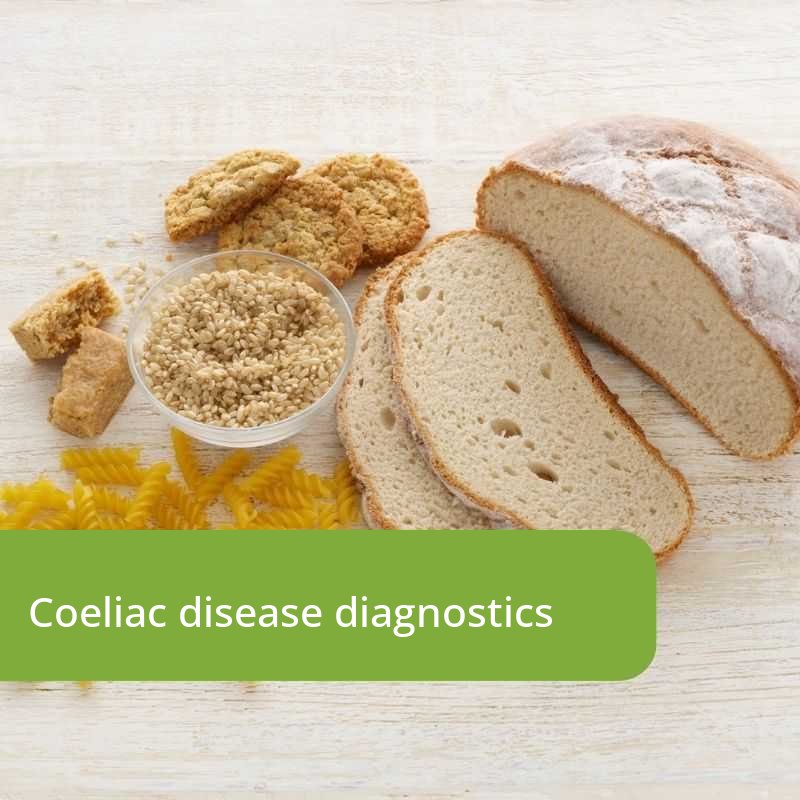
Coeliac disease is an autoimmune condition caused by an intolerance to the protein gliadin. According to research, 1 in 100 people has coeliac disease, but only 1 in 10 of those affected knows about it. Many people only find out after serious complications have developed that their chronic complaints and poor health were caused by gluten-containing foods. For people with coeliac disease, it is very important to be aware of their food intolerance!
Coeliac disease is a lifelong condition; if untreated, it can lead to vitamin and mineral deficiency, cancerous changes in the small intestine, anaemia and infertility.
FOODTEST 200+ does not detect coeliac disease, but it measures IgG antibodies produced against gluten (gliadin) and transglutaminase, and every cereal is included in the test panel. This means that for our patients with suspected coeliac disease we indicate separately if further testing is needed. Before diagnostic procedures you must eat enough gluten for the disease to be reliably ruled out or confirmed, so the additional tests must be carried out before starting a diet.
Coeliac disease may come with typical digestive symptoms: diarrhoea, bloating and fatty stools. Because of damage to the intestinal lining, it is often accompanied by lactose intolerance, as the amount of lactase, the enzyme that breaks down milk sugar, decreases in the gut. Digestive complaints may also include chronic constipation, aphthae and mouth ulcers.
In the past decade it has been shown that, without dietary treatment, coeliac disease increases the risk of cancers of the small intestine, large intestine, stomach and oesophagus, as well as of non-Hodgkin lymphomas.
Damage to the small intestine reduces the absorption of carbohydrates and fatty acids, leading to an energy deficit in the body, and anaemia is common in people with coeliac disease. Iron, folic acid or vitamin B12 deficiency may also develop; in the long term, poor absorption of calcium and vitamin D may cause bone pain, vitamin A deficiency increases susceptibility to infections, and vitamin K deficiency may lead to a tendency to bleed.
The disease often does not appear primarily with digestive symptoms, but as a deficiency condition resulting from malabsorption: fatigue, general malaise, psychological problems, hair loss.
Coeliac disease often occurs together with autoimmune diseases; for example, the link between type 1 diabetes and coeliac disease has long been known. Skin problems may also point to gluten sensitivity: itchy, herpes-like lesions often appear on the elbows, knees and shoulders, but can develop anywhere on the body. Coeliac disease can also be associated with various liver and biliary diseases.
Besides genetic predisposition (heredity), environmental factors also play a role in the development of coeliac disease. It has been shown that certain pathogens, viruses, stress, and stomach and bowel surgery may contribute to its development. Breastfeeding, on the other hand, may prevent or reduce the later onset of coeliac disease.
The primary source of gluten is wheat. Rye, barley and spelt also contain gluten. For people living with food sensitivity, however, it is very important to seek professional help at least when setting up their diet, because poorly chosen substitute foods can lead to deficiency conditions.

Don't just get the school bag ready
Starting school is not only about new exercise books and a changed daily routine but also about reorganising family meals. The FOODTEST Children's pac...
IBS and food intolerance: can diet help?
Several factors may lie behind irritable bowel syndrome, and the role of diet may also come up. The article explains in plain terms how certain foods...

Do you have to give up tasty food with a food intolerance?
Free-from or diet cooking does not mean going without: with the right ingredients and tricks, you can make tasty, varied dishes at home too.
FOODTEST newsletter
Food intolerance tips and recipes by email
Practical diet tips and recipes, straight to your inbox.