All the key information about FOODTEST food intolerance tests in one place

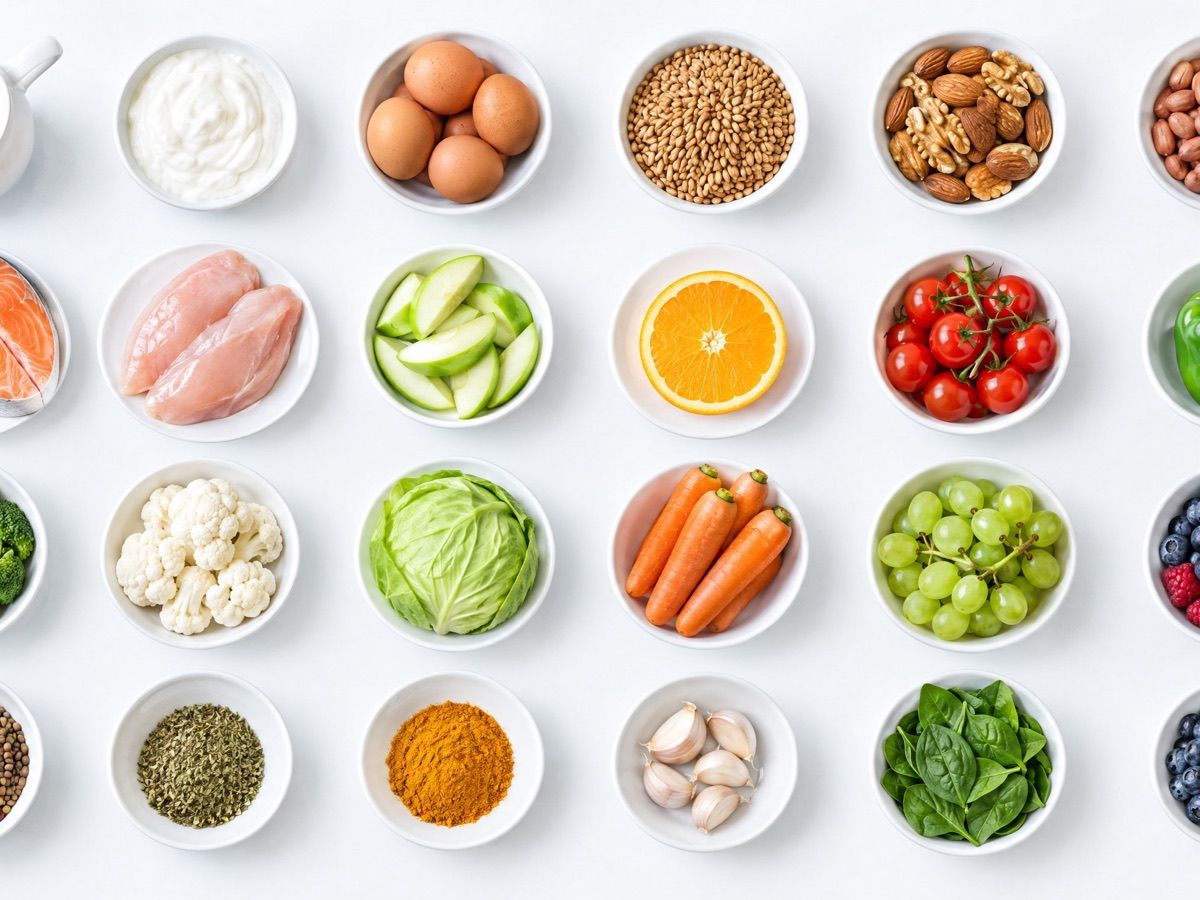





As far back as the time of Hippocrates, people recognised how important proper nutrition is for a healthy life.
Food intolerance can show itself in many different symptoms. The most common are digestive disorders such as diarrhoea, constipation, bloating, abdominal cramps, abdominal pain, but it may also appear as central nervous system complaints – such as insomnia or chronic headaches –, skin problems – such as eczema or spots – as well.
Managing food intolerance rests on identifying the foods behind the complaints and leaving them out for a while, with a specialist’s guidance. A food intolerance test gives a dietary starting point for this; the result is not a medical diagnosis, and persistent or alarming symptoms need a doctor first.
What is food intolerance, and what lies behind it?
The concept of food intolerance
Food intolerance is not a clearly defined term even among professionals. In fact, any condition in which symptoms can be linked to eating food may be called food intolerance. On this basis, food intolerance is a broad umbrella term that includes food allergy, histamine sensitivity, lactose intolerance, fructose malabsorption, complaints caused by other components of food (e.g. glutamate, phenylethylamine, etc.) and the disputed IgG intolerance.
Food allergy
The symptoms of food allergy are characteristic (skin and gastrointestinal symptoms, and in severe cases breathing difficulties and circulatory collapse) and develop shortly after eating the triggering food, so the trigger can usually be suspected. The mechanism by which the condition develops is known and accepted as proven. The key factor in the process is the production of IgE-type antibodies against various food components (mainly proteins). The condition can be diagnosed in the laboratory by measuring antibodies of this type.
Intolerance not caused by food allergy
Many chronic diseases are known whose symptoms can be reduced with a special diet. These include not only gastrointestinal diseases but also, among others, chronic skin diseases and psychiatric disorders (J Sarris et al.: Lancet Psychiatry 2015, 2:271-274, http://dx.doi.org/10.1016/S2215-0366(14)00051-0), which can be significantly improved with diet, although the triggering foods are hard to identify. One way of identifying the triggering foods is an elimination diet: strictly leaving out one food for one week while monitoring the symptoms, then leaving out a further food and recording the symptoms. If several different foods may be responsible for triggering the condition, this process can take months, requires great patience and is easy to get wrong. Measuring IgG produced against food components makes it possible to put together a diet that significantly improves the patient's symptoms without trial and error, under the guidance of a dietitian or nutrition expert. For example, in the management of irritable bowel syndrome it is accepted that the patient's condition can be improved by changing the diet. One way of setting up the diet is to build it on the identification of IgG-reactive foods. Some specialists try everything to improve their patients' condition and already know from experience that an elimination diet can bring significant improvement.
There is, however, one disease whose symptoms are not very characteristic and whose diagnosis is very important: coeliac disease (true gluten intolerance). Lifelong, continuous gastroenterological follow-up is essential for people with confirmed coeliac disease.
How are IgG antibodies against food components produced?
While the development of food allergy is clearly proven, the interpretation of how other antibodies are produced is still debated, even though many studies on the details of this process have been published in high-quality journals. The participants in the process are the intestine (absorption), the immune system (tolerance or defence) and the vast mass of microbes living in the gut (the microbiota, and its genetic material, the microbiome).
Absorption of food
The epithelial cells of the small intestine play the main role in absorbing food. Between the cells there is a protein structure that blocks the inflow pathway (the so-called tight junction), which lets through only small molecules and positively charged ions. Small molecules and molecular subunits do not provoke an attack from the immune system. A large proportion of the large molecules in food are broken down into their subunits by enzymes in the digestive tract. These do not provoke a defensive reaction either. Undigested molecules that enter the absorbing cells are partly broken down into smaller pieces. Inside the cell they bind to certain proteins involved in defence processes. Large molecules that pass through in this way prompt the immune system not to attack but to accept them (tolerance). According to more recent data, undigested protein molecules enter not only through the absorbing cells but also through the mucus-producing goblet cells. Protein entry by this route also results in tolerance.
Fasano's research showed that epithelial cells can produce a molecule (which he named zonulin) that leads to the breakdown of the structure between the epithelial cells, and the larger molecules flooding in there prompt the immune system to attack. A similar consequence occurs when, in certain pathological conditions (e.g. iron deficiency), defence-triggering proteins bound by antibody molecules pass intact through the absorbing epithelium.
The gut-associated lymphoid tissue (GALT) detects the molecules that call for a defensive response and eventually triggers the production of various types of antibodies (including IgG molecules).
There are four subclasses of IgG-type antibodies: IgG1, IgG2, IgG3 and IgG4 (numbered according to their concentration in the blood). IgG4 is present in the smallest amount. The first food intolerance tests to be produced measured IgG4 molecules exclusively. However, research in recent years has shown that this molecule does not take part in the final destruction of an intruding component perceived as dangerous. Many inflammation-triggering molecules are produced in this step. IgG4 therefore tends to act as a brake on excessively prolonged immune reactions that may harm the body, and on allergic processes. For this reason, the European Academy of Allergy and Clinical Immunology (EAACI) emphasised in a methodological position paper that the IgG4 test is not suitable for determining an elimination diet. Tests that measure only IgG4 are often positive simply when someone eats a lot of a particular food frequently. Many people have generalised this position to tests that measure total IgG levels, such as FOODTEST 200+. In fact, IgG1, IgG2 and IgG3 are able to activate the protein complement system in the body, which results in the production of inflammation-triggering molecules and thus in complaints. Histological specimens have confirmed that in intolerant patients the food protein–IgG complex activates the complement system.
In summary, an inadequately digested food component entering the body may provoke inflammation. One of the initiators of this process may be IgG antibodies produced against the food component.
Some characteristics of antigen–antibody binding
Although antibodies bind to a specific part of a given protein or other large molecule (the so-called antigen epitope), they may also be able to bind to similar protein components found in distantly related species. This is called cross-reaction. Its practical significance is well known from allergology. For example, someone who is allergic to dust may well react with similarly severe allergic symptoms to eating invertebrates (seafood: mussels, crabs, octopus, squid). Another example: people sensitive to ragweed are advised not to eat members of the gourd family (pumpkin, melon, courgette, cucumber), sunflower seeds or bananas while the plant is in flower. These phenomena are known mainly in connection with common inhaled allergens. They are less well mapped for foods and other consumed substances that receive less attention. For example, ginkgo may cross-react with the sumac family (sumac, mango, pistachio, cashew, and sumac the spice used in Middle Eastern cuisine), and poppy seed with sesame seed, hazelnut, rye, buckwheat, kiwi and silver birch pollen.
Besides the fact that an antibody may bind to different molecules, it must also be taken into account that a given large molecule has several antigen epitopes, meaning that different antibody molecules can bind to different reactive parts of the molecule. Proteins take on a characteristic three-dimensional structure, often coil-like. Only the surface of an intact protein is visible to the immune system. If this structure changes as a result of some effect (e.g. heat), that is, the molecule unfolds, a more deeply located epitope may prompt the immune system to react and produce antibodies. Heat-treated molecules are therefore not immunologically identical to the native molecule. In the FOODTEST 200+ test, the position labelled "polenta" contains nixtamalised maize extract. During nixtamalisation, maize kernels are cooked in a mildly alkaline solution (dilute slaked lime solution), then washed and dried. The extract found here therefore differs in immunoreactivity from the one labelled "maize". If either of them is positive in the evaluation, it is advisable to leave maize-containing foods out of the diet. Similarly, couscous and wheat also differ immunologically. If either of them is positive, leaving it out is recommended.
A further unusual factor in the FOODTEST 200+ test is that, because of its special chemical properties, gliadin is not included in the extracts of gliadin-containing grains. This is because the food extracts fixed in the test are prepared as aqueous extracts, whereas gliadin dissolves only in alcohol. It is therefore listed separately. So it is possible for gliadin to be negative while one of the gliadin-containing grains (e.g. wheat) is positive: this means that antibodies have been produced against another protein of that grain. It may also happen that gliadin is positive while none of the grains is. This, however, means that antibodies have been produced against gliadin, and in this case it is advisable to leave all gliadin-containing grains out of the diet (even though they gave a negative result in the test).
The number of articles dealing with the importance of the microbiota has grown steadily over the past decade. A healthy gut flora is an ecological system that suppresses pathogenic components and supplies the intestine and the body with nutrients and important biologically active molecules. Medicines (not only antibiotics, but also drugs that affect stomach acid production and anti-inflammatory/painkilling drugs) can upset this balance and lead to the overgrowth of harmful components, contributing to the development of many diseases.