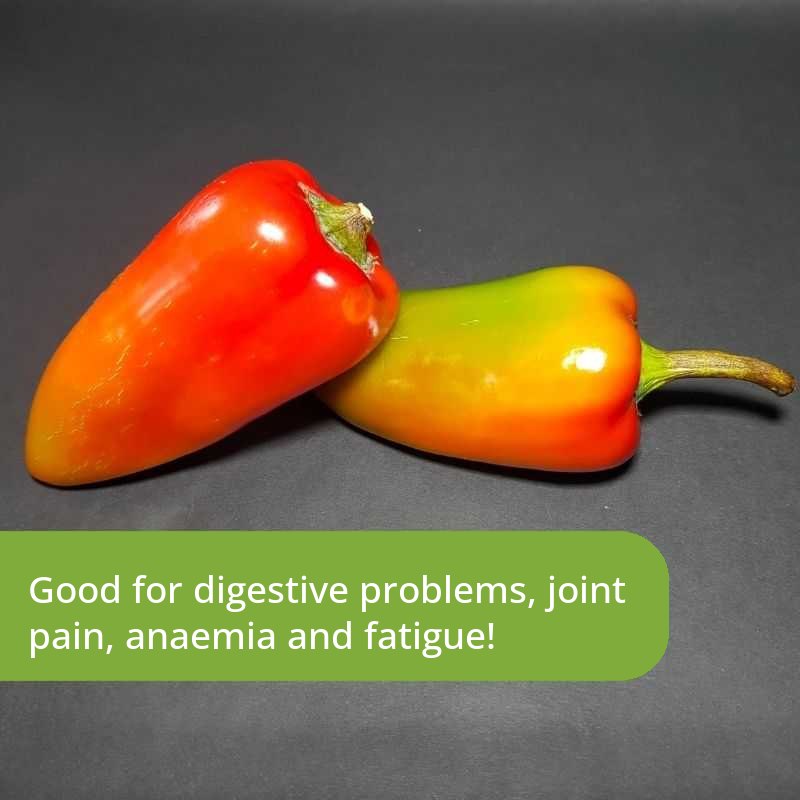
From ornamental plant to medicinal herb, and then to spice.
In its native South America, paprika (pepper) was first used as an ornamental plant and later as a medicinal herb. Columbus brought it to Europe, but it is said to have reached Hungary from India through the Turks.
However it arrived, it gives Hungarian cuisine its excellence and uniqueness, as Hungarians were the first to use paprika as a spice in its own right. The fame of Kalocsa and Szeged paprika is due to various breeding efforts.
Paprika is a truly colourful, attractive plant, so it is no wonder that its beauty alone captivated noble courts. Thanks to breeding over the past centuries, it is now grown all over the world in countless colours and flavours.
What all peppers have in common is a very high content of vitamin C and vitamin A. The redder the pepper, the more vitamin C it contains, but even the simplest green pepper contains twice as much vitamin C as citrus fruits. The plant also contains provitamin, potassium, phosphorus, calcium and bioflavonoids; several of these are antioxidants. The vitamin A formed from its provitamin (beta-carotene) contributes to the maintenance of normal skin, mucous membranes and vision.
Capsaicin accumulates in the veins of the fruit and in the seeds, causing a burning sensation and watery eyes when eaten. This gives paprika its greatest virtue: its pain-relieving effect. Through breeding, however, this pungent substance has disappeared from some varieties, and today we distinguish between hot and mild paprika.
In its native land it was mainly used to aid digestion, prevent scurvy, relieve joint pain, treat anaemia, and in cases of loss of appetite and fatigue. According to folk medicine records, paprika soothes sore throats and, because it thins the thick mucus stuck in the sinuses, it is good for a blocked nose; it also contains expectorant substances.
Paprika is a Hungarian speciality not only as a spice but also as a food – after all, it is the basis of lecsó. Almost every nation has a national dish made entirely from plants – ours is the vitamin bomb cooked from onions, tomatoes and peppers: lecsó.

Don't just get the school bag ready
Starting school is not only about new exercise books and a changed daily routine but also about reorganising family meals. The FOODTEST Children's pac...
IBS and food intolerance: can diet help?
Several factors may lie behind irritable bowel syndrome, and the role of diet may also come up. The article explains in plain terms how certain foods...
Do you have to give up tasty food with a food intolerance?
Free-from or diet cooking does not mean going without: with the right ingredients and tricks, you can make tasty, varied dishes at home too.
FOODTEST newsletter
Food intolerance tips and recipes by email
Practical diet tips and recipes, straight to your inbox.