Nobody knows the exact origin of the mysterious and versatile plum, but its traceable roots go all the way back to Western Asia. Even researchers can only assume that its original home is the eastern Mediterranean basin. What is certain is that it reached Europe through the Romans, but the ancient Hungarians were already fond of it too, as we can infer from place names such as Szilvásvárad, Szilvágy, Szilvás and Szilvásszentmárton (szilva is Hungarian for plum).
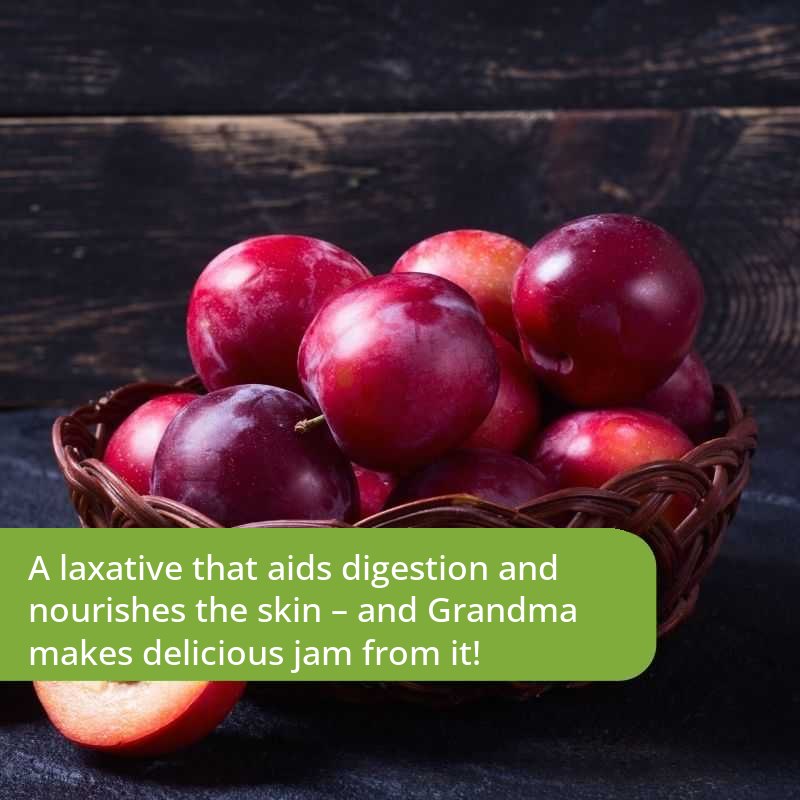
The plum is a stone fruit belonging to the rose family; the greengage, of the same species, is related to the almond and the peach. Today at least two thousand varieties are known worldwide, and plums can be yellow, green, red, crimson, burgundy, blue or purple. Their shape can also vary: we know elongated, round and even egg-shaped ones.
The flavoursome, fleshy, juicy plum is low in calories and contains no saturated fat, yet it is rich in vitamins, minerals and other useful nutrients!
Plums are used primarily as a laxative, as they were by our ancestors, since the fibre, sorbitol and isatin they contain promote metabolism in the digestive system.
They are an excellent source of vitamin C, which is an effective antioxidant. Plums are also high in anthocyanins and quercetin. The vitamin A in the fruit has a beneficial effect on vision and on keeping the skin and mucous membranes healthy.
You can read more about the possible causes of skin symptoms, and whether diet may play a part in them, on our skin problems page.
They also contain antioxidants such as lutein, zeaxanthin and cryptoxanthin. These compounds are antioxidants too.
Plums are rich in minerals such as potassium, iron and fluoride. Iron contributes to normal formation of red blood cells and haemoglobin, and potassium to the maintenance of normal blood pressure. They also contain vitamin B6, pantothenic acid and vitamin K.
In Hungary, plums have been used in many ways for centuries. Szatmár plum jam and plum pálinka, made exclusively from plums and regarded as Hungaricums, are well known. The yellow-fleshed, bloomy-blue Besztercei plum, also known as the long plum, is very popular beyond our borders too – according to some records, it spread from Hungary under the name Hungarian Plum to Central and Western Europe and even North America. Of course, Besztercei plum pálinka enjoys a similar reputation.

Don't just get the school bag ready
Starting school is not only about new exercise books and a changed daily routine but also about reorganising family meals. The FOODTEST Children's pac...

IBS and food intolerance: can diet help?
Several factors may lie behind irritable bowel syndrome, and the role of diet may also come up. The article explains in plain terms how certain foods...

Do you have to give up tasty food with a food intolerance?
Free-from or diet cooking does not mean going without: with the right ingredients and tricks, you can make tasty, varied dishes at home too.
FOODTEST newsletter
Food intolerance tips and recipes by email
Practical diet tips and recipes, straight to your inbox.