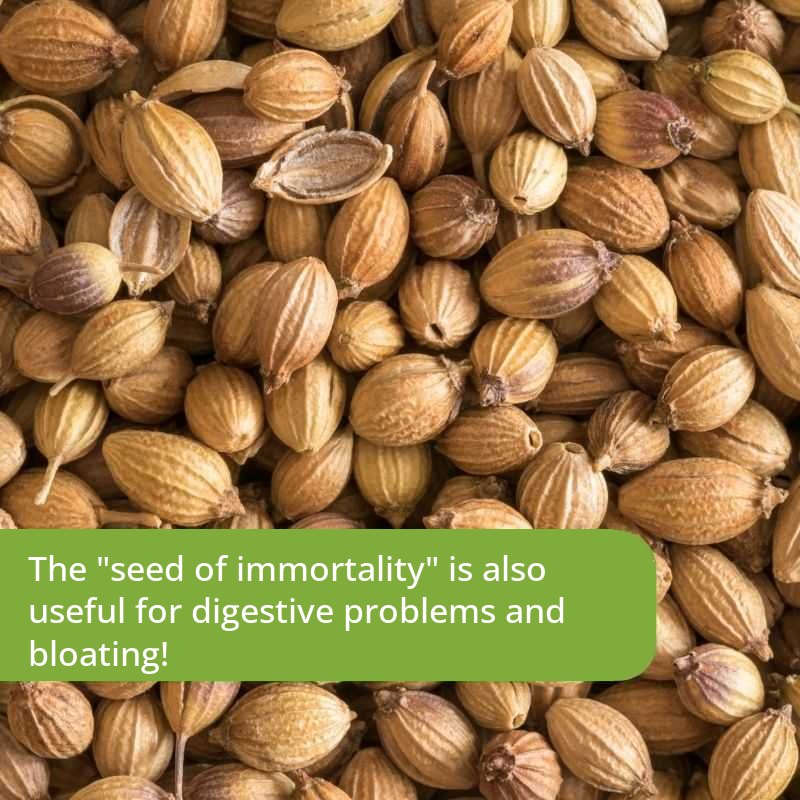
The Chinese chewed coriander seeds in the hope of eternal life, and because of its effects this herb is surrounded by other beliefs too.
Coriander, known but less used in Hungary, originates from the Mediterranean region, and it appears as a wonder remedy in both cooking and medicine in the Bible and in Sanskrit texts. The ancient Greeks, Egyptians and Romans used it mainly to improve digestion and as a cleansing agent, but if we are to believe Scheherazade, it also works as an aphrodisiac!
If bloating or another digestive complaint keeps coming back, you can read more about the possible causes and the role of diet on our digestive problems page.
Coriander leaves and coriander seeds cannot replace each other, as they contain different essential oils. These are found in every part of the plant: the seeds mainly contain linalool and geraniol, while the leaves and roots contain oleic acid, tannins and flavonoids, among others. Tradition credits coriander seeds and their essential oils with calming, diuretic, anti-bloating and antispasmodic effects, and they are also used to help the production of digestive juices. Its antibacterial effect is also being studied in the laboratory, and it is an important source of vitamins A and C.
As a spice, coriander is mainly found in Eastern and Indian dishes; in Hungary it is used rather to flavour pickled vegetables, even though it is a versatile spice. Its leaves, seeds and roots are all useful and can make our food tasty, and it is a very easy-to-grow, undemanding plant.
Thanks to their piquant flavour, they are good ingredients for marinades and spice mixes, and go well with roast meats, cabbages, sauces and soups. They are also excellent for flavouring breads, baked goods and sweets. In Hungary it is available both ground and whole – but it is also worth getting to know the fresh form grown in pots.
It looks very much like parsley, the everyday soup herb in Hungary, which is probably where its folk names come from: "gypsy parsley", "Chinese parsley", "zergefű" or "beléndfű".

Don't just get the school bag ready
Starting school is not only about new exercise books and a changed daily routine but also about reorganising family meals. The FOODTEST Children's pac...
IBS and food intolerance: can diet help?
Several factors may lie behind irritable bowel syndrome, and the role of diet may also come up. The article explains in plain terms how certain foods...
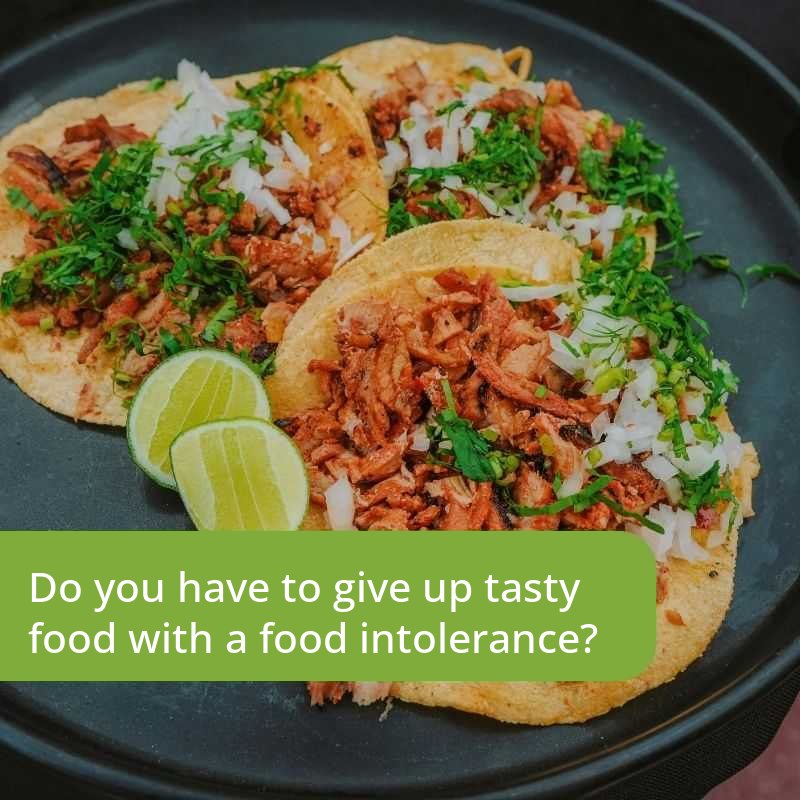
Do you have to give up tasty food with a food intolerance?
Free-from or diet cooking does not mean going without: with the right ingredients and tricks, you can make tasty, varied dishes at home too.
FOODTEST newsletter
Food intolerance tips and recipes by email
Practical diet tips and recipes, straight to your inbox.