In this article
Source: J H Wu, R Micha and D Mozaffarian: Nature Reviews Cardiology 2019, 16:581-601
Translated by: Dr Károly Krkos, 10 March 2020
The effects of fats on cardiovascular disease and type 2 diabetes have long been studied. Early studies used a single surrogate endpoint (e.g. the change in serum cholesterol in response to fat intake). Over the past two decades, based on many new methodological principles, several large randomised controlled trials (RCTs) have been carried out with evaluation of multiple endpoints. It is becoming increasingly certain that the physiological effects of the fats consumed vary and depend not only on the fatty acid composition of the fat, but also on its source, how it interacts with other nutrients, the composition of the food matrix and the method by which the food was prepared.
The effects of fats on cellular processes
Key points
- Besides being important sources of energy, fatty acids modify many cellular processes, including the regulation of transcription, the membrane structure and function of cells and cell organelles, ion channel activity and electrophysiological processes.
- Fats consumed as food contain many different fatty acids, whose physiological effects and sources differ.
- There is strong evidence that reducing total fat intake has no beneficial effect.
- Evaluating the saturated fatty acids (SFA) and monounsaturated fatty acids (MUFA) found in a wide variety of foods separately, according to their food sources and types, may help us understand their physiological effects.
- Much data supports a positive cardiometabolic effect of polyunsaturated fatty acids (PUFA), namely of consuming n-6 PUFA and n-3 PUFA from seafood.
- People eat complex foods, not pure fatty acids, so dietary recommendations should emphasise the dietary sources that contain fatty acids of the right composition.
Fatty acids are classified according to several criteria: those without double bonds are saturated fatty acids (SFA), those with a single double bond are monounsaturated (MUFA), and those with several double bonds are polyunsaturated fatty acids (PUFA). Among the latter, n-3 (or w3) and n-6 (or w6) fatty acids are distinguished, depending on whether the last double bond is 3 or 6 carbon atoms from the terminal methyl group. On the other hand, depending on the length of their carbon chain, we speak of short-chain (2–6 carbon atoms, short chain fatty acid, SCFA), medium-chain (8–12 carbon atoms, medium chain fatty acid, MCFA), long-chain (14–18 carbon atoms, long chain fatty acid, LCFA) and very long-chain (20–24 carbon atoms, very long chain fatty acid, VLCFA) fatty acids. Some saturated fatty acids are also branched-chain. Those with double bonds have cis and trans isomers (depending on whether the parts of the molecule on either side of the double bond, which cannot rotate, point in the same or opposite directions). Mammals synthesise cis isomers, whereas trans fatty acids are formed by certain bacteria in cattle, sheep and goats, and during the industrial hydrogenation of vegetable oils.
Membrane structure and function
The incorporation of specific fats into the phospholipids of cell and organelle membranes changes the characteristics of the lipid microdomain around transmembrane receptors. These lipid rafts modulate various cellular processes (transcription activation, signal transduction, protein production).
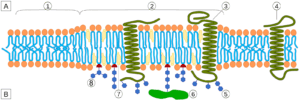
Figure by Artur Jan Fijałkowski (Lipid raft, Wikipedia)
A. Intracellular space or cytosol
B. Extracellular space or vesicle/Golgi apparatus lumen
1. Non-raft membrane
2. Lipid raft
3. Lipid raft-associated transmembrane protein
4. Non-raft protein
5. Glycosylation modifications (on glycoproteins or glycolipids)
6. GPI (glycosylphosphatidylinositol)-anchored proteins
7. Cholesterol
8. Glycolipid
Phospholipids containing trans fatty acids bind cholesterol with greater affinity than phospholipid-bound cis fatty acids, and thus reduce the activation of rhodopsin (a G protein-coupled membrane receptor, GPR), which is essential for vision. SFAs can modify the recruitment of Toll-like receptors (TLRs), which are important in innate immunity, and thus inflammatory responses. n-3 PUFA-mediated modulation of lipid rafts leads to changes in cytokine production and immune cell function: TLR4 levels decrease and the efficiency of GPR signalling increases.
Ion channels and electrophysiology
Certain fatty acids alter membrane ion channels. Based on in vitro studies, n-3 PUFAs affect the transmembrane sodium channel, the sodium–calcium exchanger and the L-type calcium channel. Arachidonic acid, one of the n-6 PUFAs, influences the activity of many ion channels both directly and indirectly (through its metabolites, the eicosanoids).
Regulation of transcription
One important function of dietary fats is the direct regulation of gene expression. Non-esterified fatty acids and their acyl-coenzyme A thioesters are natural ligands of many nuclear receptors and transcription factors, such as peroxisome proliferator-activated receptors (PPARs), retinoid X receptors (RXRs) and liver X receptors (LXRs). Fatty acids also affect gene expression through certain cell-surface GPR receptors (free fatty acid receptors), and thus influence many critical metabolic pathways. For example, palmitic acid (a 16-carbon SFA) reduces the availability of endothelial progenitor cells via the PPARg receptor and thus impairs vascular regeneration. α-Linolenic acid (an 18-carbon n-3 PUFA with 3 double bonds) and oleic acid (an 18-carbon n-9 MUFA) reduce tissue inflammation and insulin resistance. n-3 PUFAs exert their triglyceride-lowering effect through genetic pathways, by acting on hepatic VLDL production and by increasing VLDL clearance.
Bioactive metabolites
Many bioactive metabolites are formed from fatty acids. These include the eicosanoids, formed enzymatically and non-enzymatically from polyunsaturated fatty acids (PUFAs), whose role in cardiometabolic processes is becoming increasingly evident. Others are the mono-epoxides (MEFAs) generated by cytochrome P450, e.g. epoxyeicosatrienoic acid, and the specialised pro-resolving mediators (SPMs), such as resolvins and protectins. The effects of MEFAs: reduced inflammation, weaker tissue fibrosis, improved vasodilation. SPMs play an important role in the active resolution of inflammation (e.g. improved ventricular function and myocardial healing after myocardial infarction – a result from animal studies).
Consumption of w3 fatty acids raises MUFA and SPM levels in tissues and in the circulation within days to weeks. Leukotrienes (e.g. LTB4), prostaglandins (e.g. PGE2) and thromboxanes are also formed from arachidonic acid.
Total fat intake
Key findings
International guidelines historically recommended reducing fat intake on the basis of older ecological studies, which showed that dietary fat raises cholesterol and LDL cholesterol levels. These principles were gradually changed by studies showing that reducing fat intake has no beneficial effect. According to the US guidelines in force between 1980 and 2000, fat intake should cover ≤30% of calorie requirements; in 2005 this was changed to between 20 and 35%. The more recent DGAC (Dietary Guidelines Advisory Committee) report published in 2015 recommends removing the limit on total fat intake altogether, based on the following study results:
- In overweight and obese people, a low fat intake did lower cholesterol and LDL cholesterol levels, but at the same time the levels of triglyceride-rich lipoproteins rose and HDL cholesterol levels fell.
- RCTs (randomised controlled trials) studying the effect of reduced carbohydrate and increased fat intake in people with diabetes showed reductions in haemoglobin A1c levels and in the need for medication.
- According to several studies of total fat intake, the level of total fat intake had no effect on either cardiovascular events or type 2 diabetes.
- The largest dietary RCT to date, the WHI (Women’s Health Initiative), studied nearly 50,000 postmenopausal women, comparing those on a low-fat diet with those on a normal diet. Although total fat intake was reduced from 37.8 E% to 28.8 E% (a relative reduction of 24%), no difference was found in the incidence of coronary heart disease, stroke or diabetes. The women’s tendency towards atherogenic dyslipidaemia (low HDL cholesterol, high triglyceride levels) increased, and the intake of glycaemic carbohydrates had unfavourable effects.
- In contrast to the WHI study, in the PREDIMED trial one group of patients was prescribed a high-fat Mediterranean diet (using extra virgin olive oil or a mix of nuts) compared with the control group. Cardiovascular and diabetes risk was significantly lower in the intervention group; fat intake was 41 E% versus 37 E% in the control group.
These RCTs showed that a diet with reduced fat intake has no advantage, whereas a higher intake of fats from healthy foods reduces cardiovascular risk. The emphasis has therefore shifted from studying total fat intake to evaluating the effects of the types of food sources.
Controversial areas
Contradictions in national and international guidelines on total fat intake
While the 2015 US DGAC recommendation places no upper limit on total fat intake, the US Institute of Medicine’s 2002 statement, which includes an upper limit of 20–35 E%, has remained in force. The WHO has stuck with the even older restriction (≤30 E%).
It is problematic that in public life (consumer forums, school education) the importance of reduced fat intake is still promoted despite the new results. Manufacturers also market their reduced-fat products with much publicity, yet these products are highly processed and contain large proportions of refined starches, added sugars and salt.
Low-fat or low-carbohydrate diets for weight loss and against diabetes
Because the calorie content of fats (9 kcal/g) is higher than that of carbohydrates and proteins (4 kcal/g), reduced-fat diets were prescribed for weight loss and weight control. More recent studies, however, have shown that the effect of a high-fat, low-carbohydrate diet is similar to or better than that of a low-fat, high-carbohydrate diet, both in terms of weight loss and the reduction of metabolic risk factors. Meta-analyses indicate that a high-fat, low-carbohydrate diet is more effective in achieving glycaemic control in people with diabetes. An RCT studying weight loss compared the effect of an ad libitum (unrestricted) high-fat, low-carbohydrate diet with a low-fat, high-carbohydrate diet. According to its results, the high-fat, low-carbohydrate diet led to significant weight loss and improved body composition, whereas on the low-fat, high-carbohydrate diet muscle mass decreased and weight loss was moderate. It should be noted that most of the studies were limited to less than 2 years. The PREDIMED study, which examined cardiovascular outcomes, covered a 5-year period. It did not focus on weight loss; the higher-fat diet was achieved by giving participants extra virgin olive oil or nuts. In this group BMI was similar, but waist circumference decreased compared with those on the low-fat diet. Further long-term randomised controlled trials that also examine the sources of nutrients would be needed. In modern life (considering the foods available in shops and restaurants), carbohydrate-rich diets contain refined starches and sugars. A low-carbohydrate diet contains few refined carbohydrates and is truly effective when the higher fat content comes from healthy fats. If the diet favours less processed, low glycaemic index, polyphenol-rich foods, the ratio of fats to carbohydrates is probably less important for achieving weight loss.
The potential dangers of a diet with very low total fat intake
A large international study, PURE, examined the effect of a very low-fat diet (<10 E%) on all-cause mortality, evaluating data from about 130,000 people living in 18 countries (including low-, middle- and high-income areas). There was a significant difference in mortality between the highest and lowest quintiles, and semi-parametric analysis showed a non-linear downward trend in mortality as the fat content of the diet increased. Analysing cause-specific mortality, the low-fat diet increased the frequency of death from stroke and non-cardiovascular (non-coronary) causes. Because the PURE study also included residents of low-income countries, it cannot be ruled out that the results were also influenced by the poor socio-economic conditions in these countries. The ARIC study carried out in the USA, which also examined the effect of a high-carbohydrate diet with low fat (and low protein) intake, likewise found that this diet is associated with higher total mortality.
Future directions
It is essential that the newer results be incorporated into dietary guidelines and become widely known. At the same time, it has also been suggested that future studies should focus not on the ratio of macronutrients but on their types and sources. Genetic and demographic differences, differences arising from microbiome composition and many other relevant medical and individual factors should also be taken into account so that personalised dietary advice can be prepared. (For example, variations in the APOC3 and APOE genes can modify blood lipid levels or glycaemic responses to a fat-containing diet.) In summary, it is not yet clear whether personalised dietary counselling or conventional dietary recommendations based on population studies achieve more in reducing cardiometabolic risk.
The main classes of dietary fats
The main lines of evidence
Meta-analyses of RCTs on controlled feeding and changes in blood lipids
In controlled feeding studies, SFAs (most of which, in the Western-type diet, consist of the 16-carbon palmitic acid) raise serum LDL-C concentration, which is a risk factor for coronary heart disease. The effects of different types of fat on serum lipids are, however, more complex. With an isocaloric change, if the reduction in SFA is replaced with carbohydrate, LDL-C and apolipoprotein B (ApoB) decrease, but HDL-C levels also fall, triglyceride concentration rises, and the cholesterol/HDL-C ratio does not change significantly. Replacing SFA intake with carbohydrate shifts the composition of LDL particles towards (potentially more atherogenic) small dense LDL. Replacing SFAs with MUFAs (in the diet almost entirely oleic acid) or PUFAs, mainly linoleic acid (an 18-carbon n-6 PUFA with two double bonds), lowers LDL-C, triglycerides, ApoB and ApoA-I and the cholesterol/HDL cholesterol ratio, although HDL-C levels also fall.
When evaluating the effect of fats on blood lipid levels, several critical points need to be considered:
Although the evidence is not as robust as for LDL-C, triglyceride levels (VLDL cholesterol, chylomicrons, chylomicron remnants) are also causally related to cardiovascular disease (CVD) and total mortality (based on studies of cholesterol-lowering drugs and Mendelian randomisation studies).
Although HDL-C concentration is not causally related to CVD, it is an independent and strong predictor of it, and thus at least a surrogate marker of another risk.
Using a single surrogate to measure the effect of an intervention, even one as important as LDL-C, is only valid for measuring clinical effect if the intervention has no other or multiple (pleiotropic) effects.
Dietary lipids have many effects, so using a single surrogate (LDL-C) leads to misleading conclusions when evaluating clinical effects.
Meta-analyses of controlled feeding and glycaemic control
Replacing total SFA intake with carbohydrate has no significant overall effect on the glycaemic response. MUFAs and PUFAs incorporated into the diet have favourable effects on HbA1c levels and on insulin resistance as assessed by the HOMA index, and increasing the proportion of PUFAs brings further improvement in insulin secretory capacity. Increasing MUFAs alone may also be beneficial, but this is still contradictory for the time being and may be influenced by the type of food source.
Prospective observational studies using clinical endpoints
Total SFA consumption is not associated with coronary heart disease, stroke or diabetes. According to long-term observational studies, total dietary MUFA intake (mainly oleic acid) has a fairly neutral effect on cardiometabolic risk. This observational finding contrasts with the RCT findings that MUFA has a good effect on blood lipids, HbA1c and the HOMA index that defines insulin resistance. The observations of observational studies may be affected by the different food sources. Plant-based MUFA sources (e.g. extra virgin olive oil, nuts) reduce the risk of cardiovascular diseases (CVDs) and diabetes, as do dairy-derived MUFAs; MUFAs from unprocessed red meats carry a moderately increased risk of developing diabetes but have no significant effect on CVD risk, whereas processed red meats carry a significantly higher risk of both diabetes and CVD.
Among dietary fats, prospective cohort studies show the clearest protective effect (against CVD and T2DM) for PUFA (mainly linoleic acid) intake.
According to the international PURE study, neither total SFA nor total MUFA consumption affects CVD risk, but a very low SFA intake carries a high risk of stroke – a finding consistent with the conclusion of an earlier Asian cohort study. Replacing carbohydrate consumption with higher PUFA consumption reduces all-cause mortality, although this mainly reflects a reduction in non-CVD deaths.
Randomised controlled trials on disease outcomes
A consistent finding of randomised controlled trials is that total SFA intake is not associated with coronary heart disease, stroke or diabetes.
According to long-term observational studies, MUFA intake (mainly oleic acid) is entirely neutral with respect to cardiometabolic risk factors, including blood lipid levels, HbA1c and the HOMA index that defines insulin resistance. The results of observational studies are affected by the different food sources. For example, consumption of plant-based MUFAs (extra virgin olive oil, nuts) is associated with lower cardiovascular (CVD) and diabetes risk. Unprocessed red meats cause a moderately higher risk, whereas consumption of processed meats is associated with significantly higher CVD and diabetes risk.
Total PUFA intake (mainly linoleic acid) has a protective effect against CVD and T2DM (type 2 diabetes).
According to the international PURE study, neither SFA nor MUFA intake is associated with CVD risk, but a very low SFA intake increases the risk of stroke, as an earlier Asian study had already reported. Higher PUFA intake replacing carbohydrates as a source of calories reduces the risk of death regardless of cause, although this mainly applies to non-CVD mortality. PURE did not evaluate total CVD mortality.
Randomised controlled trials on disease outcomes
Many clinical studies have evaluated whether replacing SFA-rich animal fats with PUFA-rich vegetable fats reduces CVD risk. Most of these studies were considerably imprecise because of small sample sizes, lack of double blinding, heterogeneous clinical endpoints or lack of randomisation, and the reliability of the evaluation may also have been confounded by the possible presence of trans fats. Nevertheless, meta-analyses summarising these studies did demonstrate the beneficial effect of replacing animal SFAs with vegetable PUFAs.
Controversial areas
Saturated fatty acids versus carbohydrates
The evidence has remained contradictory on whether saturated fat consumption is similar to, better or worse than total or refined carbohydrate intake in terms of cardiometabolic disease risk. According to the studies, replacing 5% of energy intake from SFA with carbohydrates slightly increases CVD risk. Because the modern diet mainly contains refined polysaccharides and sugars, no conclusions could be drawn from these studies about the effects of unprocessed whole grains and fruit. According to some studies, eating whole grains is healthier. It is also debated which source of unsaturated fat is ideal: purely plant-based or mixed (from meats and plants).
Optimal public communication about saturated fatty acids
All researchers agree that excessive saturated fat intake carries a similar risk to excessive carbohydrate intake, and that consumption of plant-derived PUFA is protective. However, different effects are seen when the different types of saturated fatty acids (lauric acid, myristic acid, palmitic acid, stearic acid) are studied separately, and also depending on the source of the fatty acid. Similarly, the effects of carbohydrate-rich foods differ depending on the food source. For all these reasons, the emphasis should be placed not on total saturated fat or total carbohydrate intake but on appropriate food sources.
Future directions
Future research must clarify the different effects of individual saturated fatty acids, their different food sources, and whether their effects differ according to individual risk predisposition (differences by age and sex, absence or presence of hyperlipidaemia, mixed dyslipidaemia, atherogenic dyslipidaemia, presence of prediabetes or diabetes). It must be decided whether recommendations should be changed depending on clinical goals (whether the aim is rapid weight loss, preventing weight gain, correcting the levels of individual blood lipids or restoring glycaemic control). The effect of very low SFA intake on stroke risk needs to be studied further in additional trials and prospective studies.
The effect of dietary fats on newer lipid risk factors is not clear. Few studies have been published on SFA consumption lowering, or a low-fat diet raising, serum levels of lipoprotein(a), which is considered a risk factor for CHD and aortic valve disease. The magnitude and clinical significance of this effect have not been established.
Similarly, while PUFAs are known to lower serum ApoC-III levels, the effect of other fats on ApoC-III has not been studied. (ApoC-III is a modifier of LDL-C and HDL-C atherogenicity.) Because ApoC-III correlates with serum triglyceride concentration, the triglyceride-lowering effect of PFA, MUFA and SFA consumption (compared with carbohydrate consumption) suggests that all types of fat may lower ApoC-III levels, as has so far been observed in a small number of controlled feeding studies.
Saturated fatty acids and their sources
Main evidence
RCTs on risk factors
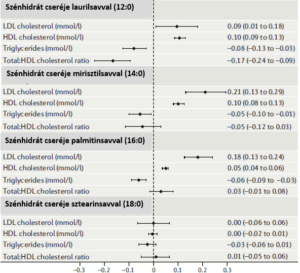
The effects of individual medium- and long-chain fatty acids on blood lipids differ considerably (see Figure 2). The effects of short-chain and very long-chain fatty acids on lipid levels, and the effects of total SFA on glycaemic parameters, have not yet been studied thoroughly. In vitro and animal studies point to beneficial effects of SFA intake: induction of energy metabolic pathways, increased fat-free body mass, protection against diabetes. So far only a few studies have addressed the effects of branched-chain and odd-chain fatty acids (e.g. D Mozaffarian and J H Y Wu: Circulation Research 2018 122: 369-384; doi: 10.1161/CIRCRESAHA.117.309008).
Prospective studies with clinical endpoints
Few studies address the effect of individual saturated fatty acids on cardiometabolic disease outcomes. Individual fatty acid biomarkers can be measured in blood and adipose tissue, but these levels reflect endogenous synthesis and metabolism as well as dietary intake. During de novo lipogenesis in the liver (e.g. in response to high intake of starch and sugar), myristic acid (14:0), palmitic acid (16:0), stearic acid (18:0), palmitoleic acid (16:1n-7) and oleic acid (18:1n-9) are produced. These enter the circulation, and their amounts also depend on other components of the diet (starches, sugars). In contrast, odd-chain fatty acids (15:0 and 17:0) are not synthesised in humans and appear to be reasonable biomarkers for assessing fatty acid intake. Based on meta-analyses of prospective studies, 17:0 intake (but not 15:0) is inversely associated with CVD risk.
Figure 2: Isocaloric replacement of 5% of energy intake from carbohydrates with different fatty acids
Food sources of SFA
The main food sources of SFA are milk, cheese, butter, margarine, vegetable oils, red and processed meats, poultry, chocolate, baked goods and, in tropical nations, fruit oils (palm and coconut oil). The estimated SFA from these foods, and total intake of these foods, show different associations with cardiometabolic diseases. For example, SFAs from meats increase CVD risk, while those from dairy products reduce it. Furthermore, although they have similar total fat, SFA and cholesterol contents, consumption of processed meats causes an increased risk of death (all-cause and CVD), CHD, stroke and diabetes, whereas consumption of unprocessed red meats is not significantly associated with total mortality, CVD mortality or CHD, shows a weak association with stroke, and carries a moderately higher risk of diabetes. The difference between the effects of processed and unprocessed meats may be related to the higher salt content of the former (~400% higher) and to harm caused by other undefined factors (e.g. preservatives such as nitrites). The fact that consumption of both processed and unprocessed meats carries an increased risk of diabetes may be explained by haem iron being a risk factor for diabetes [based on animal studies and studies of certain patients with iron metabolism disorders (patients with haemochromatosis)].
Based on long-term observational studies, the intake of different dairy products (milk, cheese, yoghurt, butter) has different effects on the risk of CHD, stroke, diabetes and weight gain (Figure 3). These differences do not appear to be related to total fat and SFA content but to other characteristics (probiotics, fermentation, amino acids, specific fatty acids or vitamin K2). For example, according to a meta-analysis of RCTs, cheese consumption lowered serum LDL cholesterol levels by 6.5% and HDL cholesterol levels by 3.9% more than butter consumption, even though the SFA and PUFA compositions of cheese and butter are very similar. The effects of these foods on glucose–insulin homeostasis also appear to differ depending on the food source, although only a few studies have examined this so far.
Figure 3: Different sources of saturated fatty acids and the risk of cardiometabolic diseases*

RR (95% CI)
*: Mozaffarian D & Wu J: Circulation 2016, 133: 187-225; https://doi.org/10.1161/CIRCULATIONAHA.115.018585
based on; CVD: cardiovascular disease, RR: relative risk, CI: confidence interval
In East Asia, fruit oils (palm oil, coconut oil) are the main sources of SFAs. According to controlled feeding studies, their effects on the various risks mentioned are not conclusive. For example, if a vegetable oil containing a mixture of MUFAs and PUFAs is replaced with palm oil, palm oil raises LDL-C and HDL-C levels but has no significant effect on the total cholesterol:HDL-C ratio or serum triglyceride levels. Few studies evaluating clinical endpoints have been carried out in this area. In a retrospective case–control study, replacing PUFA-rich soybean oil used for cooking with palm oil increased the risk of myocardial infarction. The long-term effect of palm oil consumption on the risk of cardiovascular disease has not yet been studied in a prospective study, nor have the effects of carbohydrates and palm oil been compared.
Controversial areas
The health effects of red meat
The reason for the difference between the health effects of processed and unprocessed red meats, and its relevance to dietary advice, is controversial. There is little evidence on the different health effects of conventionally fed versus grass-fed beef, or of processed versus unprocessed meat. The unfavourable environmental impact of cattle farming (greenhouse gas production, water pollution, deforestation) must also be taken into account. While current evidence points to a clear harmful effect of processed meats and has shown a neutral effect of unprocessed meats eaten in small amounts (1–2 times a week), these differences have not been incorporated into the dietary advice currently in use.
The health effects of dairy products
In very many populations (especially in low- and middle-income countries), dairy products are an important source of calorie intake. Low-fat dairy products are a main component of many healthy dietary patterns, such as the DASH (Dietary Approaches to Stop Hypertension) diet, aimed at preventing high blood pressure, and the US Dietary Guidelines. In contrast, some researchers recommend the currently popular anti-inflammatory diet, according to which dairy products should be eliminated from the diet completely. Current dietary guidelines make little distinction between the different types of dairy products (yoghurt, milk and cheese). Opinion on the effects of dairy fats is contradictory; based on observational studies it can perhaps be considered evident that they are protective against diabetes and perhaps against CVD, yet dietary guidelines emphasise the long-term consumption of low-fat dairy products. The effect of dairy fats is also modified by other food components.
The health effects of tropical fruit oils
Although conventional dietary guidelines do not recommend the use of tropical fruit oils because of their high saturated fatty acid content, the composition of these oils is complex and their long-term health effects are uncertain. With the exception of palm stearin, most palm oil products (palm oil, red palm oil and palm olein) contain roughly half SFAs (mostly palmitic acid) and half unsaturated fatty acids (mainly oleic acid, but also linoleic acid). Coconut oil is 80% SFA, but half of this is the medium-chain lauric acid (12:0), which significantly raises HDL-C and lowers serum levels of triglyceride-rich lipoproteins and the total cholesterol:HDL-C ratio. Moreover, unlike in animal fats, palmitic acid in the triacylglycerol is attached at the sn-1 and sn-3 positions of glycerol (and not at sn-2). This explains the characteristic effect of palm oil on serum lipids, although the studies on this are few and contradictory. In addition, virgin tropical oils also contain other important substances – carotenoids, vitamin E, potassium, phenols – that have beneficial effects. As with cattle farming, palm oil production also has an unfavourable environmental impact (deforestation, loss of biodiversity). Taking all this together, the health effects of tropical oils and their role in the diet are controversial.
Future directions
The health effects of foods with different SFA contents
Given the contradictions in the results of studies so far, further research is needed to explore the cardiometabolic effects of different SFA sources. The modifying effects of different combinations of saturated fatty acids, of other components in food (e.g. calcium, amino acids) and of the different structures of fats (e.g. the sn position of the fatty acid in fats) should also be studied. It would also be important to evaluate how different food processing methods, preservatives (sodium chloride, nitrates), in the case of milk homogenisation and the loss of the milk fat globule membrane, and various probiotics influence cardiometabolic health.
The health effects of rare fatty acids
Little is known about the cardiometabolic effects of rare fatty acids [branched-chain (BCSFA) and very long-chain (VLCSFA)]. VLCSFA levels are inversely associated with CHD and T2DM risk. VLCSFAs are also synthesised endogenously, but they can also enter the body in limited amounts from dietary sources (e.g. rapeseed oil, hazelnuts, macadamia nuts). VLCSFs are major components of ceramides and sphingomyelin. These molecules play a role in insulin resistance, inflammation and liver homeostasis. In experimental studies, ceramides containing different SFAs (e.g. palmitic acid vs. VLCSFA) have different biological effects. The relationship of these differences to cardiometabolic risk, however, remains to be explored.
Monounsaturated fatty acids (MUFAs) and their sources
More than 90% of dietary monounsaturated fatty acids is oleic acid. Little is known about the health effects of the other MUFAs that occur in small amounts in foods. About 70% of the fatty acid content of the olive oils used in the Mediterranean diet is oleic acid. In non-Mediterranean countries, oleic acid comes from other sources (high-oleic soybean oil, grapeseed oil, avocado, nuts and oilseeds). Fats of animal origin (about half of the fats in meat and about a fifth of the fats from dairy products) contain MUFA. While according to randomised controlled trials monounsaturated fat consumption improves the lipid profile, HbA1c levels and insulin resistance, in long-term observational studies its effect on cardiometabolic events is neutral.
Main evidence
Randomised controlled trials on risk factors
Most RCTs examined plant sources of MUFA (mainly olive and soybean oil), and only a few examined foods of animal origin containing monounsaturated fatty acids. When animal fats and tropical oils were replaced with olive or soybean oil, total cholesterol and LDL-C levels improved, and replacing fats containing trans fatty acids brought further favourable changes: serum ApoB and triglyceride levels and the total cholesterol/HDL-C ratio decreased. According to a meta-analysis published in 2017, olive oil consumption (compared with control fats and a low-fat diet) improved glucose metabolism (fasting blood glucose and HbA1c levels) in people with diabetes. The conclusion drawn from the PREDIMED trial (Estruch R et al. Lancet Diabetes Endocrinol 2016, 4: 666-667) is that extra virgin olive oil and oleic acid-rich nuts reduce abdominal obesity compared with the effect of a low-fat diet. The effect of oleic acid on certain physiological parameters (fatty acid oxidation, energy expenditure) appears mixed. Various nuts (almonds, cashews, hazelnuts, peanuts, pistachios, pecans and macadamia nuts) are rich in MUFA. According to RCTs, eating these nuts lowers serum total cholesterol, LDL-C or triglyceride levels but has no effect on HDL-C concentration. According to some RCTs, avocado consumption has no effect on total cholesterol, LDL-C or triglyceride levels but moderately raises HDL-C concentration. Few studies have attempted to analyse the effect of MUFAs of animal origin (meats, dairy products).
Prospective cohort studies using clinical endpoints
A meta-analysis pooling prospective cohort studies of total MUFA intake from mixed animal and plant sources concluded that it has no effect on cardiovascular risk, CVD mortality or total mortality. In contrast, higher olive oil consumption significantly reduced the incidence of cardiovascular events (RR 0.72, 95% CI 0.47-0.77) and stroke (RR 0.60, 95%CI 0.47-0.77). According to a cohort study carried out in the United States, MUFA consumption from plant (but not animal) sources is associated with a lower CHD risk. At present we have not found any prospective study that examined the effect of MUFA sources of different origins on stroke or diabetes.
RCTs examining disease outcomes
The PREDIMED trial demonstrated the favourable effect of a Mediterranean diet containing extra virgin olive oil and nuts compared with a low-fat diet: it reduced myocardial infarction, stroke or CVD death, used as the primary endpoint, by 30%. A secondary analysis of a PREDIMED subgroup concluded that, over a median follow-up of 4 years, this diet reduced the development of diabetes by 50% and hip circumference by 0.6 and 0.9 cm respectively (for the diets using olive oil and nuts) compared with the group on the control diet. It should be noted that in this study 60% of the extra virgin olive oil was replaced with non-virgin olive oil. Because the oils contained the same amount of MUFA (oleic acid), it has been suggested that the other components of extra virgin olive oil (phenols, e.g. oleocanthal) have a more significant effect than oleic acid.
Controversial areas
The health effects of monounsaturated fatty acids of different origins
While for decades dietary guidelines recommended consuming monounsaturated and polyunsaturated fatty acids instead of saturated fatty acids, on the basis of a growing body of newer data the US DGAC concluded in 2015 that “the evidence is limited that replacing saturated fatty acids with unsaturated ones brings an overall cardiovascular benefit”, and instead it emphasises the favourable cardiovascular effects of olive oil and nuts. The reasons for and mechanisms of the different effects of MUFA of animal and plant origin are unclear. Besides differences in lifestyle, the results are modified by components of the food sources with beneficial effects (vitamins and phenols in plants) or harmful effects (sodium and haem in animal sources).
Dietary oleic acid content and atherosclerosis
In animal models, plant-derived oleic acid had a favourable effect on serum LDL-C levels and the total cholesterol:HDL-C ratio, yet it could not prevent the development of atherosclerosis. A suggested reason was that LDL-C became rich in cholesteryl oleate and therefore bound more strongly to the proteoglycans in the intima of the vessel wall. In a human study with oleic acid-rich rapeseed oil, the cholesteryl oleate-rich LDL-C mentioned above did not bind more strongly to proteoglycans.
Future directions
Further studies are needed to determine whether monounsaturated fatty acids from plant sources have a beneficial effect in themselves, or whether it is due to other components found in these sources, or to the interaction of the two. When developing future dietary advice, care must also be taken to recommend sources whose production methods do not destroy the beneficial components.
Polyunsaturated n-6 (w6) fatty acids (PUFAs) and their sources
Linoleic acid, the main dietary PUFA, is found in soybean, sunflower, maize and other vegetable oils (peanuts, pecans, other nuts and oilseeds). Like the n-3 PUFA α-linolenic acid, linoleic acid cannot be synthesised by the human body and must be supplied by the diet. Once absorbed, linoleic acid is converted into other n-6 PUFAs: γ-linolenic acid (18:3n-6), dihomo-γ-linolenic acid (20:3n-6) and arachidonic acid (20:4n-6), but these are also found in small amounts in dietary sources (eggs, poultry and other meats).
Main evidence
Randomised controlled trials on effects on risk factors
RCTs have documented that PUFA consumption (mainly linoleic acid, but also arachidonic acid) improves the main cardiometabolic risk factors, such as blood lipid levels and glycaemic parameters. Some randomised controlled trials have also demonstrated further benefits of linoleic acid-rich vegetable oils, such as reduced fat accumulation in the liver and reduced postprandial lipaemia. Although in theory linoleic acid and arachidonic acid are pro-inflammatory, RCTs found that these fatty acids have no appreciable effect on pro-inflammatory biomarkers and other inflammation-related indices, including platelet function and immune activation.
Prospective cohort studies using clinical endpoints
A meta-analysis of prospective cohort studies in which linoleic acid consumption was compared with total saturated fat or carbohydrate intake demonstrated a ~10% reduction in CHD risk and a ~13% reduction in CHD mortality. Because linoleic acid is not synthesised in the human body, linoleic acid levels in both blood and adipose tissue can be considered objective biomarkers for assessing the amount of linoleic acid consumed with food. According to a meta-analysis evaluating 20 prospective cohort studies (carried out in 10 countries), higher linoleic acid biomarker levels are associated with a 35% reduction in the incidence of diabetes (per interquartile range: RR 0.65, CI 0.60-0.72), and this was consistently observed in subgroups by age, sex and ethnicity, BMI and n-3 PUFA biomarker level. According to a newer meta-analysis evaluating 30 studies, linoleic acid biomarkers are inversely associated with the risk of cardiovascular disease, CVD mortality and the development of ischaemic stroke. The hypothetical pro-inflammatory effect is contradicted by prospective cohort studies showing that higher arachidonic acid biomarker concentrations are not associated with the development of diabetes and moderately reduce the risk of coronary heart disease.
RCTs examining disease outcomes
Older and methodologically limited earlier systematic studies and meta-analyses report a significant reduction in CHD events when patients consume PUFA-rich oils instead of animal fats.
Controversial areas
The possible dangers of n-6 polyunsaturated fatty acids
Two older RCTs, whose findings on linoleic acid-rich vegetable oils are disputed, have been reanalysed. The findings of these studies must be interpreted with caution, because the studies partly used industrially produced, hydrogenated margarines rich in trans fatty acids as a source of linoleic acid, and the studies also had other methodological shortcomings. A meta-analysis of clinical studies analysing the effect of PUFA showed that replacing saturated fatty acids with polyunsaturated fatty acids reduces the risk of coronary heart disease (~10% risk reduction for a 5 E% increase in PUFA intake). This is consistent with the findings of controlled feeding studies, according to which a 5 E% PUFA intake reduces risk by 9%, and with prospective observational studies of the association between n-6 PUFA intake and CHD events, which found a 13% reduction in CHD risk for a 5 E% PUFA intake. In summary, the studies so far have provided full evidence of the beneficial cardiometabolic effects of total PUFA and n-6 PUFA consumption.
Competition between n-6 (w6) PUFA and n-3 (w3) PUFA; the w6:w3 ratio
The possible competition between n-6 and n-3 polyunsaturated fatty acids for the binding sites of certain enzymes (such as the fatty acid desaturases FADS1 and FADS2), together with the theoretical pro-inflammatory effect of n-6 PUFAs, led some researchers to declare n-6 polyunsaturated fatty acids harmful and to be avoided. On the basis of these conclusions, the view became popular that the optimal w6:w3 ratio is 1:1, that n-6 PUFA intake above this ratio is harmful, and that a higher proportion of n-6 PUFA should therefore be reduced. Nevertheless, independent and complementary evidence supports the beneficial effect of higher n-6 PUFA consumption. Establishing the ratio raises many questions, since the health benefits of the two components were studied separately and not simultaneously. The main nutrition organisations (US Dietary Guidelines, AHA, United Nations Food and Agricultural Organization) have concluded that linoleic acid intake is beneficial and that its consumption should be increased.
The possible dangers of industrial vegetable oils
According to many online posts and claims on social media, industrially produced refined vegetable oils, especially those rich in n-6 polyunsaturated fatty acids, are dangerous to health. The origin of this claim is unclear. All the evidence supports the beneficial effects of these vegetable oils. Whether the virgin versions of these oils have an even more favourable effect (because of their higher phenol and phytosterol content) needs to be confirmed by further studies.
Future directions
The overall evidence suggests that linoleic acid-rich vegetable oils protect against cardiometabolic diseases, whereas other PUFAs, such as arachidonic acid, represent neither a benefit nor a danger. Studying the effects of oils containing both n-6 and n-3 fatty acids (soybean and rapeseed oil) could be the most relevant way of demonstrating a CHD risk-reducing effect. Because the methodology of older studies is limited, new well-designed studies would be needed to demonstrate the CHD and T2DM risk-reducing effects of linoleic acid. Future studies should also examine how n-6 PUFA intake affects health alongside reduced carbohydrate consumption.
Polyunsaturated n-3 (w3) fatty acids (PUFAs) and their sources
n-3 PUFAs, such as α-linolenic acid, the main plant-derived w3 PUFA, occur in only a few foods (e.g. walnuts, flaxseed, soybean and rapeseed oil). Eicosapentaenoic acid (EPA, 20:5n-3) and docosahexaenoic acid (DHA, 22:6n-3) are found mainly in fish, shellfish and crustaceans, and in smaller amounts in eggs, red meat and poultry. Like the 18-carbon (n-6) linoleic acid, α-linolenic acid is also an essential fatty acid (the human body cannot synthesise it). By contrast, the main SFAs and MUFAs are not essential. α-Linolenic acid can be converted into EPA and DHA in small amounts (by enzymes), but this is so negligible that serum levels of these fatty acids reflect EPA and DHA intake.
Main evidence
Randomised controlled trials on effects on risk factors
According to a meta-analysis of RCTs, long-chain n-3 PUFA intake reduces several cardiovascular risk factors, lowering triglyceride levels, heart rate and blood pressure and improving endothelial function. Further beneficial effects are improved cardiac function, lower levels of inflammatory mediators and improved adipocyte function. Based on RCTs, consumption of long-chain n-3 PUFA does not significantly affect blood glucose levels or insulin sensitivity. Studies suggest that foods rich in α-linolenic acid (walnuts, flaxseed) lower cholesterol and LDL cholesterol levels, and walnuts also improve endothelial function. Other cardiometabolic effects of α-linolenic acid (e.g. on glucose–insulin homeostasis) are little known.
Prospective cohort studies using clinical endpoints
Based on prospective cohort studies, higher consumption of fish or long-chain n-3 PUFA significantly reduces cardiac mortality (death from infarction and sudden cardiac death). Based on dose–response analysis, this association is not linear: moderate (~250 mg/day) EPA and DHA consumption carries a lower risk of death than no EPA/DHA consumption at all, but higher intake does not reduce the risk further. At the same time, higher n-3 PUFA intake showed minimal or no association with the risk of non-fatal heart disease and stroke. According to experimental studies, DHA and EPA have antiarrhythmic effects. According to prospective cohort studies, there is no association between n-3 PUFA intake from fish and seafood and the risk of type 2 diabetes, although a protective effect was found among Asian populations. A meta-analysis of longitudinal studies examining the effect of plant-derived α-linolenic acid intake showed no association with the incidence of total coronary heart disease, stroke or type 2 diabetes, but it was inversely associated with cardiovascular mortality.
α-Linolenic acid, EPA and DHA in the circulation or adipose tissue are biomarkers of intake. 19 prospective cohort studies showed that α-linolenic acid and DHA levels (but not EPA levels) were associated with a lower risk of CHD mortality. At the same time, α-linolenic acid, DHA (and EPA) levels showed no association with total CHD or non-fatal infarction. The effect of each n-3 PUFA would need to be studied separately. In the EPIC-InterAct study, according to a study of 8 countries (12,132 individuals, including T2DM), higher α-linolenic acid levels showed a reduced risk of type 2 diabetes (HR 0.93 per 1 SD increase in α-linolenic acid level). At the same time, EPA and DHA levels showed no association with T2DM risk.
RCTs examining disease outcomes
A significant proportion of randomised controlled trials examined the relationship between long-chain n-3 PUFA (EPA, DHA) and the risk of cardiovascular disease. While most earlier studies demonstrated their beneficial effect on coronary heart disease (mainly its fatal forms), later studies found no significant association between n-3 PUFA supplementation and the risk of cardiovascular disease. The effect of n-3 PUFA used at different doses on clinical risk factors varied. In the VITAL study, which examined 25,871 individuals, low-dose fish oil (840 mg EPA and DHA daily) had no significant effect on the composite primary endpoint (CHD, stroke or cardiovascular death), but total coronary heart disease risk (percutaneous coronary intervention, myocardial infarction, fatal myocardial infarction) decreased. In contrast, in the REDUCE-IT trial, which examined the effect of high-dose n-3 PUFA (4 g EPA daily), serum triglyceride levels fell significantly (in 8,179 patients studied).
Only a few RCTs have analysed whether consuming a diet rich in α-linolenic acid helps prevent cardiometabolic diseases. In a study carried out in the Netherlands, participants were given margarine rich in α-linolenic acid (2 g α-linolenic acid daily), but this intervention did not significantly reduce major cardiovascular events. In contrast, the PREDIMED trial used a mix of nuts containing 50% walnuts, and this intervention significantly reduced CVD risk compared with those on the control diet.
Controversial areas
The effect of long-chain n-3 PUFA supplementation from seafood
Many systematic reviews and meta-analyses of RCTs have concluded that n-3 PUFA supplementation does not reduce the risk of total mortality, the number of cardiovascular events, the incidence of total coronary heart disease, fatal coronary heart disease or stroke. All this increased the uncertainty about the beneficial effects of n-3 PUFA consumption. A meta-analysis pooling all large studies carried out up to 2012 showed that n-3 PUFA reduces cardiac mortality (RR 0.91, 95%CI 0.85-0.98) and found a non-significant trend for the total incidence of myocardial infarction (RR 0.89, 95%CI 0.76-1.04)
The 2017 AHA Science Advisory reviewed the evidence available at the time and concluded that n-3 PUFA supplementation may reduce the risk of coronary death among patients with previous coronary heart disease. In general, the overall evidence from controlled studies of risk factors, prospective observational studies and clinical trials confirms that n-3 PUFA consumption is a safe and reasonable choice for reducing the risk of cardiovascular disease among patients who eat little fish or have a high CVD risk.
Future directions
The uncertainty about the effect of n-3 PUFA intake or supplementation from seafood on the risk of cardiovascular disease must be resolved. Future research needs to study more relevant populations that eat little seafood, to see how lower-dose consumption affects coronary heart disease mortality and how high-dose use influences adverse cardiovascular events. Some prospective cohort studies suggest that consumption of fish and long-chain n-3 PUFA is associated with a reduced risk of stroke, atrial fibrillation and heart failure, although the evidence is limited. Further longitudinal cohort studies and clinical trials would be needed to assess the effects of fish and n-3 PUFA consumption with certainty. The specific effects of the different n-3 PUFAs should be studied by monitoring the levels of biomarkers in the circulation or tissues. Because sources rich in α-linolenic acid (walnut and flaxseed oil) are less costly than those from seafood, RCTs aimed at studying the cardiometabolic effects of α-linolenic acid would need to be carried out.
Conclusions
As nutritional science develops, the body of knowledge on the effects of dietary fats is growing rapidly. Besides being an important source of energy, fatty acids play a role in various molecular processes, including genetic regulation, the formation of the structure of cell and organelle membranes and their function, ion channel activity and electrophysiological processes, and the formation of bioactive metabolites. Dietary fats are diverse and represent many fatty acids with different structures and functions. Further studies are needed on individual specific fatty acids and their sources. Dietary guidelines should specify appropriate food sources rather than the consumption of specific fatty acids. Further studies need to resolve the contradictions so far.

SIBO and food intolerances: is food necessarily to blame?
Bloating after milk, bread or onions? The way the digestive system works may also play a role behind these symptoms. Dr Anikó Hovanecz’s article expla...

A corporate health programme in practice – the SFC CEO’s experience
What does caring for employees and their family members mean for a company leader? Through his personal experience, Gábor Horváth, CEO of SFC, explain...

Don't just get the school bag ready
Starting school is not only about new exercise books and a changed daily routine but also about reorganising family meals. The FOODTEST Children's pac...