Author: Dr Károly Krkos
Inflammatory bowel diseases (IBD) comprise two conditions: ulcerative colitis (UC) and Crohn's disease (CD). The causes of IBD are still not fully understood, but complex genetic, environmental and immunological factors, as well as the composition of the gut microbiota, play a significant role5. Although the two conditions show different pathological and clinical features, a considerable overlap can also be observed between them. UC affects the colon, whereas CD can appear anywhere in the gastrointestinal tract (from the mouth to the anus)1-4. UC is characterised by continuous inflammation confined to the mucosa of the affected colon, whereas Crohn's disease is characterised by discontinuous inflammation that penetrates the whole bowel wall (transmural), most often affecting the ileum and the first section of the colon, and is accompanied by fibrosis and scarring1,2,4,7.
IBD is often associated with extraintestinal diseases. An associated disease can already be observed in about 10% of patients at the time of diagnosis, and it appears in a quarter of patients during their lifetime. The organs affected are: the musculoskeletal system (arthritis, osteoporosis, osteonecrosis), the eyes (inflammation of the sclera, iris and conjunctiva), the liver (primary sclerosing cholangitis – PSC, fatty liver, autoimmune liver disease), blood coagulation (increased tendency to thrombosis), the haematopoietic system (autoimmune haemolytic anaemia) and the lungs (airway inflammation, parenchymal lung disease)2.
When diagnosing IBD, the following conditions must be ruled out2:
- colitis of infectious origin (bacteria, parasites, viruses),
- radiation colitis (history of radiotherapy),
- diversion colitis (history of surgical exclusion of a bowel segment),
- solitary rectal ulcer syndrome (distinguishable by its histological picture),
- graft-versus-host disease (after bone marrow transplantation),
- diverticular colitis – the diverticular openings are not affected, and its distribution (an abnormality extending over one segment) differs from that of diverticulitis,
- drug-related bowel inflammation (non-steroidal anti-inflammatory drugs, retinoic acid, checkpoint inhibitors, mycophenolate),
- certain immunodeficiency states (common variable immunodeficiency – CVID).
Imaging procedures play a fundamental role in the diagnosis of IBD (abdominal MRI – MRE, abdominal CT – CTE, UGI/SBFT (upper gastrointestinal series with small bowel follow-through), gastroscopy, colonoscopy, ultrasound with contrast agent (PEG3350) – SICUS (small intestine contrast ultrasonography)). Among laboratory tests, besides microbiological analysis of the stool, faecal calprotectin (possibly lactoferrin), the erythrocyte sedimentation rate and serum CRP are of particular importance for detecting the active phase of the disease.
IBD occurs throughout the world, but it mainly affects the population of the Western world, followed in terms of incidence by newly industrialised countries and, finally, developing countries. From an epidemiological point of view, 4 stages can be observed6:
- emergence of the disease
- acceleration of incidence
- compounding prevalence and
- prevalence equilibrium
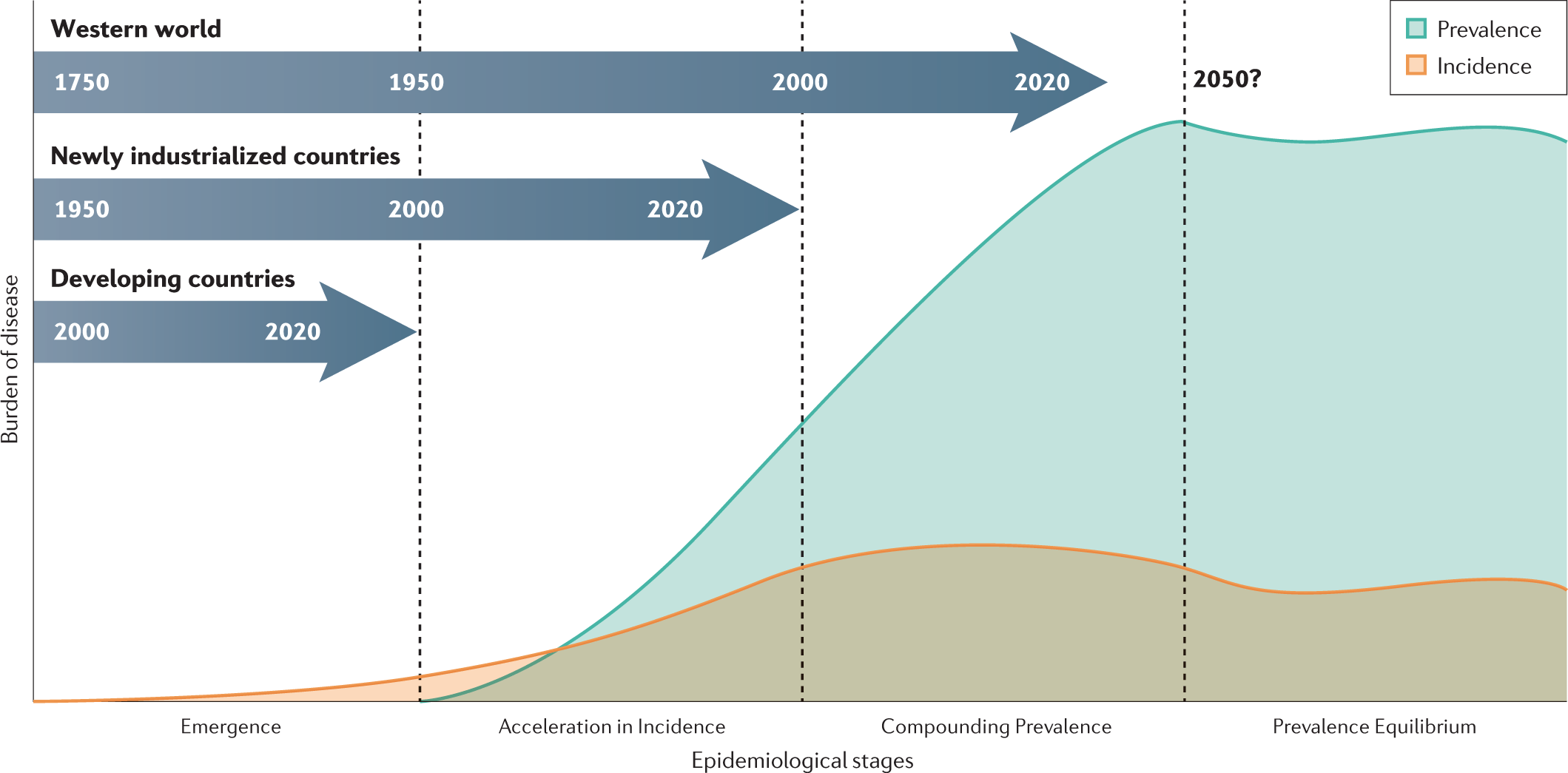
Western societies are currently in stage 3 (Compounding Prevalence), and the transition to prevalence equilibrium is probably beginning6.
Risk factors influencing inflammatory bowel diseases1,22:
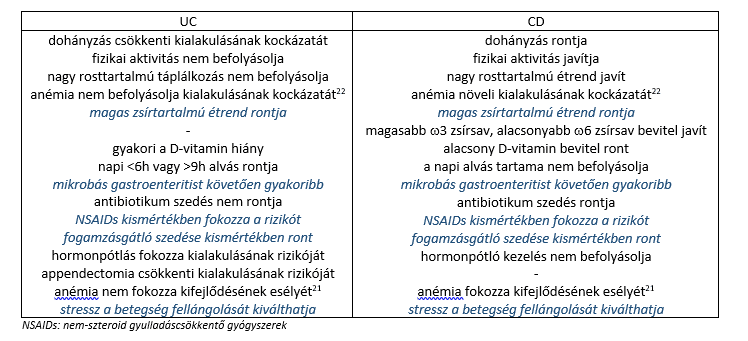
Ulcerative colitis (UC) is a chronic, continuous inflammation of the colonic mucosa with periods of improvement (remission) and relapse1,2. Depending on the extent of the disease, there is a form confined to the rectum (ulcerative proctitis), a disease affecting the rectum and sigmoid colon (ulcerative proctosigmoiditis), a form extending to the splenic flexure (left-sided colitis) and extensive colitis causing inflammation beyond it1,2.
The main symptoms are diarrhoea, which may be bloody, frequent bowel movements, abdominal pain, sudden urge to defecate, cramps and incontinence. In distal disease, constipation may also occur, with passage of blood and mucus. The symptoms develop gradually. Fever, exhaustion and weight loss may also accompany the condition. Because of anaemia, shortness of breath and strong palpitations may also occur2,4.
The symptoms of Crohn's disease may be similar, but significant bleeding does not occur; diseases of the anus (fissures, abscesses, fistulas) and involvement of the ileum are common, and the endoscopic picture differs considerably (patchy, discontinuous involvement, granulomas, strictures)1,2,4,7.
Their treatment is set by a gastroenterologist. Medicines used: mesalazine (5-ASA), steroids (budesonide), immunomodulators (azathioprine, 6-mercaptopurine, methotrexate), biological therapies (TNF, IL-12/23 and integrin 47 antibodies)7.
In the inactive (flare-free) phases of IBD, symptoms resembling a functional bowel disorder (irritable bowel syndrome – IBS) can be observed. The remission phase of the disease is supported by the absence of warning signs (bloody stools, fever, unexpected weight loss, nocturnal bowel movements, severe diarrhoea – watery stools more than 6 times a day, distension, abdominal mass) and by normal CRP and calprotectin levels3. In such cases, the following conditions need to be ruled out3,8,9:
- coeliac disease (signs of malabsorption – iron-deficiency anaemia)
- infectious diarrhoea (Giardia, Clostridioides difficile)
- lactose intolerance
- SIBO (small intestinal bacterial overgrowth) – its diagnosis is currently uncertain
- bile acid diarrhoea (because of disease or resection of the ileum, primary bile acids are not reabsorbed and, on reaching the colon, trigger diarrhoea)
- bowel inflammation due to dysbiosis-induced secondary bile acid deficiency8 (the secondary bile acids – lithocholic acid and deoxycholic acid – have an anti-inflammatory effect, and the 7-hydroxylation needed for their formation can only be carried out by a few bacteria of the Ruminococcaceae family)
- exocrine pancreatic insufficiency (chronic diarrhoea with abdominal pain) – low faecal elastase level (200g/g)
- microscopic colitis (a rare disease, more common in women, characterised by diarrhoea, sometimes accompanied by pain; it resembles IBS-D, with a normal or near-normal colonoscopic picture, and is confirmed by histological examination of samples taken from several points of the colon)
- symptomatic uncomplicated diverticular disease (SUDD – symptoms lasting longer than 24 hours, more severe than in IBS, localised to the lower left quadrant of the abdomen)
In functional bowel complaints, the guidelines recommended for the treatment of IBS and functional dyspepsia (upper gastrointestinal symptoms) apply primarily for symptom relief: dietary and lifestyle modification3.
If you need help putting your diet together, you can plan it with a dietitian at our nutritional counselling.
A questionnaire (processed food frequency questionnaire, PFQ) has been validated for monitoring the consumption of processed food products, in order to establish the link between consuming such products and the symptoms of the disease19.
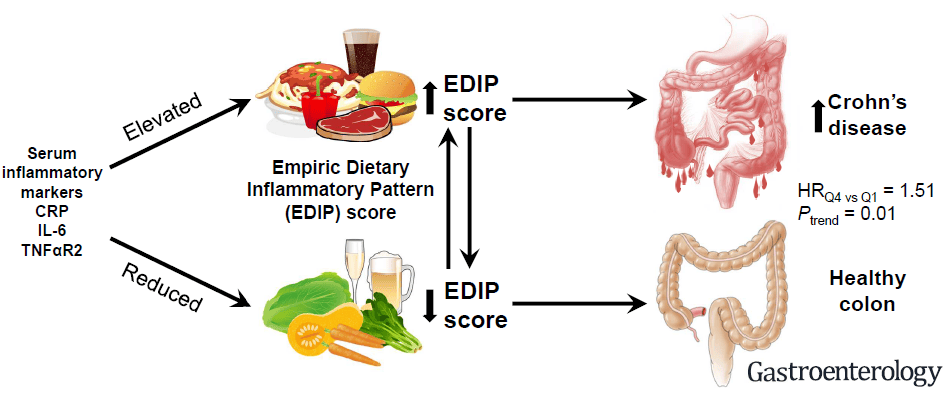
An 8-year study examined the role of pro-inflammatory foods in IBD18. Food groups were examined in relation to rises in serum levels of pro-inflammatory parameters (IL-6, CRP, TNFR2, adiponectin) and food intake using the RRR (reduced rank regression) method25, on the basis of which each food group was characterised by an EDIP (Empiric Dietary Inflammatory Pattern) score. (A high score indicated an inflammatory diet, a low score a non-inflammatory one.) It was found that a diet with a high inflammatory score increased the risk of Crohn's disease, but had no effect on ulcerative colitis.
The Mediterranean diet has a beneficial effect in Crohn's disease. Relapse occurred in a significantly higher proportion of those following a Western diet, whereas among those eating a Mediterranean diet most patients were in remission, with lower CRP and IL-6 levels and higher IL-10 concentrations15. Another study examined the effect of the Mediterranean diet in healthy children and in children diagnosed with IBD who were in remission. In the IBD group, a significant association was found between non-adherence to the Mediterranean diet and faecal calprotectin levels16.
The effect of a low-FODMAP diet (fermentable oligo-, di- and monosaccharides and polyols) was examined in patients with inflammatory bowel disease in remission. It was found that although the scores characteristic of irritable bowel syndrome did not change significantly, quality of life improved significantly. In the diet group, the proportions of Bifidobacterium adolescentis, B. longum and Faecalibacterium prausnitzii decreased, but microbiota diversity was maintained17.
Exclusive enteral nutrition (EEN) plays a primary role in the treatment of childhood Crohn's disease, but a large proportion of children do not adhere to an entirely liquid diet. In such cases, a special diet, the Crohn's Disease Exclusion Diet (CDED) combined with partial enteral nutrition (PEN), may offer a solution, as more than 95% of patients tolerate it. The study evaluated the clinical symptoms (PCDAI: Paediatric Crohn's Disease Activity Index), inflammatory markers (serum CRP, faecal calprotectin) and changes in the microbiome of children with Crohn's disease on EEN, on CDED+PEN and on a normal diet. The CDED diet was introduced gradually after EEN (supplemented with PEN). During the diet, alongside adequate fibre intake, a low fat intake (mainly avoiding animal and dairy fat) and a diet free from cereals, red meat, processed food products, yeast, taurine-rich proteins, emulsifiers, artificial sweeteners, seaweeds and sulphites were prescribed. EEN and CDED+PEN make it possible to achieve steroid-free status in the long term (compared with the group without dietary prescriptions). CDED+PEN, however, is the dietary intervention tolerated by a greater proportion of patients10. The beneficial effect of the CDED+PEN diet has also been demonstrated in adults and children not responding to drug treatment (including modern biological agents)22,23.
In patients in remission who suffer from IBS-like symptoms, an elimination diet may significantly relieve their complaints. In the serum of patients with inflammatory bowel disease (both Crohn's disease and ulcerative colitis patients), IgG antibodies appear against significantly more foods than in the non-IBD population11. Another study showed that a higher level of IgG intolerance was observed among CD patients, which was reduced by infliximab treatment, and the patients' condition improved significantly. On this basis, it is assumed that the fall in IgG levels reflects healing of the intestinal mucosa14.
A double-blind, crossover study evaluating Crohn's disease patients examined the effect of an elimination diet based on IgG antibody positivity. It found that in the group that received the elimination diet, symptoms improved significantly (stool frequency and abdominal pain decreased, quality of life improved). This effect could also be shown when the non-elimination diet was replaced by the diet based on IgG positivity, and deterioration was observed when the diet was followed by the non-elimination diet. The most frequently positive foods were cheeses, yeast, agave syrup, bamboo shoots and cereals12.
The beneficial effect of an elimination diet24 has also been examined in patients with ulcerative colitis. Half of the study participants were prescribed a normal, healthy diet, while the other half received an elimination diet set on the basis of IgG intolerance. In the group on the special diet, the Mayo score characterising disease activity became significantly lower, the extent of extraintestinal involvement decreased more markedly, and BMI and albumin levels improved more markedly than in the group on the normal diet13.
It is well known that the microbiome of people with inflammatory bowel disease differs considerably from that of healthy people. In UC patients, the effect of faecal microbiota transplantation (FMT) following combined antibiotic treatment (amoxicillin, fosfomycin, metronidazole) was compared with a group receiving combined antibiotic treatment alone. The long-term beneficial effect proved to be significantly better in the group receiving FMT. It was also shown that the intervention was more successful in those whose donor microbiome composition (mainly Bacteroides) was similar to that of the patient20.
References
- M A Peppercorn, A S Cheifetz: Definitions, epidemiology, and risk factors for inflammatory bowel disease in adults, UpToDate 2020, https://www.uptodate.com/contents/definitions-epidemiology-and-risk-factors-for-inflammatory-bowel-disease-in-adults?search=inflammatory%20bowel%20disease&source=search_result&selectedTitle=3~150&usage_type=default&display_rank=3
- M A Peppercorn, S V Kane: Clinical manifestation, diagnosis, and prognosis of ulcerative colitis in adults, UpToDate 2020, https://www.uptodate.com/contents/clinical-presentation-and-diagnosis-of-inflammatory-bowel-disease-in-children?search=inflammatory%20bowel%20disease&source=search_result&selectedTitle=2~150&usage_type=default&display_rank=2
- P Gibson: Approach to functional gastrointestinal symptoms in adults with inflammatory bowel disease, UpToDate 2020, https://www.uptodate.com/contents/approach-to-functional-gastrointestinal-symptoms-in-adults-with-inflammatory-bowel-disease?search=inflammatory%20bowel%20disease&source=search_result&selectedTitle=4~150&usage_type=default&display_rank=4
- L M Higuchi, A Bousvaros: Clinical presentation and diagnosis of inflammatory bowel disease in children, UpToDate 2020, https://www.uptodate.com/contents/clinical-presentation-and-diagnosis-of-inflammatory-bowel-disease-in-children?search=inflammatory%20bowel%20disease&source=search_result&selectedTitle=2~150&usage_type=default&display_rank=2
- J T Chang: Pathophysiology of Inflammatory Bowel Diseases, NEJM 2020, 383:2652-2664, https://doi.org/10.1056/NEJMra2002697
- G G Kaplan and J W Windsor: The four epidemiological stages in the global evolution of inflammatory bowel disease, Nature Reviews Gastroenterology & Hepatology 2021 18:56–66, https://doi.org/10.1038/s41575-020-00360-x
- K Cushing, P D R Higgins: Management of Crohn Disease, JAMA 2021, 325(1):69-80, https://doi.org/10.1001/jama.2020.18936
- S R Sinha, Y Haileselassie et al.: Dysbiosis-Induced Secondary Bile Acid Deficiency Promotes Intestinal Inflammation, Cell Host&Microbe 2020, 4:659-670.e5, https://doi.org/10.1016/j.chom.2020.01.021
- I Aziz, M Simrén: The overlap between irritable bowel syndrome and organic gastrointestinal diseases, Lancet Online First November 12 2020, https://doi.org/10.1016/S2468-1253(20)30212-0
- Levine, N Wine et al.: Crohn’s Disease Exclusion Diet Plus Partial Enteral Nutrition Induces Sustained Remission in a Randomized Controlled Trial, Gastroenterol 2019, 157(2):440-450.e8, https://doi.org/10.1053/j.gastro.2019.04.021
- C Cai, J Shen et al.: Serological Investigation of Food Specific Immunoglobulin G Antibodies in Patients with Inflammatory Bowel Diseases, PLOS ONE 2014, 9(11): e112154, https://doi.org/10.1371/journal.pone.0112154
- S Bentz, M Hausmann et al.: Clinical relevance of IgG antibodies against food antigens in Crohn’s disease: a double-blind cross-over diet intervention study, Digestion 2010, 81:252-264, https://doi.org/10.1159/000264649
- L Jian, H Anqi et al.: Food Exclusion Based on IgG Antibodies Alleviates Symptoms in Ulcerative Colitis: A Prospective Study, Inflamm Bowel Dis 2018, 24(9):1918-1925, https://doi.org/10.1093/ibd/izy110
- N Xiao, F Liu et al.: Food-specific IgGs Are Highly Increased in the Sera of Patients with Inflammatory Bowel Disease and Are Clinically Relevant to the Pathogenesis, Intern Med 2018, 57:2787-2798, https://doi.org/10.2169/internalmedicine.9377-17
- E Papada, C Amerikanou et al.: Adherence to Mediterranean diet in Crohn’s disease, Eur J Nutr 2020, 59(3):1115-1121, https://doi.org/10.1007/s00394-019-01972-z
- C Strisciuglio, S Cenni et al.: Effectiveness of Mediterranean Diet’s Adherence in children with Inflammatory Bowel Diseases, Nutrients 2020, 12(10):3206, https://doi.org/10.3390/nu12103206
- S R Cox, J O Lindsay et al.: Effects of Low FODMAP Diet on Symptoms, Fecal Microbiome, and Markers of Inflammation in Patients With Quiescent Inflammatory Bowel Disease in a Randomized Trial, Gastroenterol 2020, 158(1):176-188.e7, https://doi.org/10.1053/j.gastro.2019.09.024
- Chun-Han Lo, Paul Lochhead et al.: Dietary Inflammatory Potential and Risk of Crohn’s Disease and Ulcerative Colitis, Gastroenterol 2020, 159(3):873-883.e1, https://doi.org/10.1053/j.gastro.2020.05.011
- C Sarbagili-Shabat, S Zelber-Sagi et al.: Development and validation of processed foods questionnaire (PFQ) in adult inflammatory bowel diseases patients, Eur J Clin Nutrition 2020, 74:1653-1660, https://doi.org/10.1038/s41430-020-0632-5
- K Okahara, D Ishikawa: Matching between Donors and Ulcerative Colitis Patients Is Important for Long-Term Maintenance after Fecal Microbiota Transplantation, J. Clin. Med. 2020, 9(6):1650, https://doi.org/10.3390/jcm9061650
- E A Kang, J Chun et al.: Anemia is associated with the risk of Crohn’s disease, not ulcerative colitis: A nationwide population-based cohort study, PLOS ONE 2020, https://doi.org/10.1371/journal.pone.0238244
- Rotem Sigall Boneh, Chen Sarbagili Shabat et al.: Dietary Therapy With the Crohn’s Disease Exclusion Diet is a Successful Strategy for Induction of Remission 2017, J Crohns Colitis, 11(10):1205-1212, https://doi.org/10.1093/ecco-jcc/jjx071
- A M Riordan, J O Hunter et al.: Treatment of active Crohn’s disease by exclusion diet: East Anglian Multicentre Controlled Trial. Lancet 1993, 342:1131-1134, https://doi.org/10.1016/0140-6736(93)92121-9
- M H DeLegge: Nutritional and dietary management for adults with inflammatory bowel disease UpToDate, https://www.uptodate.com/contents/nutrition-and-dietary-management-for-adults-with-inflammatory-bowel-disease?search=Nutritional%20and%20dietary%20management%20for%20adults%20with%20inflammatory%20bowel%20disease%20&source=search_result&selectedTitle=1~150&usage_type=default&display_rank=1
SIBO and food intolerances: is food necessarily to blame?
Bloating after milk, bread or onions? The way the digestive system works may also play a role behind these symptoms. Dr Anikó Hovanecz’s article expla...

A corporate health programme in practice – the SFC CEO’s experience
What does caring for employees and their family members mean for a company leader? Through his personal experience, Gábor Horváth, CEO of SFC, explain...

Don't just get the school bag ready
Starting school is not only about new exercise books and a changed daily routine but also about reorganising family meals. The FOODTEST Children's pac...