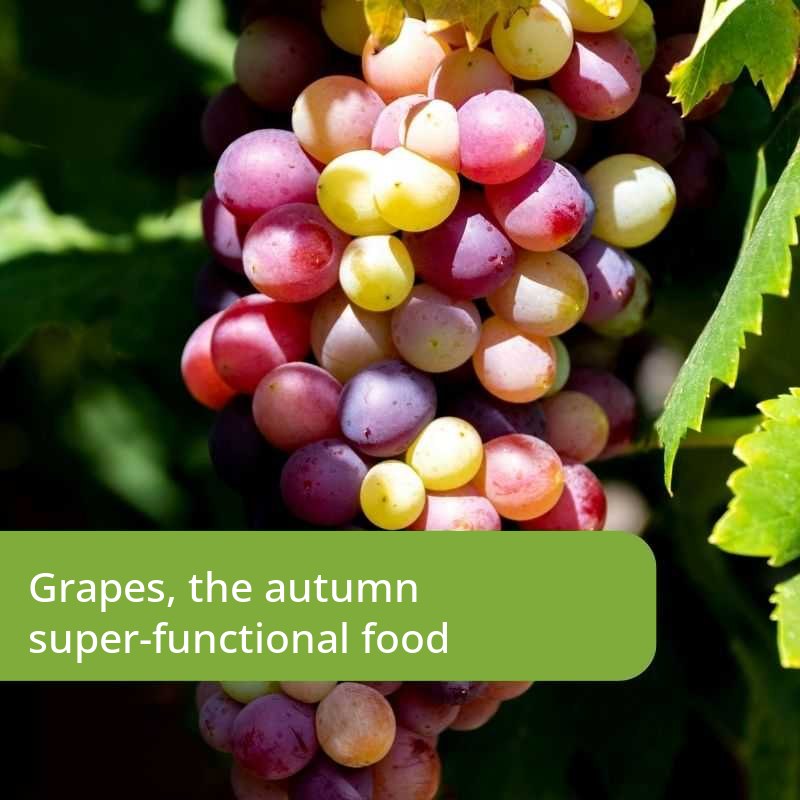
Could it be a coincidence that the Latin word for grape vine, vitis, is said to come from vita, meaning life? I do not think so, since alongside cereals it is one of our most ancient cultivated plants. This popular autumn fruit has an exceptionally good nutrient content and counts as a functional food – but what exactly does that mean?
Functional foods are foods that prove beneficial for how the body works. Research is looking at what role they may play, as part of a balanced diet, in reducing the risk of certain diseases. Among plant foods, oats, soya, flaxseed, tomatoes, garlic, broccoli, citrus fruits, blueberries, tea, wine and, last but not least, grapes are mentioned.
The main characteristics of functional foods:
- They can and should be built into an everyday (balanced) diet
- Natural form, with natural components
- Research is looking at how they influence certain processes in the body, for example:
- strengthening defence mechanisms
- slowing down the ageing process
- influencing physical and mental performance and mood.
Grapes have an outstanding carbohydrate, energy and fibre content, yet their glycaemic index (their ability to raise blood sugar) is only moderate. They contain many vitamins, for example vitamins A, B, C and K, and their potassium, selenium, biotin, iron and folic acid content supports blood formation, the body's defences and the maintenance of mental and physical fitness. Folk tradition also recommended a grape cure for gout complaints; with gout, however, treatment is for your doctor to decide.
Among the minerals, potassium, phosphorus, iron, zinc and copper stand out; through these, grapes play a role in protecting the nervous and immune systems and contribute to the proper functioning of metabolic processes and to healthy hair, skin and nails. Dark grapes contain several flavonoids, such as quercetin and resveratrol.
The effects of plant flavonoids and resveratrol on inflammation, the immune system and the heart muscle are also being studied. Studies abroad are looking at its possible protective effect on the cardiovascular system and on the risk of some cancers (e.g. prostate, breast, lung); this is not a proven healing effect.
The effects of the saponins found in the skin of the fruit on inflammation and on cholesterol absorption are also being studied.
Oil pressed from grape seeds makes the skin radiant, and fruit acids make it glow – renewing skin cells. Because of its antioxidant content, grape seed oil is also used in skin-care cosmetics.
Folk tradition recommended white grapes for tiredness and red and dark red varieties during infections; these effects have not been proven, however.
Let us not forget the juice of the grape, i.e. wine, either. Many people enjoy good-quality wine in moderation with a meal; a heart-protecting effect has not been proven, however, so drinking alcohol for health reasons is not recommended.

Don't just get the school bag ready
Starting school is not only about new exercise books and a changed daily routine but also about reorganising family meals. The FOODTEST Children's pac...

IBS and food intolerance: can diet help?
Several factors may lie behind irritable bowel syndrome, and the role of diet may also come up. The article explains in plain terms how certain foods...

Do you have to give up tasty food with a food intolerance?
Free-from or diet cooking does not mean going without: with the right ingredients and tricks, you can make tasty, varied dishes at home too.
Free download (PDF)
Elimination starter kit
Leaving foods out and bringing them back, step by step, without your plate going empty.