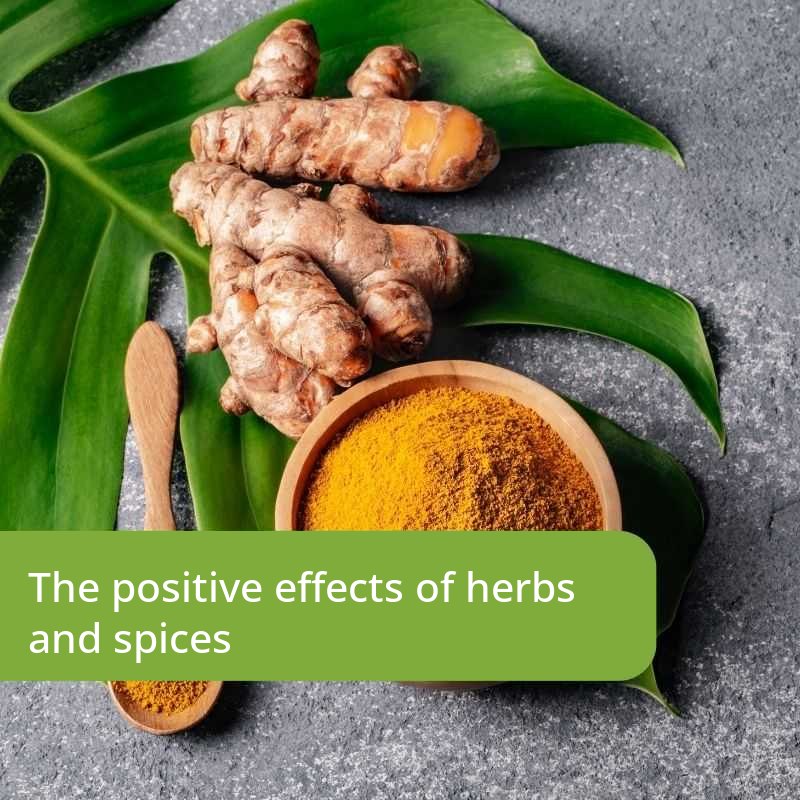
Do you also love the fresh greens lined up on your windowsill, and the fresh scent of herbs that hits you when you crumble them?
If so, we have great news for you! Besides enriching your dishes with fantastic flavours, herbs and spices come with many interesting facts from tradition and research. Let us see what is worth knowing about each spice!
The main virtue of turmeric, which comes from Indian cuisine, is its curcumin content, which is an antioxidant, and many studies are looking at its effect on inflammation.
It is also being studied in joint complaints, low mood and chronic age-related diseases, but it does not replace medication. It is fat-soluble, so it is best taken with some fat.
It is recommended to take it together with pepper, as the piperine found in pepper can increase its absorption by up to 2000%.
You have already been able to read about black pepper, the basic spice of Hungarian cuisine.
It is also known as an appetising spice that aids digestion.
Nutmeg is not only a favourite in Christmas gingerbread but folk tradition also credits it with mood-lifting and libido-boosting effects; it does not treat depression or anxiety, however. It contains selenium, manganese, magnesium and B vitamins.
Cayenne pepper also deserves a mention on this list, as many studies are looking at the effects of capsaicin, which gives it its heat. If you have chest pain or suspect a heart attack, call 112 immediately!
This member of the chilli family (it is not actually a pepper but a chilli) is traditionally used to stimulate circulation and digestion.
We know garlic from Hungarian folk medicine, mainly because of its outstanding antibacterial effect. Its antifungal and antiviral effects, and its effects on cholesterol, blood pressure and blood sugar, are also being studied.
Parsley was held in such high esteem in folk medicine that in the Middle Ages one ruler made its cultivation compulsory. No wonder: as well as being rich in vitamins A, B, C and K and in chlorophyll, it contains antioxidants, is traditionally used as a diuretic and to aid digestion, and even freshens the breath.
Besides its distinctive aroma, rosemary is traditionally used to aid digestion and for headaches. Research is looking at its effect on brain diseases of old age, but a protective effect has not been proven.
Why is thyme on our list?
Because it is traditionally credited with antispasmodic and disinfectant effects and has long been used for upper respiratory complaints such as a chesty cough. Folk medicine also recommends thyme tea for headaches, menstrual cramps and stress.
Thanks to menthol, peppermint has a pleasant cooling effect. Its tea is traditionally drunk for digestive complaints, bloating and complaints of the mouth, and it freshens the breath.
Dill is not only good for livening up creamed marrow or fermented cucumbers; folk medicine also uses it as a diuretic and for bloating and nausea.
Caraway is one of the main spices of Hungarian cuisine.
Could it be that our grandmothers used it to make heavy Hungarian dishes easier to digest? This idea seems justified, as caraway is traditionally used as an antispasmodic, bloating-reducing and digestion-aiding spice.
Herbs and spices are countless, but it is clear that for a varied, tasty diet, sometimes we only need to go as far as the kitchen spice rack or the windowsill. Let us use spices freely!

Don't just get the school bag ready
Starting school is not only about new exercise books and a changed daily routine but also about reorganising family meals. The FOODTEST Children's pac...
IBS and food intolerance: can diet help?
Several factors may lie behind irritable bowel syndrome, and the role of diet may also come up. The article explains in plain terms how certain foods...

Do you have to give up tasty food with a food intolerance?
Free-from or diet cooking does not mean going without: with the right ingredients and tricks, you can make tasty, varied dishes at home too.
Free download (PDF)
Elimination starter kit
Leaving foods out and bringing them back, step by step, without your plate going empty.