In this article
Author: Dr Károly Krkos
Irritable bowel syndrome (IBS)
Irritable bowel syndrome (IBS) is a functional disorder of the gastrointestinal tract whose main features are abdominal pain and altered bowel habits¹–³ (prolonged diarrhoea or constipation, or alternation of the two, or diarrhoea and/or constipation following normal periods³). As a rule, no organic abnormality can be detected, apart from the few patients in whom microscopic inflammation is observed¹. Based on population studies, the prevalence of the disease is 10–20%¹–³. It is 25% less common in people over 50 than in younger people³, and it occurs about one and a half times as often in women as in men.
You can read more about the possible causes of IBS, and whether diet may play a part in the symptoms, on our IBS page.
As the disease has no specific marker, it is diagnosed on the basis of symptoms, according to the Rome IV criteria³:
abdominal pain occurring at least once a week for three months, together with at least 2 of the following criteria³:
- it is related to defecation
- the frequency of bowel movements changes
- the appearance (consistency) of the stool changes.
The above can be supplemented by the Manning criteria, which include assessment of the onset of pain, the presence or absence of mucus in the stool and the sensation of incomplete evacuation:
Table 1: Manning criteria5,30 – the likelihood of IBS is proportional to the number of criteria met

A validation study carried out in 2013 found the Rome criteria to be more sensitive and the Manning criteria more specific6.
IBS subtypes¹‚³ are determined on the basis of bowel habits, with stool consistency assessed using the Bristol scale7 (Bristol Stool Form Scale, BSFR):
- IBS-C – constipation (constipatio) predominates
- IBS-D – diarrhoea (diarrhoea) predominates
- IBS-M – mixed subtype: constipation and diarrhoea alternate
- IBS-U – unclassified, cannot be assigned to any of the 3 groups above.
The use of subtypes is controversial, as 29% of IBS-C patients switch to the IBS-D subtype and, in general, 75% of patients change type within 1 year¹.
According to the American College of Gastroenterologists (AGA), detailed investigation is needed for people over 50, and for IBS patients under 50 in whom the following "alarm symptoms" are present8:
- weight loss
- iron-deficiency anaemia
- a family history of gastroenterological disease (e.g. IBD, coeliac disease, colorectal carcinoma).
The causes of the condition have still not been clearly established. Research focuses mainly on gastrointestinal motility and visceral hypersensitivity; in addition, the role of inflammatory processes, changes in microbial composition, bacterial overgrowth (in the upper sections of the bowel), food sensitivity and genetic predisposition are also among the factors under investigation².
Many studies consider the cause of hypersensitivity to be the effect of distension in triggering hypersensitisation of visceral afferent nerves, in which the local nervous system, modulation in the brain and special gastrointestinal modulators (serotonin, kinins) may also play a part².
Activation of the immune system of the intestinal mucosa (mainly after infection) is more pronounced in the IBS-D type: increased lymphocyte infiltration in the myenteric plexus, and an increased number of mast cells in the jejunum, ileum and colon9,10. Plasma levels of pro-inflammatory cytokines are raised¹¹. We discussed the role of mast cells in the pathophysiology of IBS in our previous summary ["The role of mast cells in functional gastrointestinal disorders (FGIDs)"]27-29.
In post-infectious IBS, the development of IBS is preceded by acute enteritic diarrhoea. The infection may be of bacterial, protozoal, helminthic or viral origin. IBS is about 6 times more likely to develop after acute infectious gastroenteritis12,13. According to an animal study published in January 2021, infection with certain gastrointestinal pathogens causes local (not systemic) IgE-mediated mast cell activation, accompanied by typical IBS symptoms. When common allergens (cow's milk, soya, gluten) were introduced into the bowel (rectosigmoid section) of IBS patients and healthy individuals, a local immune response was detected in the IBS patients, whereas no reaction was seen in the healthy individuals38. On this basis, the authors recommend the use of agents that inhibit mast cell activity in treatment.
Changes in the gut flora also play a role in the manifestation of IBS (demonstrated in animal experiments)14. Certain probiotics improve symptoms, but no change in the composition of the microbiota can be detected while they are being given.
Hereditary factors play only a moderate role in the development of IBS; clustering of the condition is observed more often in monozygotic than in dizygotic twins15. Beyond familial aggregation, social influences play a greater role16.
Psychosocial factors (anxiety, sleep disorders) may have a significant effect on the expression of IBS17. Anxiety, depression, phobia and somatisation are more common in IBS patients18.
Food sensitivity and IBS
Carbohydrate malabsorption is assumed in a significant proportion of IBS patients. This was originally demonstrated in IBD patients and later confirmed in the IBS patient group as well³. Complaints may be caused primarily by the intake of fermentable oligo-, di- and monosaccharides (fructose, galactose) and polyols (sugar alcohols), which is why a low-FODMAP diet is recommended³.
Although food skin prick test positivity is more common in IBS patients19, challenge with the positive foods did not worsen symptoms². No significant difference was found in food component IgE levels between IBS patients, patients with functional dyspepsia and a normal control group23.
An elimination diet can be based on the results of a test for IgG produced against food components23,32. Such antibodies may be produced because of activation of the gut-associated immune system, partly due to altered intestinal permeability and partly due to the stimulating effect of antigens entering through the M cells23.
Academic medicine does not yet regard this treatment option as clearly proven², but a number of prospective, randomised studies appear to support the beneficial effect of an elimination diet based on IgG testing.
One study performed IgG food intolerance testing on 5,289 patients struggling with various problems (gastrointestinal, respiratory, dermatological, neurological, musculoskeletal, psychological) and analysed the effect of an elimination diet based on the test, taking into account how strictly participants adhered to the dietary change33.
Among those who strictly followed the diet, the highest proportion (>80%) reporting marked to significant improvement as a result of the diet was found among gastrointestinal patients, but this proportion also exceeded 70% in the other groups, except for those complaining of musculoskeletal problems (64% of whom experienced significant relief of symptoms). A large proportion of the individuals studied also tried what happens if they start eating the food that gave a positive result again: 77% of them experienced a return of symptoms. Of those who had originally followed the diet strictly, 92% reported a deterioration in their condition after eating the positive food again33.
A randomised study examined 150 IBS patients over 12 weeks20. IgG titres against food components were determined for everyone. In half of the participants (n=75), the positive foods were eliminated from the diet (true elimination group), while in the other half the same number of test-negative foods were eliminated as there were positive ones (sham diet group). At the end of the study, 65 enrolled participants in the true diet group and 66 in the sham diet group could be evaluated. The following were assessed (on a scale of 0–500):
- IBS symptom severity score (pain, distension, bowel function, general well-being);
- non-colonic symptom score (lethargy, back pain, nausea, urinary complaints);
- quality of life (QOL) score;
- anxiety and depression (hospital anxiety and depression, HAD)
- in addition, global symptom change was assessed (as a result of the diet, well-being became unbearably worse, worse, slightly worse, unchanged, slightly better, excellent).
By the end of week 12, the condition of those on the true diet had improved significantly compared with those on the sham diet. The difference was considerably greater among those who adhered fully to the dietary change.
Figure 2 in the article20: Change in IBS symptom severity in the two groups by adherence to the diet (low – moderate – good adherence)
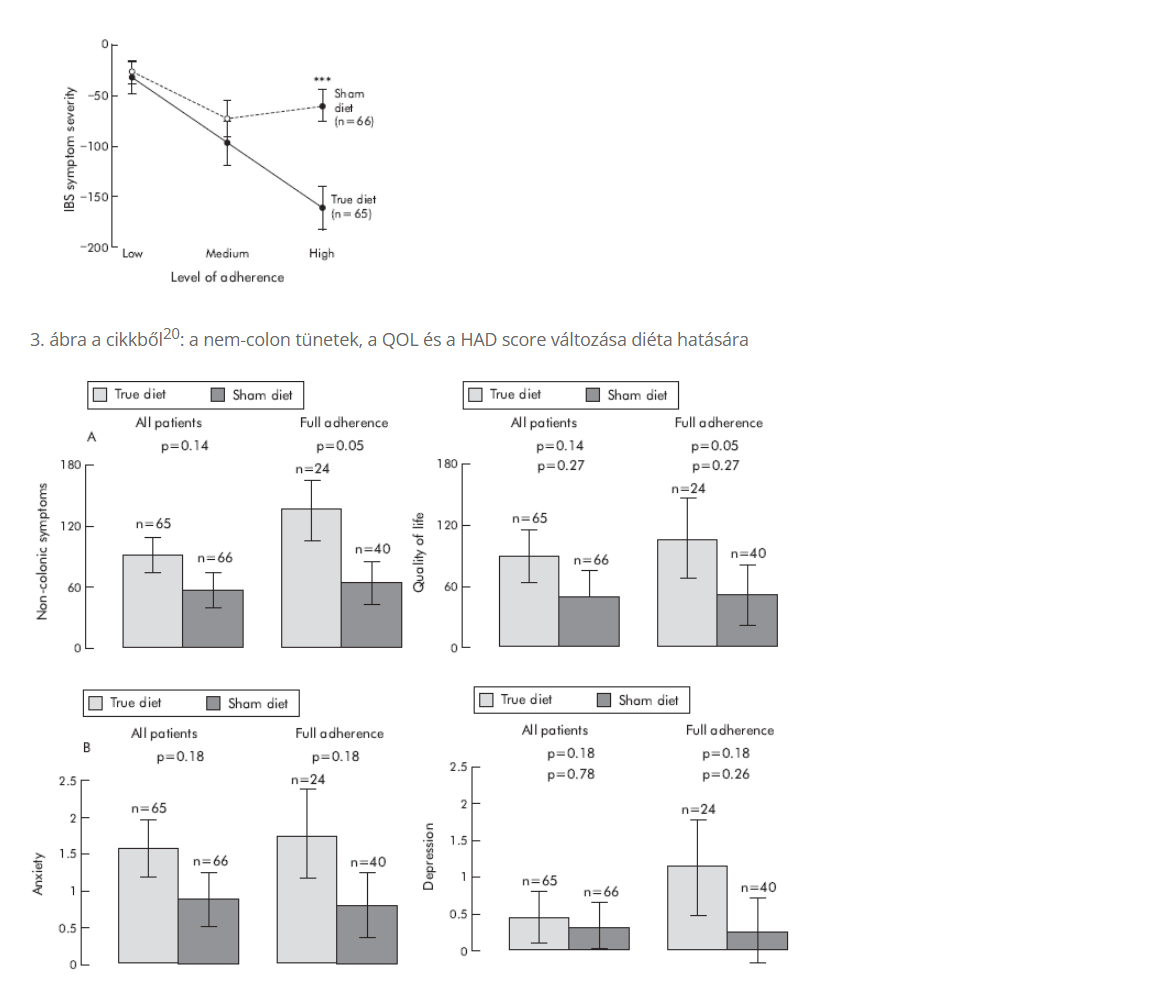
The data from the study confirm that a strictly followed dietary change based on IgG testing significantly improves the condition of IBS patients.
Another study examined IBS patients who did not respond to standard drug therapy24: food component IgE and IgG levels were measured, microbiome analysis and a breath test were performed (baseline after an 8-hour fast, then measurement of hydrogen and methane levels for 3 hours after drinking a glucose solution), and IBS-specific symptoms and quality of life (IBS-QOL) were assessed with a questionnaire. The patients were placed on an elimination diet set on the basis of the IgE and IgG tests. After a strict diet lasting 3–4 weeks, reintroduction of the positive foods was attempted one by one (every 3–4 days). From then on, a rotation diet was set up for the tolerated foods, while the components that were not tolerated continued to be left out of the diet for six months. Participants kept a detailed diary of their daily diet. The patients received a probiotic (daily) between months 2 and 6, with a 1-month break at the end. The composition of the probiotic used: Lactobacillus acidophilus, Bifidobacterium bifidum, L. rhamnosus, L plantarum, B. infantis, L. salivarius, L. bulgaricus, L. casei, L. brevis and Streptococcus thermophilus. The tests mentioned, performed before the study, were repeated after 6 months.
The initial tests revealed a dysbiotic flora (the numbers of Lactobacillus and Bifidobacterium species and of E. coli colonies were reduced compared with the normal population). The composition of the gut flora was checked at the end of the study. Although an improving trend was observed, the change was not significant. In those whose breath test proved positive, values did not improve after taking the probiotic.
As a result of the elimination (and partly rotation) diet, IBS symptoms and quality of life improved significantly. Probiotics played a smaller part in the improvement.
Besides reducing IBS symptoms, an IgG-based diet may also play a role in improving major depressive disorder (MDD). This was examined in the study by H. Karakula-Juchnowicz and colleagues25, which compared patients with MDD, patients with IBS and healthy controls (HC). Food component IgG levels were examined in all three groups. A significant difference was found between the IBS and HC groups and between the MDD and HC groups. Higher values for gluten were obtained in MDD patients than in IBS patients, so it is likely that an elimination diet improves symptoms – this will need to be proven with appropriate prospective, randomised, double-blind studies.
The figure below clearly shows the differences in the IgG values obtained25:
The presumed role of IgG antibodies in patients with depressive complaints is summarised in the figure below25:
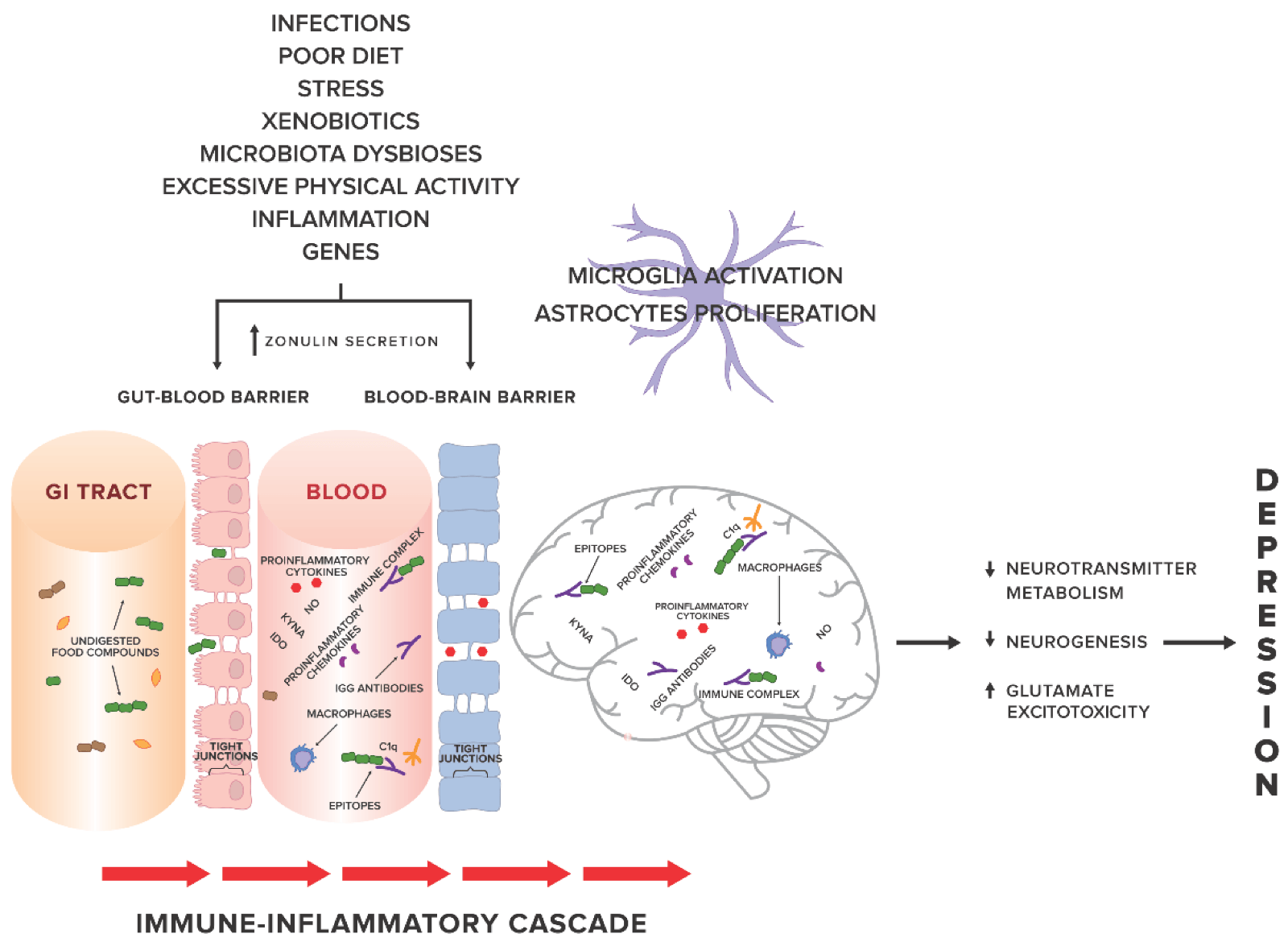
Genetic and environmental factors lead to damage to tight junctions in both the gut and the blood–brain barrier. Because of damage to the intestinal barrier, inadequately broken-down molecules enter the bloodstream, where IgG antibodies produced against them form immune complexes with them and induce inflammatory processes. This low-grade, uncontrolled, systemic inflammation leads to neuroinflammation; pathological processes develop in the central nervous system, and changes in neurotransmitter metabolism, impaired neurogenesis and glutamate excitotoxicity result in long-lasting depression.
Abbreviations: GI tract: gastrointestinal tract; KYNA: kynurenic acid; NO: nitric oxide; IDO: indoleamine 2,3-dioxygenase; C1q: complement component
A case study raises the role of an allergic reaction to medication in the impairment of intestinal permeability and in the development of food intolerance (to wheat proteins)29. A previously completely healthy patient underwent dental surgery. The medication used (anaesthetics, antibiotics, painkillers) triggered a severe allergic reaction. In the following weeks, the patient noticed IBS-like symptoms 1–3 hours after eating. Coeliac-specific antibodies, HLA DQ2 and DQ8 proved negative. Antibodies appeared against tight junction proteins (occludin/zonulin), lipopolysaccharides and actomyosin, which supports increased intestinal permeability. IgG and IgA levels against gluten, cereal proteins and other foods were raised. Six months after the elimination diet, the complaints had resolved and antibody levels had returned to the reference range.
Many studies confirm that there is an overlap between the symptoms of IBS and coeliac disease34,35. In one group of IBS patients, a gluten-free diet significantly relieves symptoms, yet coeliac disease cannot be confirmed (non-coeliac gluten/wheat sensitivity)31. Patients classified in the IBS-D group who are HLA-DQ2 positive but serology- and histology-negative, and in whom anti-gliadin IgG (AGA IgG) positivity can be detected, very probably belong to this group36. In non-coeliac, HLA-DQ2/DQ8-positive IBS-D patients, intestinal permeability is increased compared with HLA-DQ2/DQ8-negative patients37.
References
https://doi.org/10.1053/j.gastro.2015.02.005
- J K Lehrer, G R Lichtenstein: Irritable Bowel Sydrome Emedicine Medscape 2019, https://emedicine.medscape.com/article/180389
- A Wald: Clinical manifestations and diagnosis of irritable bowel syndrome in adults – UpToDate, 2019 (last update), https://www.uptodate.com/contents/clinical-manifestations-and-diagnosis-of-irritable-bowel-syndrome-in-adults
- A Wald: Pathophysiology of irritable bowel syndrome – UpToDate, 2020 (last update), https://www.uptodate.com/contents/pathophysiology-of-irritable-bowel-syndrome
- A Wald: Treatment of irritable bowel syndrome in adults – UpToDate, 2020 (last update), https://www.uptodate.com/contents/treatment-of-irritable-bowel-syndrome
- Manning AP, Thompson WG, Heaton KW, Morris AF (1978). “Towards positive diagnosis of the irritable bowel”. Br Med J. 2(6138): 653–4. doi:1136/bmj.2.6138.653
- Ford, Alexander C.; Bercik, Premysl; Morgan, David G.; Bolino, Carolina; Pintos–Sanchez, Maria Ines; Moayyedi, Paul (Dec 2013). “Validation of the Rome III criteria for the diagnosis of irritable bowel syndrome in secondary care”. Gastroenterology. 145(6): 1262–70.e1. doi:1053/j.gastro.2013.08.048
- M R Blake, J M Raker, K Whelan: Validity and reliability of the Bristol Stool Form Scale in healthy adults and patients with diarrhoea‐predominant irritable bowel syndrome, Alimentary Pharmacol Ther 2016, 44:693-703, https://doi.org/10.1111/apt.13746
- Brandt LJ, Chey WD, Foxx-Orenstein AE, et al, for the American College of Gastroenterology Task Force on Irritable Bowel Syndrome. An evidence-based position statement on the management of irritable bowel syndrome. Am J Gastroenterol. 2009 Jan. 104 suppl 1:S1-35.
- Peter R. Gibson, Jane Varney, Sreepurna Malakar, Jane G. Muir: Food Components and Irritable Bowel Syndrome, Gastroenterology 2015, 148(6):1158-11474, https://doi.org/10.1053/j.gastro.2015.02.005
- Halmos EP, Power VA, Shepherd SJ, Gibson PR, Muir JG. A diet low in FODMAPs reduces symptoms of irritable bowel syndrome. Gastroenterology 2014, 146(1):67-75, https://doi.org/10.1053/j.gastro.2013.09.046
- Jørgen Valeur, Milada Cvancarova Småstuen et al.: Exploring Gut Microbiota Composition as an Indicator of Clinical Response to Dietary FODMAP Restriction in Patients with Irritable Bowel Syndrome, Dig Dis Sci63, 429–436 (2018). https://doi.org/10.1007/s10620-017-4893-3
- Heather Halvorson;Carey Schlett;Mark Riddle: Postinfectious Irritable Bowel Syndrome—A Meta-Analysis, American Journal of Gastroenterology. 101(8):1894–189, https://doi.org/10.1111/j.1572-0241.2006.00654.x
- M Thabane, D T Kottachchi, J K Marshall: Systematic review and meta‐analysis: the incidence and prognosis of post‐infectious irritable bowel syndrome, Aliment Pharmacol Ther 2007, 26(4):535. https://doi.org/10.1111/j.1365-2036.2007.03399.x
- Crouzet L, Gaultier E, et al.: The hypersensitivity to colonic distension of IBS patients can be transferred to rats through their fecal microbiota, Neurogastroenterol Motil. 2013, 25(4):e272-82, https://doi.org/10.1111/nmo.12103
- Mohammed I, Cherkas LF, Riley SA, Spector TD, Trudgill NJ: Genetic influences in irritable bowel syndrome: a twin study, Am J Gastroenterol. 2005, 100(6):1340, https://doi.org/1111/j.1572-0241.2005.41700.x
- Levy RL, Jones KR, Whitehead WE et al.: Irritable bowel syndrome in twins: heredity and social learning both contribute to etiology, Gastroenterology. 2001, 121(4):799, https://doi.org/1111/j.1572-0241.2005.41700.x
- L Chang: The role of stress on physiologic responses and clinical symptoms in irritable bowel syndrome, Gastroenterology. 2011, 140(3):761, https://doi.org/1053/j.gastro.2011.01.032
- Solmaz M, Kavuk I, Sayar K: Psychological factors in the irritable bowel syndrome, Eur J Med Res 200, 8(12):549
- Jun DW, Lee OY et al.: Food intolerance and skin prick test in treated and untreated irritable bowel syndrome, World J Gastroenterol. 2006;12(15):2382, https://doi.org/10.3748/wjg.v12.i15.2382
- W Atkinson, T A Sheldon, N Shaath, P J Whorwell: Food elimination based on IgG antibodies in irritable bowel syndrome: a randomised controlled trial, Gut 2004, 53:1459-1464, https://doi.org/1136/gut.2003.037697
- S Evangelista: Benefits from Long-Term Treatment in Irritable Bowel Syndrome, Gastroenterology Research and Practice 2012, Article ID 936960, https://doi.org/10.1155/2012/936960
- L Agréus, K Svärdsudd et al.: Natural History of Gastroesophageal Reflux Disease and Functional Abdominal Disorders: A Population-Based Study, Am J Gastroenterol 2001, 96(10):2905-2914, DOI:1111/j.1572-0241.2001.04680.x
- X L Zuo, Y Q Li et al.: Alterations of food antigen-specific serum immunoglobulin G and E antibodies in patients with irritable bowel syndrome and functional dyspepsia, Clin Exp Allergy 2007, 37:823-830, https://doi.org/10.1111/j.1365-2222.2007.02727.x
- J Drisko, B Bischoff et al.: Treating Irritable Bowel Syndrome with a Food Elimination Diet Followed by Food Challenge and Probiotics, J Am Coll Nutr 2006, 25(6):514-522, https://doi.org/10.1080/07315724.2006.10719567
- H Karakula-Juchnowicz, M Gałęcka et al.: The Food –Specific Serum IgG Reactivity in Major Depressive Disorder Patients, Irritable Bowel Syndrome Patients and Healthy Controls, Nutrients 2018, 10:548, https://doi.org/3390/nu10050548
- N A Pullen, Y T Falanga et al.: The Fyn-STAT5 pathway: a new Frontier in IgE- and IgG-mediated mast cell signalling, Frontiers in Immunology 2012, 3: Article 117, https://doi.org/10.3389/fimmu.2012.00117
- M M Wouters, M Vicaro, J Santos: The Role of Mast cells in functional GI Disorders, Gut 2016, 65:155-168 http://dx.doi.org/10.1136/gutjnl-2015-309151
- T C Theoharides, K-D Alysandratos et al.: Mast cells and inflammation, Biochim Biophys Acta 2012, 1822(1):21-33, https://doi.org/10.1016/j.bbadis.2010.12.014
- A Vojdani, J Lambert: The onset of enhanced intestinal permeability and food sensitivity triggered by medication used in dental procedures, Case Reports in Gastrointestinal Medicine 2012, Article ID 265052, https://doi.org/10.1155/2012/265052
- L J Talley, R Spiller: Irritable bowel syndrome: a little understood organic bowel disease?, Lancet 2002, 360(9332):555-564, https://doi.org/10.1016/S0140-6736(02)09712-X
- P Mansueto, A D’Alcamo et al.: Food allergy in irritable bowel syndrome: The case of non-celiac wheat sensitivity, World J Gastroenterol 2015, 21(23): 7089-7109, https://doi.org/10.3748/wjg.v21.i23.7089
- G E Mullin, K M Swift et al.: Testing for Food Reactions_ The Good, the bad and the Ugly, Nutrition in Clinical Practice 2010, 25(2):192-198, https://doi.org/10.1177/0884533610362696
- G Hardman, G Hart: Dietary advice based on food-specific IgG results, Nutrition and Food Science 2007, 37(1):16-13, https://doi.org/10.1108/00346650710726913
- Sanders DS, Carter MJ et al.: Association of adult coeliac disease with irritable bowel syndrome: a case-control study in patients fulfilling ROME II criteria referred to secondary care. Lancet 2001, 358(9292):1504, https://doi.org/1016/S0140-6736(01)06581-3
- Verdu EF, Armstrong D, Murray JA: Between celiac disease and irritable bowel syndrome: the “no man’s land” of gluten sensitivity, Am J Gastroenterol. 2009, 104(6):1587.
- Wahnschaffe U, Schulzke JD et al.: Predictors of clinical response to gluten-free diet in patients diagnosed with diarrhea-predominant irritable bowel syndrome, Clin Gastroenterol Hepatol. 2007, 5(7):844, https://doi.org/1016/j.cgh.2007.03.021
- Vazquez-Roque MI, Camilleri M et al.: A controlled trial of gluten-free diet in patients with irritable bowel syndrome-diarrhea: effects on bowel frequency and intestinal function, Gastroenterology 2013 May, 144(5):903-911.e3, https://doi.org/1053/j.gastro.2013.01.049
- Aguilera-Lizarraga, J., Florens, M.V., Viola, M.F. et al.Local immune response to food antigens drives meal-induced abdominal pain. Nature (2021). https://doi.org/10.1038/s41586-020-03118-2
SIBO and food intolerances: is food necessarily to blame?
Bloating after milk, bread or onions? The way the digestive system works may also play a role behind these symptoms. Dr Anikó Hovanecz’s article expla...

A corporate health programme in practice – the SFC CEO’s experience
What does caring for employees and their family members mean for a company leader? Through his personal experience, Gábor Horváth, CEO of SFC, explain...

Don't just get the school bag ready
Starting school is not only about new exercise books and a changed daily routine but also about reorganising family meals. The FOODTEST Children's pac...