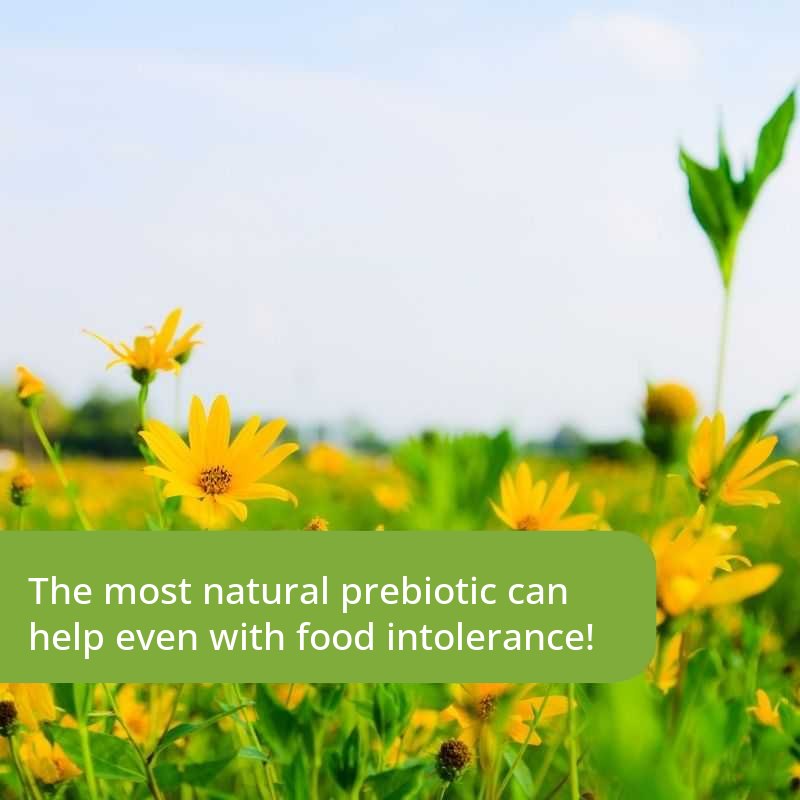
Our gut’s best friend is the Jerusalem artichoke, which used to be synonymous with poverty and was eaten mainly by the impoverished – after all, it grows almost anywhere and is a very undemanding plant. Nowadays, however, people have once again noticed the beneficial effects of the Jerusalem artichoke.
This odd plant belongs to the sunflower family, but we eat its root, so its taste is more like that of sweet potato. One of its most important properties is that it feeds the beneficial gut bacteria. The inulin found in the vegetable is a soluble plant fibre that the human body cannot digest, but which feeds the beneficial gut bacteria. So the Jerusalem artichoke is practically the most natural prebiotic; it can also be part of a varied diet after antibiotic treatment. If you have a food intolerance or a sensitive gut, talk to a dietitian about your diet, as larger amounts can cause bloating.
It can also be included in the diet of people with diabetes; discuss how much and how with your doctor or dietitian.
Research is also looking at the effect of inulin on the gut and on cholesterol levels; a cancer- or heart-disease-preventing effect has not been proven.
Jerusalem artichoke can be prepared in many different ways: it works well as a cream soup or as a side dish. What’s more, wherever you buy it, you can be sure it is organic. This plant has no pests or diseases, so it is a completely clean, chemical-free food.
Jerusalem artichoke also contains essential amino acids, vitamins C, B1 and B2, niacin, beta-carotene, zinc, potassium, calcium, phosphorus and magnesium.

Don't just get the school bag ready
Starting school is not only about new exercise books and a changed daily routine but also about reorganising family meals. The FOODTEST Children's pac...
IBS and food intolerance: can diet help?
Several factors may lie behind irritable bowel syndrome, and the role of diet may also come up. The article explains in plain terms how certain foods...
Do you have to give up tasty food with a food intolerance?
Free-from or diet cooking does not mean going without: with the right ingredients and tricks, you can make tasty, varied dishes at home too.
FOODTEST newsletter
Food intolerance tips and recipes by email
Practical diet tips and recipes, straight to your inbox.