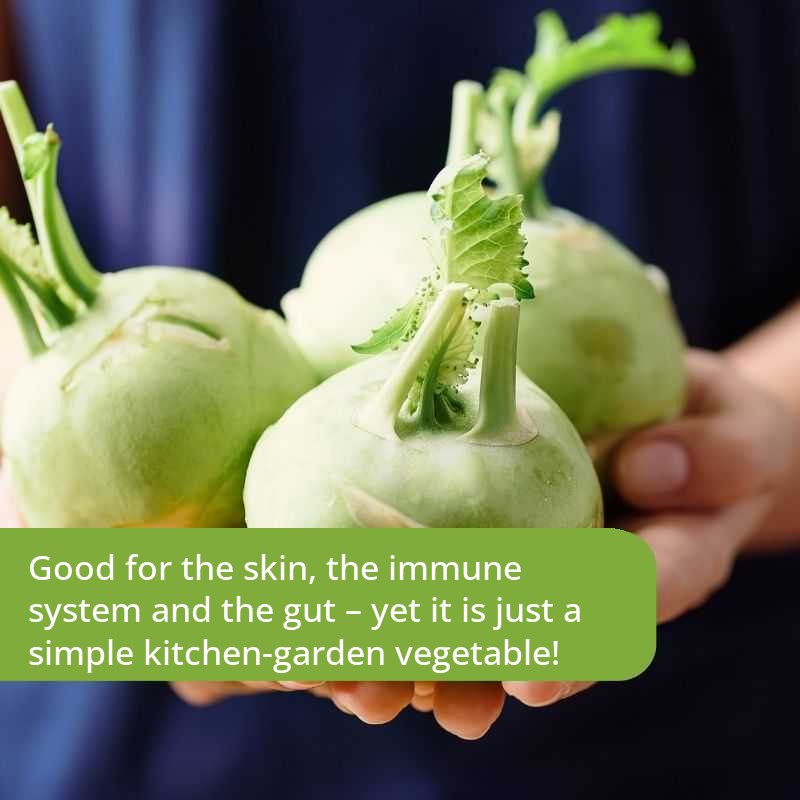
Hungarian cuisine uses kohlrabi mainly as a soup ingredient, yet it can be prepared in many ways, is delicious raw and, last but not least, is a very valuable vegetable.
It belongs to the cabbage family, originates from northern Europe, is undemanding, can be grown in a kitchen garden and is available all year round. Of course, you need to choose carefully, because only young bulbs are tasty; if it grows too large, i.e. stays in the ground too long, or is stored too long, it becomes woody, i.e. inedible.
It is very useful for our body, as it is rich in plant fibre and its mineral content is significant: potassium, calcium, magnesium, phosphorus; its leaves contain a lot of iron and carotenoids. Its vitamin content is not negligible either: it contains vitamins C, A, B1, B2 and B6. Its colour does not affect its physiological effects or its nutrients.
Kohlrabi is a light, gentle vegetable, so it can be an important part not only of menus that are gentle on the stomach and gut, but is also recommended for people trying to lose weight or on a diet – either as a main course or as a side dish. Its high vitamin C content contributes to normal collagen formation for the normal function of skin and to the normal function of the immune system.
You can read more about the possible causes of skin symptoms, and whether diet may play a part in them, on our skin problems page.
Before routinely throwing away the “greens”, i.e. the kohlrabi leaves, think about what you want to use the plant for, because kohlrabi leaves are tasty and healthy as a seasoning, or stuffed as a main course!
Kohlrabi goes very well with lovage, nutmeg, parsley, dill or white pepper.

Don't just get the school bag ready
Starting school is not only about new exercise books and a changed daily routine but also about reorganising family meals. The FOODTEST Children's pac...
IBS and food intolerance: can diet help?
Several factors may lie behind irritable bowel syndrome, and the role of diet may also come up. The article explains in plain terms how certain foods...
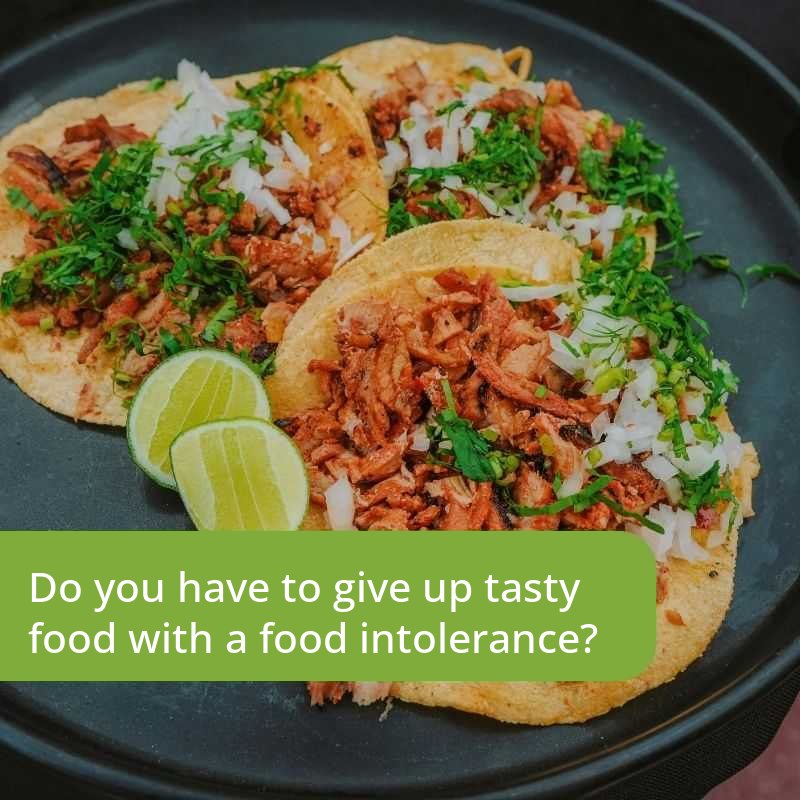
Do you have to give up tasty food with a food intolerance?
Free-from or diet cooking does not mean going without: with the right ingredients and tricks, you can make tasty, varied dishes at home too.
FOODTEST newsletter
Food intolerance tips and recipes by email
Practical diet tips and recipes, straight to your inbox.