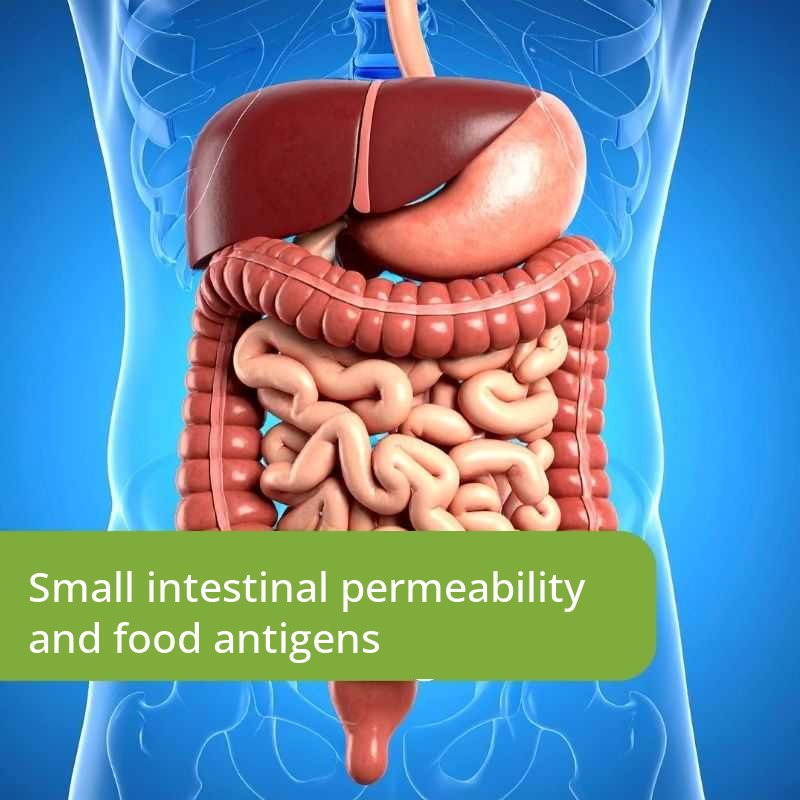
Small intestinal permeability and food antigens
This page previously presented a detailed Hungarian digest of a review article published in Mucosal Immunology. Below is a short summary in our own words.
The lining of the small intestine is a selective barrier: it lets nutrients in, regulates the movement of ions and water, and limits contact between the body and the large amounts of food antigens and microbes in the gut. The barrier is not completely closed to large molecules. Under normal conditions, small amounts of food antigens cross it and mainly induce tolerance and local secretory IgA production. If the barrier is damaged, more antigens and microbes can enter, which the authors link to conditions such as food allergy, inflammatory bowel disease, autoimmune diseases and metabolic syndrome.
Some food proteins resist digestion; gliadin, for example, can leave larger immunogenic peptides. Molecules can cross the lining between cells (the paracellular route, controlled mainly by tight junctions) or through cells (the transcellular route). The review describes how antibodies can carry food antigens across the lining in the form of immune complexes: secretory IgA (with an abnormal route via the transferrin receptor in coeliac disease), IgE via the CD23 receptor in allergic conditions, and IgG via the neonatal Fc receptor, which is present in adults too. Antigens that reach the inner side intact may trigger immune reactions there.
Inflammatory signalling molecules, such as interferon-gamma, TNF-alpha and IL-1 beta, can increase permeability, among other ways through the enzyme myosin light chain kinase, which opens tight junctions.
Source: Ménard S, Cerf-Bensussan N, Heyman M. Multiple facets of intestinal permeability and epithelial handling of dietary antigens. Mucosal Immunology. 2010;3(3):247–259. doi: 10.1038/mi.2010.5

Don't just get the school bag ready
Starting school is not only about new exercise books and a changed daily routine but also about reorganising family meals. The FOODTEST Children's pac...
IBS and food intolerance: can diet help?
Several factors may lie behind irritable bowel syndrome, and the role of diet may also come up. The article explains in plain terms how certain foods...
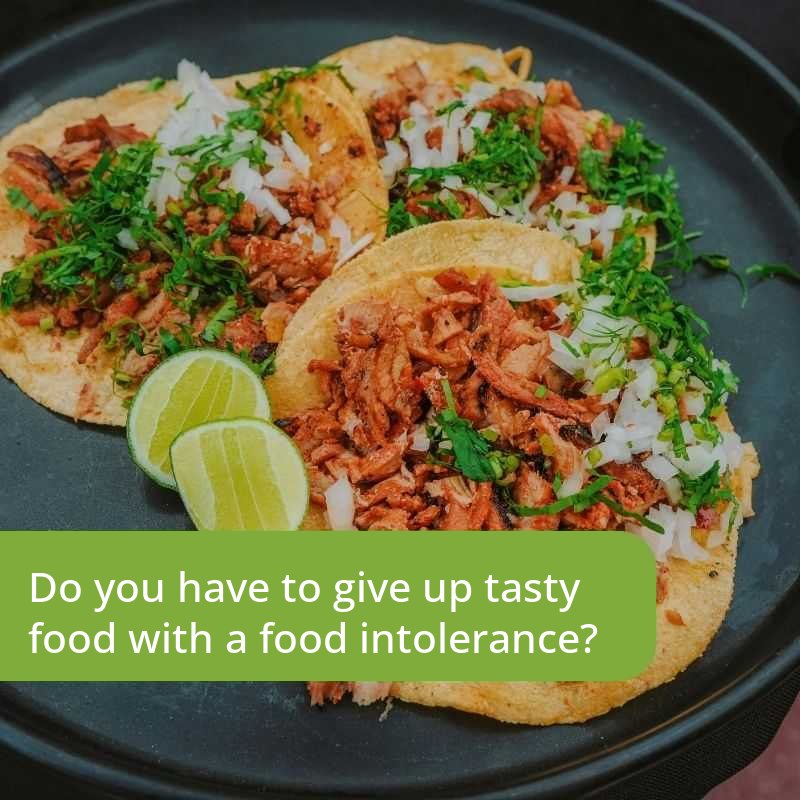
Do you have to give up tasty food with a food intolerance?
Free-from or diet cooking does not mean going without: with the right ingredients and tricks, you can make tasty, varied dishes at home too.