FOODTEST found a food intolerance in both my little son and me – what diet should we follow?
Find out which foods need to be left out temporarily, how to plan the diet and when foods can be reintroduced.

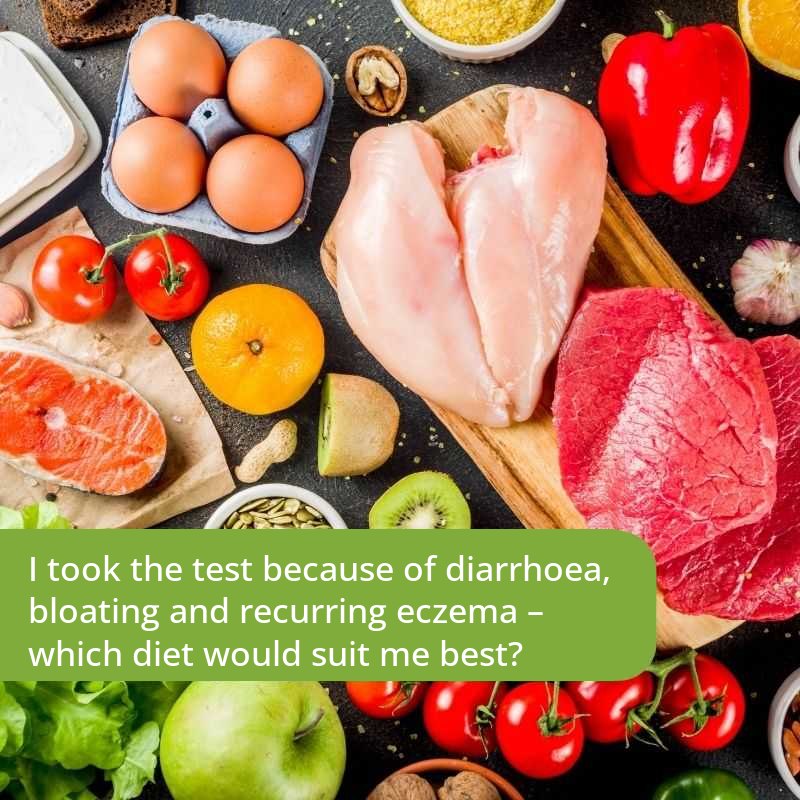
With a food intolerance detected by FOODTEST, foods with high values should be avoided for three months and then, after the gut has regenerated, gradu...
In food intolerance, temporarily leaving out foods with high values and choosing suitable alternatives may help reduce digestive complaints and skin s...
With food intolerance, a balanced diet can be put together by avoiding milk, egg white and certain additives and choosing suitable alternatives.
A food intolerance test is generally recommended over the age of 2, because in younger children the digestive system is still developing.
In food intolerance the body may react to specific proteins of cow’s milk or to other cereal proteins, so foods with a positive result should be avoid...
Based on a FOODTEST result, foods with high values should be avoided for three months and then gradually reintroduced, while protein intake can be cov...
Gliadin intolerance is not the same as coeliac disease, but avoiding gluten-containing cereals can help reduce symptoms.
With a negative coeliac test, eating grains depends on the food intolerance result: it is worth avoiding grains with high values and moderating border...
Persistent complaints alongside coeliac disease may be caused by further food intolerances or digestive problems, so a thorough investigation and the...
The FOODTEST 200+ test helps identify food intolerances and gives guidance on the steps of the elimination diet and the later reintroduction of foods.
With a food allergy, foods labelled “may contain traces” should also be avoided, whereas with a food intolerance they can usually be eaten.