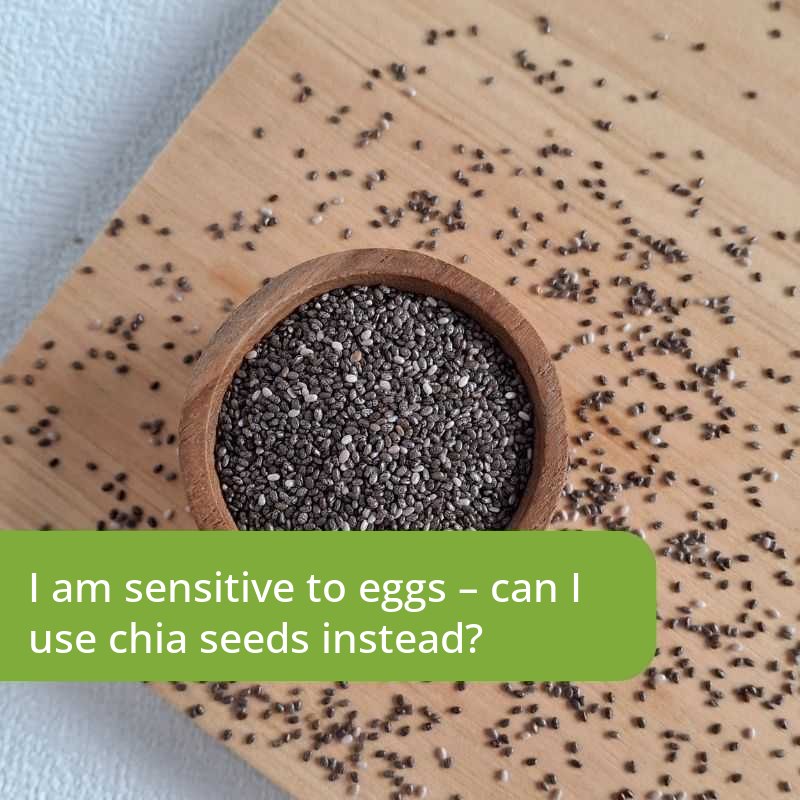
I was shocked by my FOODTEST 200+ test result, as I had not had any noticeable symptoms so far. Now it has turned out that I am sensitive to milk, egg white and wheat. My gynaecologist sent me for the test because we have been trying for a baby for a long time without success. I have several questions about the test report: what should I pay most attention to during the diet? Is there any result for sugar? I cannot find it as glucose either. The stickiness of eggs will be the hardest thing to replace; I have read about chia seeds – can I use them instead?
Answer: Yes, you can use chia seeds. Soaked linseed and psyllium husk are also suitable for replacing eggs. Chia seeds need to be soaked; linseed, besides soaking, also needs to be cooked a little and puréed; psyllium husk also forms a gel-like, sticky substance, so they are all suitable for replacing eggs. Add it to the cake mixture slowly, and make up for the liquid absorbed by the gel-like substance.
As for your other questions: the FOODTEST 200+ test is protein-based, which means it tests neither sugar nor milk sugar.
In food intolerance, we consider it necessary to eliminate foods with a value above 60. Foods in the borderline range may be eaten on a rotation basis. The length of the diet varies depending on the type and severity of the symptoms. A course of probiotics that supports the regeneration of the intestinal lining speeds up recovery. A food supplement with a high bacterial count containing both prebiotics and probiotics is a suitable choice.
In the case of intolerance, it is advisable to try reintroducing the positive foods after three months of dieting (eat one small portion, then pause for 3–5 days). During the diet and the reintroduction, it is important to monitor changes in your symptoms and keep a food diary.
Foods to be eliminated based on your food intolerance test report: cow’s milk, casein, sheep milk, goat milk, egg white, wheat, maize, buckwheat, couscous, kola nut. Foods in the borderline range may be eaten at most 2–3 times a week.

Don't just get the school bag ready
Starting school is not only about new exercise books and a changed daily routine but also about reorganising family meals. The FOODTEST Children's pac...
IBS and food intolerance: can diet help?
Several factors may lie behind irritable bowel syndrome, and the role of diet may also come up. The article explains in plain terms how certain foods...
Do you have to give up tasty food with a food intolerance?
Free-from or diet cooking does not mean going without: with the right ingredients and tricks, you can make tasty, varied dishes at home too.
Free download (PDF)
Elimination starter kit
Leaving foods out and bringing them back, step by step, without your plate going empty.