Let me share a story with you. Make yourself comfortable, because I have prepared an excellent snack for the mind. Please pay attention, because "if you digest it well", you might even gain 10–20 good years from it… :)
If you have ever talked to others about exercise, healthy eating or a more active lifestyle, you have probably often heard people say "I don't have time for that, it takes up too much".
People with families often add that because of the children they have no time for anything; the daily routine eats them up: getting up in the morning, ferrying the children to various institutions, after-school clubs, homework, household chores, dinner, bath time, bedtime, and 8–10 hours later it all starts again… (I used to be in the same boat)
Who knows, perhaps you think the same way?
It is a fact that healthy eating and regular, active exercise require an investment of time. These days I go to exercise three times a week, which, including travel and changing, comes to about 8 hours in total. Every week. Before you close the matter by telling yourself that you do not want to devote almost a whole working day to this on an ongoing basis (after all, think how much you could do in that time: cleaning, watching films, jobs around the house, etc., and you have no time…), stop and think about the big picture: use the helicopter view!
Years ago I sat down and thought through what kind of life I wanted. One parameter that is very important to me is my condition in old age, both physically and mentally. While thinking it over, I looked at my own family and the people around me. I pictured every acquaintance aged 50, 60, 70 or over, and thought about how they eat, how much exercise they do and how much they develop themselves mentally. And of course, what they had done for these areas over the course of their lives.
Then I also pondered what condition they are in now. How is their mental performance? How much can they manage physically, or what is it that they can NO longer manage?
All this is very simple to examine; I asked practical questions like these:
1) Would I dare to leave my child with them for 8 hours, or perhaps 8 days?
2) Can they complete a half-day or full-day hike? (at a comfortable pace that suits their level)
3) Can they teach their grandchildren anything?
4) Can they be "counted on" (in any sense – mentally, emotionally, etc.), or are they rather a burden on those around them and their family?
The answers were very mixed, mostly with a negative balance, especially on the health side. (I only considered cases where avoidable health problems were causing trouble.)
On average, at the age of 70 and over, people's performance somehow was no longer what it used to be, based on the sample I examined. Often because of problems (excess weight causing physical difficulty, diabetes "left to itself", ignored food sensitivity, alcohol consumption, smoking, stomach problems resulting from poor eating, and more serious difficulties developed from other neglected health problems) that can be tackled. For example, by exercising or by paying a little attention.
I was sure that for me it would not be enough for the part of my life when I can still be active, when I can still "be counted on", to "end" by the age of 70. I wanted to achieve much more, both mentally and physically, than the statistics show. I am not alone in this, and it is not impossible at all. Look at Bernie Ecclestone. Until 2 years ago, up to the age of 85, he was the almost all-powerful ruler of Formula 1!
While some people cannot go on a hike because of their health problems and are unable to keep themselves mentally sharp enough that their 8-year-old grandchild does not think them "silly" at 70, Bernie Ecclestone travelled to 30–40 countries a year up to the age of 85 and was in charge of deals worth tens to hundreds of millions of dollars!
Do you feel the huge difference?! :)
But what might this take? What decides whether for some people "the shop closes" at 70,
while others get at least another 15–20 years?
I do not know the answer for sure, but what is certain is that continuous movement, exercise and a balanced, healthy diet are important. If you look after your health, you may live a more active life for 10–20 years longer. I think that is worth it.
Isn't it so much different to look at it this way?
How important it is to use the "big picture", the helicopter view, too?
By my values, nothing can be more important than your health, not work and not much else either. If you have no time for your health, then what do you have time for?
To close, what I wanted to achieve is that you:
1) Think about a healthier lifestyle, your diet and exercise, in line with your own goals
2) and, above all, see an example showing that you can live an active, happy life over 70 too
It is worth using the helicopter view!
For inspiration, watch the running race of people over 100!
 Play video: Video

Don't just get the school bag ready
Starting school is not only about new exercise books and a changed daily routine but also about reorganising family meals. The FOODTEST Children's pac...

IBS and food intolerance: can diet help?
Several factors may lie behind irritable bowel syndrome, and the role of diet may also come up. The article explains in plain terms how certain foods...
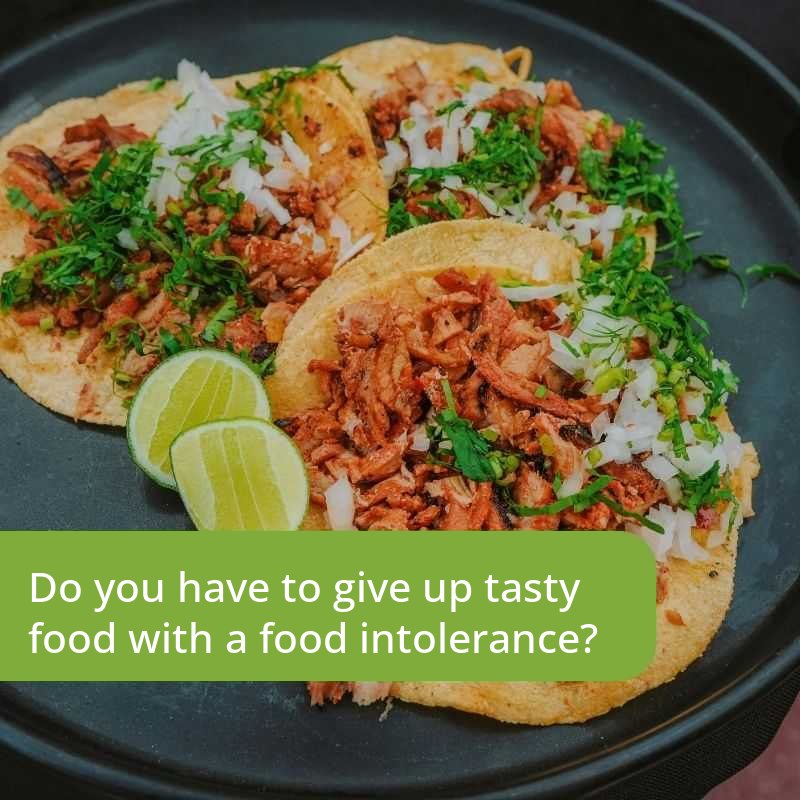
Do you have to give up tasty food with a food intolerance?
Free-from or diet cooking does not mean going without: with the right ingredients and tricks, you can make tasty, varied dishes at home too.
FOODTEST newsletter
Food intolerance tips and recipes by email
Practical diet tips and recipes, straight to your inbox.