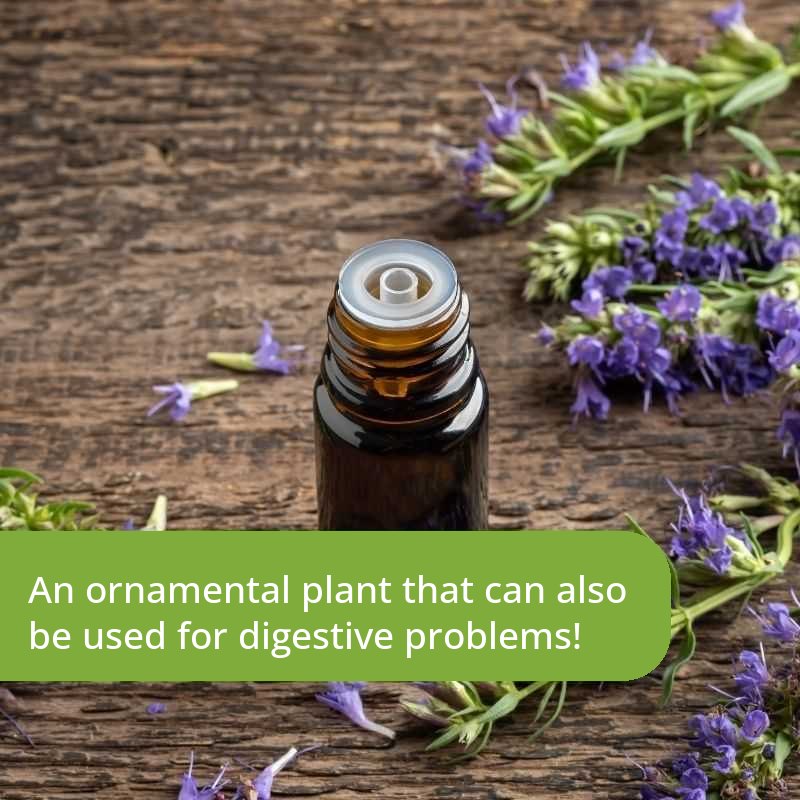
A medicinal herb among the ornaments of our garden!
Hyssop is a simple, undemanding and very attractive little flower. It can be found almost anywhere, as it comes from the Mediterranean region, where it grew mainly on the sides of rocks. Since it flowers all summer, in today's gardens it is present mostly as an ornamental plant, even though it has long been known as a medicinal herb too.
The ancient Romans used it to flavour wine, and Benedictine monks brought it to Central Europe. At that time they were responsible for healing, so it is no coincidence that they discovered the medicinal effects of hyssop. A fungus belonging to the Penicillium genus grows on the leaves of the plant and has an anti-inflammatory effect. Hyssop baths were also made from it and used in caring for people with leprosy.
Folk medicine also attributes digestive, antispasmodic and expectorant effects to it, so it was used for coughs, menstrual complaints, wounds and scars, and even for high blood pressure and asthma. These are traditional uses, not proven remedies: high blood pressure and asthma need treatment by a doctor. Tea made from hyssop is also regarded as an antiperspirant, an anti-inflammatory and a painkiller.
If bloating or another digestive complaint keeps coming back, you can read more about the possible causes and the role of diet on our digestive problems page.
It is one of the piquant spices of Mediterranean cuisine, used to season fatty, heavy dishes – precisely because it aids digestion. It gives meat, soups and salads a slightly bitter, minty flavour. In Italy, for example, hyssop is also added to sweets and liqueurs.
Interestingly, hyssop is also an ingredient of eau de cologne, while it can also be used as a weapon against pests. In kitchen gardens it attracts cabbage white butterflies.
The Bible also mentions hyssop as a kind of disinfectant, so no one knows exactly how long its medicinal effects have been known. But even if, despite all this, we simply like to see it as an ornamental plant, it will not disappoint.

Don't just get the school bag ready
Starting school is not only about new exercise books and a changed daily routine but also about reorganising family meals. The FOODTEST Children's pac...
IBS and food intolerance: can diet help?
Several factors may lie behind irritable bowel syndrome, and the role of diet may also come up. The article explains in plain terms how certain foods...
Do you have to give up tasty food with a food intolerance?
Free-from or diet cooking does not mean going without: with the right ingredients and tricks, you can make tasty, varied dishes at home too.
FOODTEST newsletter
Food intolerance tips and recipes by email
Practical diet tips and recipes, straight to your inbox.